
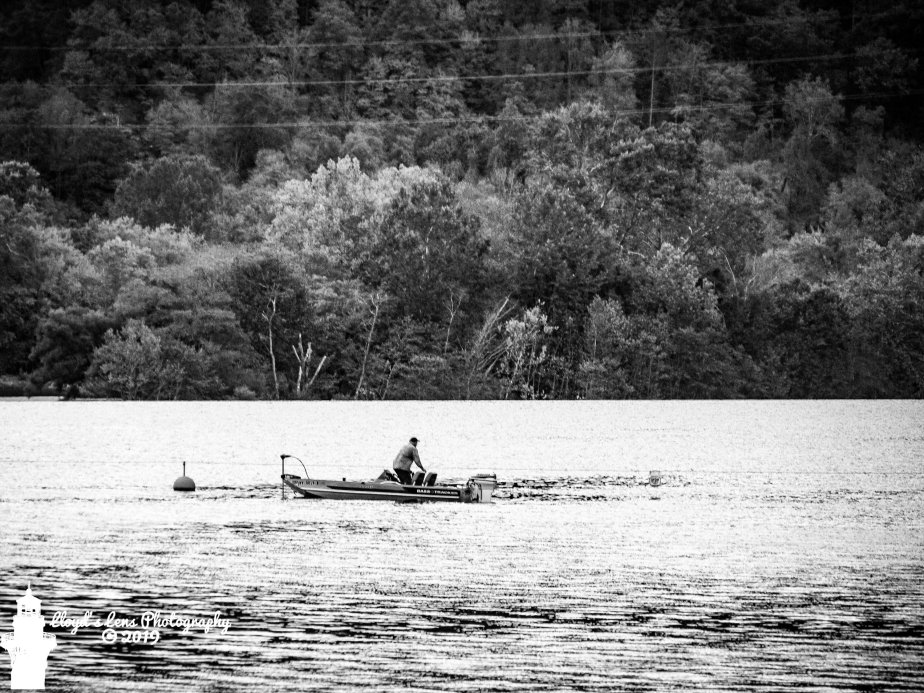
Forage Friday #35 Fish

Hello friends! Tonight’s feature image was taken just for Forage Friday. All of the photos are my original work and are available for purchase by the instructions at the bottom of the article.

It occurs to me that in 35 #ForageFriday posts that I have yet to put any meat on the table. Also, with the onset of winter finding edible plants is definitely a bit of a challenge. So when I found the fishing photos in my archive I knew that I had to include them in my Forage Friday posts.

Thanks to Jack Spyrco of The Survival Podcast my definition of survival skills has expanded to include things that benefit every day life and not just the worst case scenario. I’ve tried to reflect this take on things in my Forage Friday posts and provide you with things that have a potential to wild foods that can be given space to grow and flourish in off lawn areas or even in a garden setting. With fish it’s a little more of a challenge. Most of us don’t have ponds on our land and for those in an urban environment installing a pound a pond large enough to accommodate a reliable stock if food fish may not be possible. For those folks I’d recommend that you look into something like aquaponics. Otherwise you’ll need to find a body of water where you can drop a line. Pollution is a huge concern with fish. The mercury found in tuna is of particular importance because it accumulates in the fish. While humans have a way of clearing mercy from the body over consumption of contaminated fish can lead to health problems. Freshwater fish can also be contaminated and mercury is just one of the potential substances that you need to avoid. Fortunately, your local fish and wildlife conservation service will have a list of areas where the fish should not be eaten.

A large bass and a carp in the tank of my local Cabelas sporting goods store.

As far as aquaponics and aquaculture goes I really don’t have experience beyond a tank of tropical fish from the pet store. The main concerns of caring for them were keeping the tank clean and the fish healthy. I can only presume that those concerns get larger when you talk about tanks that are in the thousands of gallons. Regular maintenance seems to be key there. Fortunately for me, I practically live in water-world. There’s at least 5 fishable rivers and a multitude of smaller streams as well as a lake with 50 miles of shoreline all within a short drive of my home. Artificial resources like stock tanks would guarantee that I would have something for the grill but I just haven’t made the investment. The economic potential of supplying fresh fish to farmers markets and restaurants might just be worthy of the effort one day and could even be a good cottage industry for someone who’s willing to learn the techniques.

For the rest of us fishing is a form of foraging. It’s a way to connect with nature and enjoy the simple blessing of partaking in God’s creation. We crave the ambiance of the life in wild places and the challenges of the sport side of fishing.
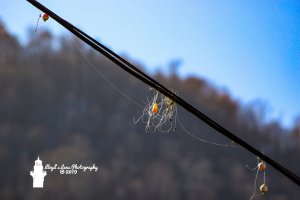
Image Titled “Hang Ups On Muddelty Creek”

It’s easy to lose your situational awareness when you so focused on that perfect casting technique. This power line above one of the more popular fishing holes in my area has a collection of tackle from those who became so lost in the activity that they forgot to look up.

Speaking of those iconic red and white bobers hanging from the cable, I’ve come to believe that in some areas that the fish have learned to avoid them. I’ve tossed them out of my kit in favor of natural cork. Cork is made from tree bark and tree bark is naturally found in the water. The fish are actually attracted to it and don’t associate it with the hook.

In most of the USA game fish like bass, catfish and pearch are regulated and techniques like weirs and spears are strictly prohibited. However, not all fish are considered game fish ( check your local regulations) and can be taken with a bow and arrow.

The tricky part of bow fishing is learning how to aim. Because the water bends the light the fish appear a little higher in the water than they actually are.

Image Titled “Life In Perspective”.

The image here shows the refraction of the light making the fish appear in a place where they are not. Bass and Bluegills are not legal to take with a bow but if it was you’d need to be able to estimate how low to aim.

Once you’ve got the fish out of the water and cleaned there’s as many ways to cook the fish as there are fish in the sea. My favorite way is to simply open the robs and prop it up over a pile of hot coals. A Native American way of cooking fish is to wrap it aromatic leaves and seal it in wild clay from the river bank. The whole package is buried directly in the hot coals and slow roasted. Once it’s done you just crack the clay open and dig in.

I have more to say about fish and fishing but I think I’ll save it for a later date. For now I hope that you have a blessed day!

Hello Friends and thank you for your support of my page. If you have enjoyed the photos or the writings please let me know by commenting and sharing my work on your social media. I also want to invite you to Follow Lloyds Lens Photography on Facebook

If you would like to Follow me on Facebook the web address is

https://www.facebook.com/aviewfromthelens/

If you’re enjoying my blog and don’t want to miss a post then you can sign up for email alerts on my website.

https://lloydslensphotographyllc.com/

Click here to visithttps://lloydslensphotographyllc.com/

Did you know that I also do portraits by appointment? If you’re interested in a portrait session either message me on Facebook or Use the Contact form. The YouTube link below takes you one of my slideshows.

https://youtu.be/FDcrY6w8oY8

Have you checked out the Zazzle Store?

I’m now using Zazzle to fulfil orders. What this means for you is a secure way to place an order, discount codes & a broader product selection! Simply message me on Facebook oruse the contact form on my websiteand tell me which image you want and I’ll reply with a direct link to where you can place the order.

Clicking on the photo takes you tohttps://www.zazzle.com/lloydslensphotos?rf=238248269630914251

Lastly, all of the photos and writings are my original work unless otherwise specified and are not to be copied or reproduced without expressed written permission from the photographer.

Thank you again for your support of my page!❤

Forage Friday #34 Birch

Hello friends! Tonight’s feature image was taken specifically for Forage Friday. All of the photos are my original work and are available for purchase by the instructions at the bottom of the article.

One of the treats for a young person growing up in the Appalachian Mountains is reaching out to pluck a birch twig during a hike. Not just any birch but one of the sweet birches. The property I grew up on had plenty of black birch and it is the strongest flavored in my recollection but the property I have now has yellow birch on it. Both are wintergreen flavored and the inner bark can be made into a tea. The wintergreen flavor comes from methyl salicylate which functions like aspirin and therefore can be used for pain relief.

One of the surprises that I learned several years ago was the existence of birch beer. It’s called beer but it’s technically a wine. The birch tree is tapped like a maple and the sap is then boiled down into syrup just like maple and to make the birch beer it’s allowed to ferment into wine. I can’t really speak to the flavor of birch syrup or beer/wine but it’s mentioned in several of my guide books.

The curly bark of a yellow birch in my property.

The bark of a yellow birch has a distinctive look. The long curls of lose bark are kinda hard to miss. Birch bark here in the USA is thought of as the construction material for Native American canoes but I think that they used the tighter bark of the white birch with is more of a northern species. The bark was used for making cooking vessels as well. A square tray made from birch bark can be coated with the birch resin and made waterproof enough to cook soup by placing it directly in the fire. Even though birch bark is extremely flammable the water inside keeps it from burning and thus you can cook in it.

Speaking of birch resin, a very useful substance that’s commonly called “Birch oil” is a resin extracted from the bark. The method used is to coil the Bark in a can with a hole in the bottom. This can us placed over a second can or glass jar that’s in a hole in the ground and the whole thing is covered with hot coals from a fire and baked slowly. The oil collects in the bottom jar. In the 17th and 18th centuries people living in Russia used it to waterproof leather and I’ve heard it referenced that during World War 2 Jews who escaped into Russia was able to extend the life of their footwear with the aid of birch oil. A 5000 year old artifact found in Finland turned out to be chewing gum made from birch tar. Which shouldn’t be surprising because the Neanderthals used it to fletch their arrows.

What gardener doesn’t hate snails and slugs? They’re nothing more that living stomachs that destroy our gardens but the birch resin can come to the rescue here too. Mix up a little birch resin with petroleum jelly and paint a barrier around your food plot to keep the slimy critters out. (It’s said to last for months but it’s not a trick that I’ve tried yet. )

Birch resin is also used in making some perfumes but I haven’t researched into that yet.

Lastly, in the more northern climates birch is host to the true tinder fungus. Also known as Chaga. When we get into medical uses for anything I mot only feel the need to urge you to do your own research nut to be extra cautious about the advice you get. Chaga is one of those useful plants that has been hailed as a cure-all. There’s a lot of treatments cited and while I’m sure that there’s a lot of things that it helps I find a claims to be a little overblown and just way too enthusiastic about results. However, this parasite of birch trees was found in the kit of Otzi the ice man. Not only could it be used as incense to keep insects away but it actually helps build fires as tinder ( hence the name true tinder fungus) and he was apparently using it as food and medicine himself. I have included it in this post because of its close association with the birches. Those who study it say that it’s medicinal qualities come from it’s ability to concentrate Betulinic acid that’s produced by the birch tree. Studies are being done that say Betulinic acid may help some cancers but again, this is outside of my understanding enough that I have to ask the reader to seek out a professional for any advice about the validity of that claim.

One last image that I have to share is one of the more interesting trees on my mountain. It’s what’s called a false graft. Normally a graft can only occur within the same species but on the edge of my yard I have a yellow birch and a magnolia that are mechanically joined. Just how this happened I don’t really know for sure. It’s common for trees that are close to each other to grow around one another but here the magnolia is actually growing a horizontal trunk into the birch.

The odd mechanical graft on my property.

I hope that you have enjoyed tonight’s Forage Friday post. When I started Forage Friday I stated that I would continue to post them as long as I could find wild edible plants to feature and I do plan to continue #ForageFriday indefinitely. However, as the winter months are upon us I might have to post an alternative here and there to keep from having to post duplicate photos. I have held back some photos so I can try to stretch the content for as long as possible but we’ll have to see if it was enough. Good night and be blessed!

Hello Friends and thank you for your support of my page. If you have enjoyed the photos or the writings please let me know by commenting and sharing my work on your social media. I also want to invite you to Follow Lloyds Lens Photography on Facebook

If you would like to Follow me on Facebook the web address is

https://www.facebook.com/aviewfromthelens/

If you’re enjoying my blog and don’t want to miss a post then you can sign up for email alerts on my website.

https://lloydslensphotographyllc.com/

Click here to visithttps://lloydslensphotographyllc.com/

Did you know that I also do portraits by appointment? If you’re interested in a portrait session either message me on Facebook or Use the Contact form. The YouTube link below takes you one of my slideshows.

https://youtu.be/FDcrY6w8oY8

Have you checked out the Zazzle Store?

I’m now using Zazzle to fulfil orders. What this means for you is a secure way to place an order, discount codes & a broader product selection! Simply message me on Facebook oruse the contact form on my websiteand tell me which image you want and I’ll reply with a direct link to where you can place the order.

Clicking on the photo takes you tohttps://www.zazzle.com/lloydslensphotos?rf=238248269630914251

Lastly, all of the photos and writings are my original work unless otherwise specified and are not to be copied or reproduced without expressed written permission from the photographer.

Thank you again for your support of my page!❤

Forage Friday #33 Oaks

Hello friends! Tonight’s feature image is titled “White Oak In Crimson” and is available for purchase by the instructions at the bottom of the article.

Oak is a wild edible plant that I have not actually ever gotten around to trying with one I’ll fated exception that’s covered in the article. All of the information about it’s food and medicine value comes from years of reading and listening to other people who have shared their knowledge with me. As always, I only intend to give you an interesting conversation starter and recommend that you do further research before trying any wild edible plants.

The young warrior moved cautiously between the boles in the early days of Fall. He hadn’t really perceived any danger but stealth had become a way of life. It wasn’t for him enough to remain unseen and unheard but instead he had to be a ghost. That meant that he had to move without leaving any signs of his passing. As he crept along the deer path he placed a hand on the corky bark and gently rubbed off the powdery dust from the ridges. The twigs ended in crown-like clusters of buds and the few leaves that were still on the tree had rounded lobes without any burs at the tip of lobes. He gently raked back the leaf litter to find the nuts. Many of them have already sprouted but he also saw that the woody caps covered more than half of the shell. These were white oak acorns and that was why he braved entering a forbidden grove. From under his tunic he produced a coarsely woven bag and began to gather the nuts. Before he gathered the second handful he felt knobby end of a staff touch his shoulder with just enough force to get his attention. He dropped the bag and rose to his feet to see his master’s grinning face. The game was a training exercise. If the young warrior had been able to gather the bag of acorns without being caught it would have meant that he’d mastered the art of stealthily crossing enemy territory. But today’s failure meant that he’d have to scrub out the cooking pots again after the acorns had been made into the morning meal.

Anyone familiar with myths and legends of Northern Europe knows that the oak was a significant tree. It’s said that the title of “Druid” means “he who knows the oaks” and while I’m not certain of how accurate that is I do know that the oak is important to every culture that has access to them.

Today the oak is mostly known for it’s wood. It’s generally considered to be among the strongest lumbers. In my opinion the red oak has the most beautiful grain in the wood but is actually slightly less rot resistant than the white oak. That’s because the white oak has a tendency to be found in wetter conditions than the red oak and so the vessels hat transport water throughout the tree tend to be smaller and tighter to lock out fungus.

White Oak was also preferred for bending. The classic examples are bent wood furniture and tools like hay forks. White Oak wood is heated until it gets limber like a noodle and then it’s placed in a form until it cools down and holds the desired shape.

Oak bark is the source of cork. There’s entire plantations of cork oak. The outer bark is stripped away and processed into flooring, bulletin boards and if course wine corks. The stripping doesn’t harm the tree. It’s akin to getting a haircut and the bark regeneration sequesters carbon dioxide.

The inner bark has been used by herbalists for washing wounds and poison ivy rash. One of my guide books suggests that a strong tea made from oak bark us used as a mouthwash to treat bleeding gums. The medicine comes from the tannins in the bark. Now I’m of the opinion that an oak based mouthwash is the act of a desperate person. And here’s why. When I first started reading up on foraging for food and medicine I read that acorns were edible. And I love nuts. Plus, I live in a forest that’s full of oak. So one day I found some beautiful acorns. They big too! So I pulled out my pliers and cracked the nut open and popped the nut meat into my mouth. Not only was that nut astringent but it was bitter and that awful taste was in my mouth for hours. Even after a lot of coffee, vanilla extract, and even hot chillies! But I had all of the experts rave about acorns. What I had missed was the leeching process. All of the bad flavor was from the tannins but, those tannins are water soluble. Removing the tannins would have been as easy as soaking the nuts in water for several days until the water no longer changes color. A strong solution of the tannins can be used to tan leathers but that’s something that we’ll cover some other time. The other method to remove the tannins is to simply tie them up in a porous sack and toss it into moving water for a few days. A modern method is to use a food processor to chop the nuts into a fine powder ( after shelling) and place the powder in a nylon stocking before leeching out the tannins. Because this increases for the water to act on it makes for less time leeching.

Main thing acorns are used for today is acorn bread. There’s plenty of recipes online but basically you’re substituting the acorn flour for wheat flour and some people mix the two.

Tonight’s feature image is a white oak. Don’t let the color of Fall leaf fool you. That’s not genetic it’s a result of the wavelength of light. Red oak can have a yellow leaf and vice versa. But red oak leaves are usually more pointed in the lobe and they tend to have a little needle-like bur at the tip.

Even though this article went a little longer than normal I’m certain that I’ve overlooked some little bit of information or trivia so I do encourage you to take a look online if you think you want to try acorns.

Hello Friends and thank you for your support of my page. If you have enjoyed the photos or the writings please let me know by commenting and sharing my work on your social media. I also want to invite you to Follow Lloyds Lens Photography on Facebook

If you would like to Follow me on Facebook the web address is

https://www.facebook.com/aviewfromthelens/

If you’re enjoying my blog and don’t want to miss a post then you can sign up for email alerts on my website.

https://lloydslensphotographyllc.com/

Click here to visithttps://lloydslensphotographyllc.com/

Did you know that I also do portraits by appointment? If you’re interested in a portrait session either message me on Facebook or Use the Contact form. The YouTube link below takes you one of my slideshows.

https://youtu.be/FDcrY6w8oY8

Have you checked out the Zazzle Store?

I’m now using Zazzle to fulfil orders. What this means for you is a secure way to place an order, discount codes & a broader product selection! Simply message me on Facebook oruse the contact form on my websiteand tell me which image you want and I’ll reply with a direct link to where you can place the order.

Clicking on the photo takes you tohttps://www.zazzle.com/lloydslensphotos?rf=238248269630914251

Lastly, all of the photos and writings are my original work unless otherwise specified and are not to be copied or reproduced without expressed written permission from the photographer.

Thank you again for your support of my page!❤

Forage Friday #32 The Dogwood family.

Hello friends! Tonight’s feature image is titled “Dogwood Berries 91519” and was taken specifically for this article. All of the photos found on my blog are my original work and are available for purchase by the instructions at the bottom of the article.

Note to new readers. I’m pretty lose with my definition of foraging and often include uses for a plant that are not food or medicine. Tonight’s article is no exception.

One of my favorite trees is the Dogwood. Maybe that’s because it’s one of the first trees that I learnedto identify. Maybe it’s the heartwarming bloom that I get to enjoy in the Spring. The interesting texture of the bark, the crooked limbs and the bright red berries all things that I love about it. Aside from the beauty that Dogwood brings into our lives it does have some usefulness. The wood is normally gnarled and twisted making it unsuitable for construction but awesome for novelties. The wood has a reddish hue when treated properly. It’s strong and tight grained and rot resistant. When a Dogwood tree dies in the forest it can remain standing for decades and will be strong enough to make a heavy but strong hiking staff. The rot is usually localized at ground level and the dead tree can easily be felled by simply leaning into it. I have made several walking sticks by pushing over a dead Dogwood that’s only an inch or two think. Before I was allowed to have things like axes I’d wedge the small dead Dogwood between two large trees and be able to break it to the right length by pushing and pulling until it broke in just the right spot.

The wood and bark will yield a purple dye when soaked in water and when working with fresh Dogwood wood this watercolor can be used to stain the wood itself to give you colorful stock to work with. In my experience the bark yields the best color and you might have to boil it down a bit to get a strong tone.

The curing the wood for tool handles and walking sticks is pretty simple. Cut it a little longer than your finished product and coat the ends with wax. Then hang it in a dark but dry place. This technique is pretty much the same for any small stock. The hanging time will vary depending on the thickness of the wood and how dry or damp your local environment is. The slower the wood cures the more stable it will be and that’s why we coat the ends with wax. It only takes a thin coating. I have also made walking sticks with relatively green Dogwood by giving it a couple of coats of polyurethane with no major problems.

Traditionally Dogwood twigs are used to make chewing sticks. Because of the way the fibers are bundled in a green Dogwood twig a natural toothbrush was made by macerating one end until it formed a brush. The origin of this is said to be either slaves or Native Americans but I’ve seen it cited as both. Either way, the trick is still taught in survival schools today.

Now for the berries. The native Dogwood berries are edible but they are drupes. They have a single large seed in the center that’s nearly as large as the berry itself. That means that there’s a lot of seed and very little fruit for the effort it takes to consume them but they are edible. A better option that’s still a Dogwood is the Cornelian Cherry. Cornelian Cherry is native to southern Europe and Southwest Asia but it was brought to North America as an ornamental and has escaped in some places. The berries are large enough to make them worth the effort to eat but you still have watch out the rock hard seed in the center. The texture is kinda like a grape and the flesh of the fruit is sour but tastes pretty good when fully ripe. Traditionally it’s used in making sauces and jams. If you have access to Cornelian Cherry it might be worth an internet search for a recipe. Wikipedia mentions that oranges are used in the preparation. At the time that I had access to Cornelian Cherry I was only interested in the survival food aspects of the berries and never progressed beyond nibbling a handful of the sour fruits but when I became aware of the concept of edible landscapes it was one of the first trees that came to mind.

During the American Civil War a strong tea made from the roots of the flowing Dogwood was used as a quinine substitute for treating malaria. (I’m not a doctor or certified herbalist and cannot endorse the medical value of any plant. Reference to the medicinal qualities of any plant is strictly to further the conversation and spur interest in the subject. Please seek out a professional for any medical conditions.) Peterson’s Field Guide also makes references to members of the Dogwood family as being used for external ulcers and that the berries were soaked in brandy for digestive issues.

Of course with this being posted deep in the fall I should also mention the color of the fall leaves. Each tree is a little different depending on genetics, soil type and lighting conditions but the Dogwood tree out on the edge of the parking lot of my day job has the most beautiful leaves that I have seen. They are almost purple.

The deep red Dogwood leaves are awesome this year.

So if you’re looking at that bare spot out by the fence and wanting something that will provide both beauty and usefulness you might want to consider a Dogwood tree.

Hello Friends and thank you for your support of my page. If you have enjoyed the photos or the writings please let me know by commenting and sharing my work on your social media. I also want to invite you to Follow Lloyds Lens Photography on Facebook

If you would like to Follow me on Facebook the web address is

https://www.facebook.com/aviewfromthelens/

If you’re enjoying my blog and don’t want to miss a post then you can sign up for email alerts on my website.

https://lloydslensphotographyllc.com/

Click here to visithttps://lloydslensphotographyllc.com/

Did you know that I also do portraits by appointment? If you’re interested in a portrait session either message me on Facebook or Use the Contact form. The YouTube link below takes you one of my slideshows.

https://youtu.be/FDcrY6w8oY8

Have you checked out the Zazzle Store?

I’m now using Zazzle to fulfil orders. What this means for you is a secure way to place an order, discount codes & a broader product selection! Simply message me on Facebook oruse the contact form on my websiteand tell me which image you want and I’ll reply with a direct link to where you can place the order.

Clicking on the photo takes you tohttps://www.zazzle.com/lloydslensphotos?rf=238248269630914251

Lastly, all of the photos and writings are my original work unless otherwise specified and are not to be copied or reproduced without expressed written permission from the photographer.

Thank you again for your support of my page!❤

Forage Friday #31 Juniper Berries

Hello friends! Tonight’s feature image is Juniper Berries On Eastern Red Cedar. The photos in this post were taken just for Forage Friday. All of the photos are my original work and are available as prints by following the instructions at the bottom of the article.

DISCLAIMER : Juniper Berries are one of the plants that I have not actually used. I have done some research for the article but since I’ve not used it myself I’m strongly urging you to double check all information for accuracy. The Web MD article on Juniper Berries lists them as possibly safe. Therefore I wanted to point out that there are some cautions. With that said, we’ll also see that there’s also some traditional uses that would indicate that they’re relatively safe.

One of the more common plants that I have grown up with is the Eastern Red Cedar. It’s an evergreen that’s fairly common in the Appalachian Mountains and because it gets timber sized it’s often mistaken for a type of pine tree. But pine trees have true needles where the juniper has leaves that are more like scales. The eastern red cedar is a beautiful tree that’s often planted as an ornamental if the right soil is available. As kids we always thought of them as Christmas Trees because of the pyramid shape they have.

I have always thought of the red cedar as a utility tree. That’s one who’s properties are more useful as a non-food / medicine. The bicolor wood is absolutely beautiful when polished. It has a creamy colored sapwood and red heartwood that’s pleasing to the eye and wonderful spicy aroma. Because of smell red cedar is traditionally used to make cabinetry. The smell keeps pests like moths from infesting natural fiber clothing and cedar panels are sold for closets. Cedar chips can be purchased by the bale as pet bedding. Early in my life as an artist and craftsman I was commissioned to create a cedar bed frame. I saved as many scraps and as much sawdust as could scrape up to make air fresheners. When I was a kid most #2 yellow pencils were made out of cedar. Even as I write this I can slell the smell of the old fashioned hand cranked pencil sharpener in my third grade classroom.

The wood is usually pretty stable and I could fill the whole post with lists of things you might use it for but this is a #ForageFriday post so lets move on to the food and medicine.

As I stated that the disclaimer there are some reasons for caution. For example, Juniper is known to cause miscarriages and diabetes are cautioned to consult with a medical professional due to the risk of kidney damage. Even a healthy person shouldn’t consume the berries in large quantities or for an extended period. But the berries are used to flavor gin.

The key seems to be moderate use as a spice on wild meats. There seems to be plenty of recipes online calling for small amounts of juniper berries and one marinade I saw called for a total of 3 berries in the mix.

Anyone can have an unknown allergy but juniper allergy is a known thing so keep that in mind.

I’m not really the kind of person who uses a lot of cologne but in the 90s I did have a favorite scent that was made from juniper berries so if you’re the kind of person who has a talent for making scents juniper is one that you might try to craft from wildcrafted berries.

The last little tid-bit that I have tonight is that even though we call it a berry it’s actually a cone that encases a single seed. The part we call a berry is actually scales. And, the white powdery substance that coats the “berry” is a wild yeast that us probably what lead to it’s use in making gin.

A closer look at the berries showing the wild yeast.

Hello Friends and thank you for your support of my page. If you have enjoyed the photos or the writings please let me know by commenting and sharing my work on your social media. I also want to invite you to Follow Lloyds Lens Photography on Facebook

If you would like to Follow me on Facebook the web address is

https://www.facebook.com/aviewfromthelens/

If you’re enjoying my blog and don’t want to miss a post then you can sign up for email alerts on my website.

https://lloydslensphotographyllc.com/

Click here to visithttps://lloydslensphotographyllc.com/

Did you know that I also do portraits by appointment? If you’re interested in a portrait session either message me on Facebook or Use the Contact form. The YouTube link below takes you one of my slideshows.

https://youtu.be/FDcrY6w8oY8

Have you checked out the Zazzle Store?

I’m now using Zazzle to fulfil orders. What this means for you is a secure way to place an order, discount codes & a broader product selection! Simply message me on Facebook oruse the contact form on my websiteand tell me which image you want and I’ll reply with a direct link to where you can place the order.

Clicking on the photo takes you tohttps://www.zazzle.com/lloydslensphotos?rf=238248269630914251

Lastly, all of the photos and writings are my original work unless otherwise specified and are not to be copied or reproduced without expressed written permission from the photographer.

Thank you again for your support of my page!❤