Forage Friday #43 Wild Garlic

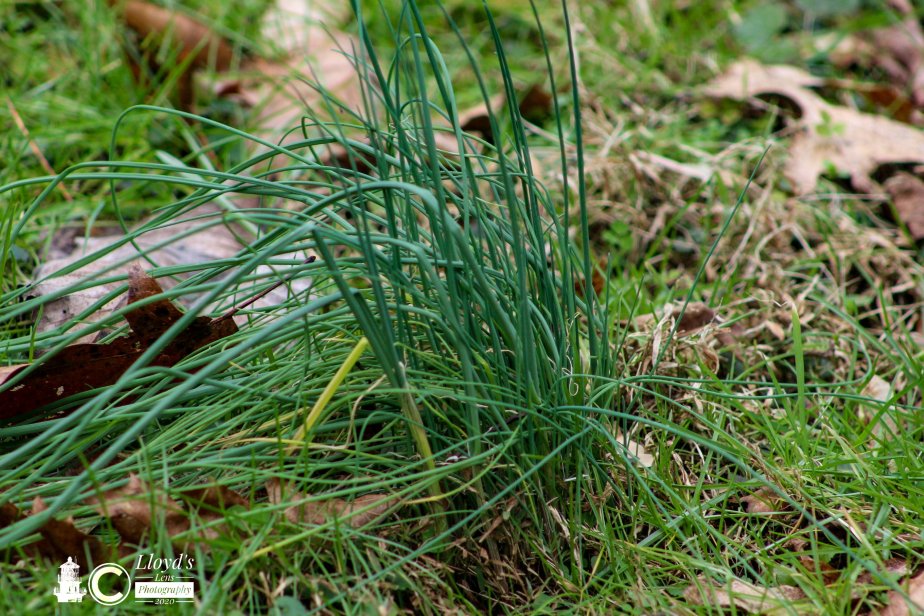
Hello friends!Tonight’s feature image was taken just for Forage Friday. The purpose of photo is to show wild garlic in its natural state.

Disclaimer: Wild Garlic and Wild Onions have multiple dangerous look-alikes. Not the least of which is an Appalachian plant known as Fly Poison (Amianthium). Fly Poison is said to be so toxic that people have died because they touched the leaves and failed to wash their hands before eating.

As I was crossing my yard I suddenly picked up a strong odor of onion rose up from the grass. I looked down to find that I had just stepped on a cluster of garlic.

Locally known as “wild onions” or “Crow Garlic” this stinky little plant is just as useful as it’s larger cousins found in grocery stores and gardens. As children thus was one of the first plants that I learned. I was taught to pinch off a bit of the leaf and smell it before I tried it. The rule of thumb is to never eat a plant that looks like a onion but doesn’t smell like an onion. As stated in the disclaimer the Fly Poison plant is one that has a reputation for causing fatalities. I am pretty sure that I have fly poison on my place as well but it doesn’t come up until Spring where the wild garlic is available almost all year round.

The green leaves of wild garlic can simply be snipped with a set of shears and sprinkled like chives. Mixed into butter for garlic bread or just tossed into a salad. The bulb is small but as you can see in the photo they grow in clumps and collectively a colony of wild garlic can provide a fair amount of mass. When it goes to seed the top will have a cluster of tiny bulblets that will eventually take root.

I find the flavor to be a bit stronger than regular garlic so it doesn’t take advantage much to get the flavor.

Like the garden variety of garlic wild garlic has a long history of being used in folk medicine. Science has proven that garlic has some antibiotic and antimicrobial use and it’s high in some vitamins and minerals including a form a sulphur that can be absorbed by the body.

About those vampires and garlic. I thought it be a fun fact to look up how that came to be but like everything else the internet is ablaze with debate. Some say origin goes back as far ancient Egypt while others believe that Bram Stoker was the first to weaponize garlic against the forces of darkness. Being a Gen-Xer it’s my opinion that the use of holy water laced with garlic was pure genius by my favorite vampire hunters from the 80s. Namely, the Frog Brothers.

The world may never know for sure how garlic became the bane of vampires. But no matter if the Frog Brothers drop by to fill their super soakers with their special anti vampire blend of holy water and garlic juice or if you want a little garlic bread to go with your spaghetti there’s a fine source of flavor and medical plant that’s probably in your back yard right now.

Hello Friends and thank you for your support of my page. If you have enjoyed the photos or the writings please let me know by commenting and sharing my work on your social media. I also want to invite you to Follow Lloyds Lens Photography on Facebook

If you would like to Follow me on Facebook the web address is

https://www.facebook.com/aviewfromthelens/

If you’re enjoying my blog and don’t want to miss a post then you can sign up for email alerts on my website.

https://lloydslensphotographyllc.com/

Did you know that I also do portraits by appointment? If you’re interested in a portrait session either message me on Facebook or Use the Contact form. The YouTube link below takes you one of my slideshows.

https://youtu.be/FDcrY6w8oY8

Have you checked out the Zazzle Store?

I’m now using Zazzle to fulfil orders. What this means for you is a secure way to place an order, discount codes & a broader product selection! Simplymessage me on Facebookoruse the contact form on my websiteand tell me which image you want and I’ll reply with a direct link to where you can place the order.

Clicking on the photo takes you tohttps://www.zazzle.com/lloydslensphotos?rf=238248269630914251Lastly, all of the photos and writings are my original work unless otherwise specified and are not to be copied or reproduced without expressed written permission from the photographer.

Thank you again for your support of my page!❤

Forage Friday #42 Bandages

Hello friends! Tonight’s feature image was taken just for Forage Friday. All of the photos are my original work and are available for purchase by the instructions at the bottom of the article.

Disclaimer: Forage Friday is only intended to be a conversation starter and not a replacement for real training. I am not a doctor and therefore not qualified to give any medical advice. I also feel like it should be stated that for deep wounds it is possible to seal in an infection and cause the wound to become gangrenous so I urge you to seek out a professional for further information.

Being a native Mountaineer means growing up in culture that’s heavy with “folk medicine”. Not all of these home remedies work and there’s quite a few that are downright dangerous. One example would be story about a young couple who’s child was burned in an accident and it was appeantly a pretty bad burn. Panicked and at a time when reaching a medical professional was difficult under the best of circumstances they defaulted to a folk cure based on the old saying that “Fire draws fire” and that saying is true. But the problem is that this particular saying is referring to how to control a forest fire and not how to treat a burn. It goes without saying that the child did not survive. Now it might have been a true story or it might have been a cautionary tale about using common sense but it made an impression on me.

In spite of the warning I continued to be fascinated by the ways people in isolated locations were able to provide so many daily needs from the landscape. I learned that for every old wives tale there was several things that actually worked and would later be confirmed by science. Such is the case with “Spider’s stitches” or using a cobweb as a bandage. Unlike a lot of the old folk sayings there wasn’t any rhymes about bandaging wounds with webs. It was just the simple statement of “You can use spiderweb on a cut.” My young mind filed away the knowledge but I always questioned whether or not it was true. Spiders are all gross and “buggy”! How could anyone put a nasty old cobweb on a place where it will mix with blood? Wouldn’t it cause an infection?

Well, it turns out that spiders might look gross but they’re actually neat freaks that are constantly grooming themselves and their webs. They’re almost OCD about keeping themselves clean. And their webs contain substances that prevent bactira, viruses and fungi from growing. It also turns out that the web is rich in vitamin K and sticky enough to hold a wound closed. It’s like God knew that we would be clumsy and made the spider to help us out.

There are a few rules to follow though. Number one being avoid the spider itself of course. Black Widow bites are notoriously painful. They’re often described as a body wide Charlie horse that lasts for 48 hours and the internet is full of nightmarish images of what the brown recluse spider can do. Fortunately, the black widow spider is very non-aggressive and the recluse would rather hide than even be seen. Most spiders don’t even have a type of venom that affects humans.

Next, is all the images of beautifully woven orbs covered in fresh dew. Now I’m certain that those orbs would work but they’re a bit thin and you’d need a lot of them. However the thick ones on top of the grass are perfect.

Be sure to use new ones that clean and free from captured prey to avoid contamination. A dirty web means either the spider has been gone for a while or that there’s something wrong with the spider.

Place the web inside the would. I know that seem wrong the it’s the most effective way. You can top the dressings off with leaves like Plantago and Comfrey for extra strength and wrap it up with long grasses.

I hope that you have enjoyed this week’s Forage Friday post. 😊

Hello Friends and thank you for your support of my page. If you have enjoyed the photos or the writings please let me know by commenting and sharing my work on your social media. I also want to invite you to Follow Lloyds Lens Photography on Facebook

If you would like to Follow me on Facebook the web address is

https://www.facebook.com/aviewfromthelens/

If you’re enjoying my blog and don’t want to miss a post then you can sign up for email alerts on my website.

https://lloydslensphotographyllc.com/

Did you know that I also do portraits by appointment? If you’re interested in a portrait session either message me on Facebook or Use the Contact form. The YouTube link below takes you one of my slideshows.

https://youtu.be/FDcrY6w8oY8

Have you checked out the Zazzle Store?

I’m now using Zazzle to fulfil orders. What this means for you is a secure way to place an order, discount codes & a broader product selection! Simplymessage me on Facebookoruse the contact form on my websiteand tell me which image you want and I’ll reply with a direct link to where you can place the order.

Clicking on the photo takes you tohttps://www.zazzle.com/lloydslensphotos?rf=238248269630914251Lastly, all of the photos and writings are my original work unless otherwise specified and are not to be copied or reproduced without expressed written permission from the photographer.

Thank you again for your support of my page!❤
Forage Friday #41 Smartweed

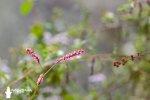
Hello friends! Tonight’s feature image is titled “Smartweed On Panther Mountain” and is available for purchase by the instructions at the bottom of the article.

Smartweed is one of those plants that has negative effects on some people. It’s said that eating large quantities of Smartweed can cause a sensitivity to the sun and some people can get a rash from skin contact with the plant. However, I have enjoyed Pennsylvania Smartweed fresh off the plant without any negative impact.

One of the first forage plants that I decided to try many years ago was Smartweed. It’s a pretty common plant that’s found throughout North America and it’s in almost every state except Utah and Nevada. Polygonum is a large genus of plants in the Buckwheat family and the different types of Smartweed can vary in spiciness. Think of different types of peppers ranging from a very mild bell pepper to the dreaded Carolina Reaper and you’ll get the idea. So with that in mind I should be clear that I’m speaking of Lady’s Thumb and Pennsylvania Smartweed. Both plants have a characteristic dark spot on the leaves ( I’ll try to do a follow-up this spring when they’re nice and fresh and get a good shot of the leaves) but the spot on Lady’s Thumb is more like a smudge where Pennsylvania Smartweed’s spot tends to be a chevron. The plant I have the most of is the Pennsylvania Smartweed. The peppery flavor tends to be stronger in Pennsylvania Smartweed but my experience with it is that the leaf is relatively mild when compared to other spices. If you’ve never tried Smartweed before then I do recommend starting with a very small piece ( about the size of the tip of your pinky finger) until you’re sure that the plant agrees with your palette. The stronger tasting Pennsylvania Smartweed leaves are mostly used as a spice.

Lady’s Thumb leaves are so mild that they can be used as a substitute for spinach in salads. Or, even cooked and served as a pot herb. The pink flowers of both plants are used as an edible garnishment.

At some point those pretty pink flowers turn white. When they do the seeds are ripe and can be collected in a paper bag and dried to be ground as a substitute for black pepper. From what I’ve read that’s the traditional European use for Smartweed. Again, remember that some varieties are more potent than others and the seeds of both Lady’s Thumb and Pennsylvania Smartweed are more spicy than the leaves. To use the seed they’ll need to be freed from the papery husk and rubbing them in your hands works just fine. Allow the seeds and husks to fall on a plate and then gently blow the paper away. Carefully tossing them up while blowing will also help.

The plant is Native to Europe but was brought here by the colonists and quickly became a Native American favorite. It was used medically to treat a variety of issues including arthritis and poison oak rash. ( Again, some people get rash from it so I would test myself before treating poison oak with Smartweed. )

As I mentioned above my plan is do a follow-up this spring when I can get some more images that includes the leaves. Tonight’s feature image was actually a calibration shot from an earlier project and since foraging can be a little bit of a challenge this time of year I decided to use it.

Before I close I’m going to toss out a reminder that if you forage please remember to either forage your own land or gain permission from the landowner and always respect private property.

Hello Friends and thank you for your support of my page. If you have enjoyed the photos or the writings please let me know by commenting and sharing my work on your social media. I also want to invite you to Follow Lloyds Lens Photography on Facebook

If you would like to Follow me on Facebook the web address is

https://www.facebook.com/aviewfromthelens/

If you’re enjoying my blog and don’t want to miss a post then you can sign up for email alerts on my website.

https://lloydslensphotographyllc.com/

Did you know that I also do portraits by appointment? If you’re interested in a portrait session either message me on Facebook or Use the Contact form. The YouTube link below takes you one of my slideshows.

https://youtu.be/FDcrY6w8oY8

Have you checked out the Zazzle Store?

I’m now using Zazzle to fulfil orders. What this means for you is a secure way to place an order, discount codes & a broader product selection! Simplymessage me on Facebookoruse the contact form on my websiteand tell me which image you want and I’ll reply with a direct link to where you can place the order.

Clicking on the photo takes you tohttps://www.zazzle.com/lloydslensphotos?rf=238248269630914251Lastly, all of the photos and writings are my original work unless otherwise specified and are not to be copied or reproduced without expressed written permission from the photographer.

Thank you again for your support of my page!❤

Forage Friday #40 Greenbriers

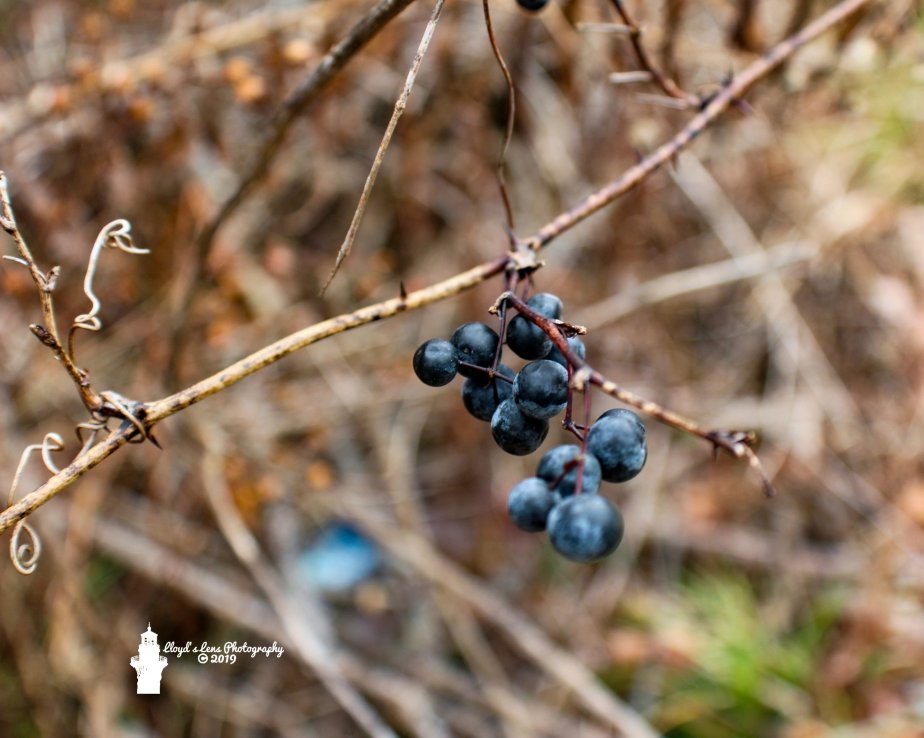
Hello friends! Tonight’s feature image is titled “Greenbrier Berries 122719” and was taken specifically for this article. All of the photos are my original work and are available for purchase by the instructions at the bottom of the article.

Although I chosen to use the cluster of greenbrier berries as tonight’s feature image I wasn’t really able to find a wide variety of references to the food value of the berries themselves. Greenbriers produce edible roots, shoots and leaves and while the berries may not be poison they do contain a large seed and I’m not sure what th e flavor of the berry might be like.

I have never taken the time to sit down and watch the old movie “Calamity Jane” but I understand that’s where the quote “Make mine a sarsaparilla” came from. In the 1800s Charles Elmer Hires made his mark on American culture with Root Beer which was often referred to as “sarsaparilla” but actually didn’t contain any of the plant that gives real sarsaparilla it’s flavor. Instead he used a mixture of birch oil and Sassafras to create his brew. It was a huge success until 1960 when the US Food and Drug Administration banned the sale of Safrole. (The substance that gives Sassafras it’s flavor and is also found in black pepper as well as nutmeg.) However, in other countries the true Sarsaparilla plant which has been used since the 16th century continued to be the soft drink of choice. That plant is one of about 300 species of greenbrier. And that brings me to tonight’s post.

As I researched the article I learned that greenbrier based soft drinks widely available and very popular in other countries. So much so that I’m a little surprised that Americans haven’t been growing smilax ( The greenbrier genus) commercially ourselves.

In the Spring, the soft new growth of the vine is free of thorns. To harvest the new shoots simply locate the uppermost thorn and begin flexing the stem while slowly working your way to the top. When you reach the point where the woody fibers end the tip will naturally break off in your hand. The shoot is tender enough to eat raw right there on the spot. It’s flavorful too. I have enjoyed this myself and it tastes a little like asparagus. It’s also fun to joke with those who don’t forage about being tough enough to chew on briers. I’ve not tried them steamed or boiled but they’re said to be excellent when cooked and buttered.

Next is the leaves. Young leaves like the stem are tender enough to eat raw and go great in a “wild child” salad. They can also be cooked like spinach and served as a pot herb.

But the real harvest is the root crop. Smilax roots are fibrous and those fibers need to come out. It’s a little bit of a process but once you dig up the root it should be peeled like a potato and crushed under water. Allow the starch to settle out in the bottom of the container and gently pour off the water with the floating fibers. The starch on the bottom can be used like flour and can be used immediately or dried and saved for later. This powder is kinda special among starches. By adding a tablespoon of the dry red powder to each cup boiling water you can make a nice jelly. Or by diluting it and chilling it you get the aforementioned soft drinks ( minus the carbonation). I’m guessing that either product will require sweetening. The starch can also be added to soups and stews as a thickening agent.

I have not been able to confirm that greenbrier root contains the Safrole like nutmeg, back pepper and the banned sassafras but if not then it just a wild forage plant but a potential commercial crop for niche markets.

The most popular type of Sarsaparilla is the Jamaican variety but the best variety in North America is the Bull Brier. From my experience it has the fewest thorns and the best flavor.

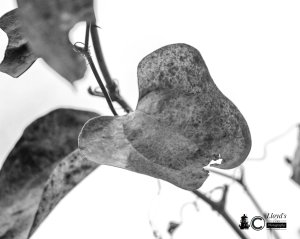
The late Fall leaves of a Bull Brier showing the different shapes of the leaves.

Hello Friends and thank you for your support of my page. If you have enjoyed the photos or the writings please let me know by commenting and sharing my work on your social media. I also want to invite you to Follow Lloyds Lens Photography on Facebook

If you would like to Follow me on Facebook the web address is

https://www.facebook.com/aviewfromthelens/

If you’re enjoying my blog and don’t want to miss a post then you can sign up for email alerts on my website.

https://lloydslensphotographyllc.com/

Did you know that I also do portraits by appointment? If you’re interested in a portrait session either message me on Facebook or Use the Contact form. The YouTube link below takes you one of my slideshows.

https://youtu.be/FDcrY6w8oY8

Have you checked out the Zazzle Store?

I’m now using Zazzle to fulfil orders. What this means for you is a secure way to place an order, discount codes & a broader product selection! Simplymessage me on Facebookoruse the contact form on my websiteand tell me which image you want and I’ll reply with a direct link to where you can place the order.

Clicking on the photo takes you tohttps://www.zazzle.com/lloydslensphotos?rf=238248269630914251Lastly, all of the photos and writings are my original work unless otherwise specified and are not to be copied or reproduced without expressed written permission from the photographer.

Thank you again for your support of my page!

Forage Friday #39 Virginia Creeper ( by special request)

Hello friends! Tonight’s feature image is titled “The Creeper On The Stairs” and is available for purchase by the instructions at the bottom of the article.

Before we dig into tonight’s Forage Friday post I have to address an issue that was raised by a comment on one of the Facebook groups I share with. The commenter said that she had trouble with trespassers “foraging” on her property. And that she had to involve the police because of the damage done to the plants she had reserved for her own use. So, in no way, shape or form should anyone enter private property without permission from the landowner.

Today I received an email from Annette who wanted to ask about Virginia Creeper. Specifically, if it could be used to make rope. The answer is yes. But, there are better options. Virginia Creeper is a strong flexible vine native to the Appalachian Mountains. It’s often mistaken for poison ivy but Virginia Creeper has five leaves per cluster where poison ivy only has three leaves per cluster. Both vines can have what’s called prop roots that hold them to the sides of structures and trees so without the leaves it can be hard to tell the difference. Especially with young vines that are the size one might use to lash poles together for a shelter. One of the identification factors for Virginia Creeper is that it’s tendrils branch out and end in little disks.

I have never had an allergic reaction to Virginia Creeper but in research for this article I learned that some people do get a rash but it’s mild.

As cordage the use of Virginia Creeper seems to be in baskets. The supple vine is woven between limber twigs and is strong enough to hold a moderate amount of weight.

A better option for cordage might be spruce roots which are both stronger and more flexible but in a lot West Virginia spruce is not as available as Virginia Creeper. Another good option would be young grape vines.

Virginia Creeper is not a type of grape but is a “cousin” of grape. However Virginia Creeper berries are listed as toxic with a list of nasty symptoms of poisoning.

In spite of the warnings of a possible rash Peterson’s Field Guide says that Native Americans used the leaves of Virginia Creeper to treat the rash of poison sumac and that the leaves are used in combination with vinegar to wash wounds. But, this is something that I do not have firsthand knowledge of and therefore I can’t really say if it works.

The most common use for Virginia Creeper is in landscaping. The vine can be planted as a way to provide shade and turns a beautiful velvety red in Fall.

Hello Friends and thank you for your support of my page. If you have enjoyed the photos or the writings please let me know by commenting and sharing my work on your social media. I also want to invite you to Follow Lloyds Lens Photography on Facebook

If you would like to Follow me on Facebook the web address is

https://www.facebook.com/aviewfromthelens/

If you’re enjoying my blog and don’t want to miss a post then you can sign up for email alerts on my website.

https://lloydslensphotographyllc.com/

Did you know that I also do portraits by appointment? If you’re interested in a portrait session either message me on Facebook or Use the Contact form. The YouTube link below takes you one of my slideshows.

Have you checked out the Zazzle Store?

I’m now using Zazzle to fulfil orders. What this means for you is a secure way to place an order, discount codes & a broader product selection! Simplymessage me on Facebookoruse the contact form on my websiteand tell me which image you want and I’ll reply with a direct link to where you can place the order.

Clicking on the photo takes you tohttps://www.zazzle.com/lloydslensphotos?rf=238248269630914251Lastly, all of the photos and writings are my original work unless otherwise specified and are not to be copied or reproduced without expressed written permission from the photographer.

Thank you again for your support of my page!❤