I am a West Virginia native who has always loved photography. I have studied it for many years. I recently turned my hobby into a business. I do event photography, senior and family portraits. I also have several home décor prints and items available for purchase. Some of my photos have been used for book covers. I hope to soon have an on line store at this site.
Hello friends! Tonight’s feature image is titled “The Turning 2019” and is available for purchase by following the instructions at the bottom of the article. The title refers to the fact that these are the first true Fall leaves of 2019.
Don’t let the warm days fool you and take the calendar date with a grain of salt. Summer is over. The Almighty has commissioned a change in the season. I have seen it with my own eyes. I’m speaking of my natural calendar. For me Fall is when the leaves change color. The Yellow Poplar is among the first to change. Even with the long dry spell that we’ve had the leaves turn from a rich green to a cheerful yellow. A lot of people think that the color comes from cool weather but it’s actually in response to the wavelength of the light coming from the sun. Plants are vreally very efficient. The green chlorophyll is only able to use certain wavelengths of light and when those wavelengths are no longer available the chlorophyll dyes and the green goes away. The other colors were always there but they were covered by the green. The yellow color comes from Xanthophyll and the reds from Rodophyll. The tree is still processing sunlight into sugar and will continue to do so until the leaves drop. But the green is no longer needed so there’s no sense in maintaining those cells. Different types of trees have different llevels of the yellow and green pigments and so we get the beautiful mice of colors in the Appalachian Mountains.
At the first sign of changing leaves I start to crave the taste of homemade beef stew that’s been simmering on a woodstove all day. I have already been looking for my favorite oversized flannel shirt and have my boots ready for long walks through open forests. During the summer months the underbrush is likely to be hiding a venomous snake in my area so I get the most use of the trails in cool weather.
The big question this year is will we get to enjoy the Fall colors or will the dry weather drive the forest into an early dormancy. If the tree can’t get enough water to make sugar then it doesn’t need the leaves and shuts down until Spring.
The pop of yellow in this clump of trees does give me hope that we’ll see a beautiful and colorful Fall if it rains soon.
Hello Friends and thank you for your support of my page. If you have enjoyed the photos or the writings please let me know by commenting and sharing my work on your social media. I also want to invite you to Follow Lloyds Lens Photography on Facebook
If you would like to Follow me on Facebook the web address is
Did you know that I also do portraits by appointment? If you’re interested in a portrait session either message me on Facebook or Use the Contact form. The YouTube link below takes you one of my slideshows.
I’m now using Zazzle to fulfil orders. What this means for you is a secure way to place an order, discount codes & a broader product selection! Simplymessage me on Facebookoruse the contact form on my websiteand tell me which image you want and I’ll reply with a direct link to where you can place the order.
Lastly, all of the photos and writings are my original work unless otherwise specified and are not to be copied or reproduced without expressed written permission from the photographer
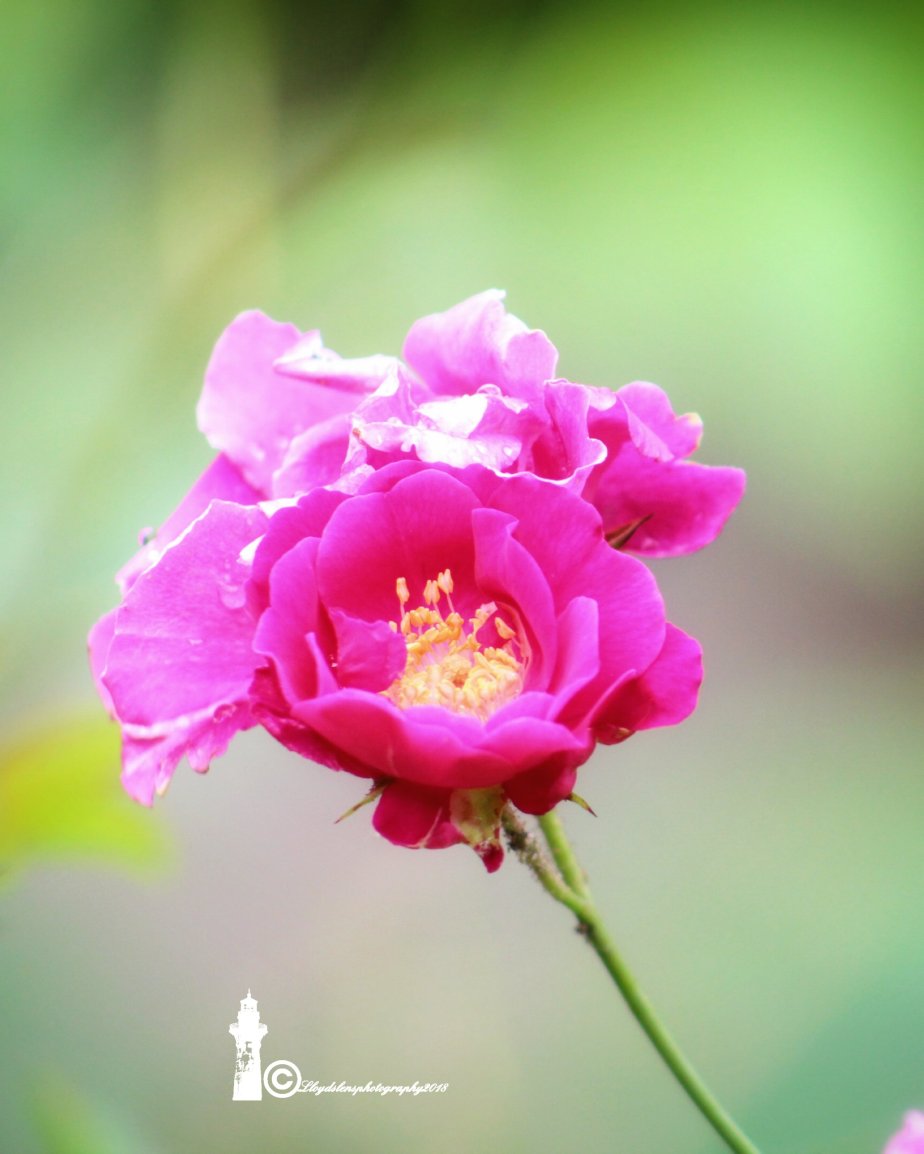
Hello friends! Tonight’s feature image is titled “Pink Roses 52117” and is available for purchase by following the instructions at the bottom of the article.
The grizzled old warrior looked out across the battlefield. The victory was theirs but it was hard won. At the onset of the fighting a hail of arrows fell in waves. His men’s armor was strong but there had been casualties. He felt a pinch in the side of his neck. The head of a broken arrow was caught in the chainmail. The mail had saved his life but the head of the arrow penetrated enough to cut him. A priest came to his side and removed the armor. Imeadiatly the priest produced an amber bottle of rose water to clense the wound. Without the vital liquid, the arrow would still be able to do it’s job many days from now.
One of the most common plants to be found in almost all climates is the rose. We tend to think of the rose as a symbol of love and the saver if absent minded husbands but there’s so much more. The short fiction above highlights one of the oldest uses for roses. A simple unsweetened tea made from rose pedals was once the preferred antiseptics. Rose water doesn’t just smell pretty. It’s rich in vitamin C which not only kills bacteria but also feeds the tissue as it heals. The sweet scent covers the smell of an open wound and therefore may help prevent insects from bothering it. But it gets better. There are more recipes that call for roses than I have room for in a single post.
One of the first herbal manuals that I ever purchased is Reader’s Digest “Herbs” ( ISB 0-89577-355-4) which suggests that the pedals can be used in salads, pies, syrups, flavored vinegar, sorbets and sweets. And the MacMillan Treasury Of Herbs ( ISBN 0-02-513470-1) has a recipe for rose pedal jam. It’s not surprising to me that there would be a lot of culinary uses for the flowers since in most cases the fruit is rather small and packed with seeds. However, the hips are also used in several of the teas.
The hips of Multiflora Rose are small but can be used to make a tea that’s rich in vitamin C.
Domestic Rose in all of it’s wonderful varieties is the most popular but it’s also a needy plant. One that I’ve struggled to keep alive and healthy. But Multiflora Rose is one that was brought in to be a “living fence” in the 1860s and quickly became invasive. It’s just as fragrant but the hips are small. Multiflora Rose is favored by a lot of songbirds and they seem to spread it well. Fortunately, it can be used in most of the same ways that the domestic roses can it just needs less encouragement to grow.
The simple white bloom of Multiflora Rose can be used in the same way domestic roses can.
While Multiflora Rose is considered to be a pest at least it’s a pest that has some virtue.
The best hips are said to come from the Dog Rose. Like Multiflora Rose, Dog Rose has a simple bloom but a much larger hip. I also understand that it’s a much lower maintenance rose than domestic roses.
If you’re curious about using roses the ISBN numbers are posted along with book titles that used as a reference to the article and I’m presuming that the internet has ton of Victorian treats to explore. In full confsession I have not gotten around to trying any more than just a nibble of Multiflora Rose Hips so it’s one of those plants that I’m waiting to try this fall. I’ll post a follow-up article to let you know how it turned out.
Hello Friends and thank you for your support of my page. If you have enjoyed the photos or the writings please let me know by commenting and sharing my work on your social media. I also want to invite you to Follow Lloyds Lens Photography on Facebook
If you would like to Follow me on Facebook the web address is
Did you know that I also do portraits by appointment? If you’re interested in a portrait session either message me on Facebook or Use the Contact form. The YouTube link below takes you one of my slideshows.
I’m now using Zazzle to fulfil orders. What this means for you is a secure way to place an order, discount codes & a broader product selection! Simplymessage me on Facebookoruse the contact form on my websiteand tell me which image you want and I’ll reply with a direct link to where you can place the order.
Lastly, all of the photos and writings are my original work unless otherwise specified and are not to be copied or reproduced without expressed written permission from the photographer
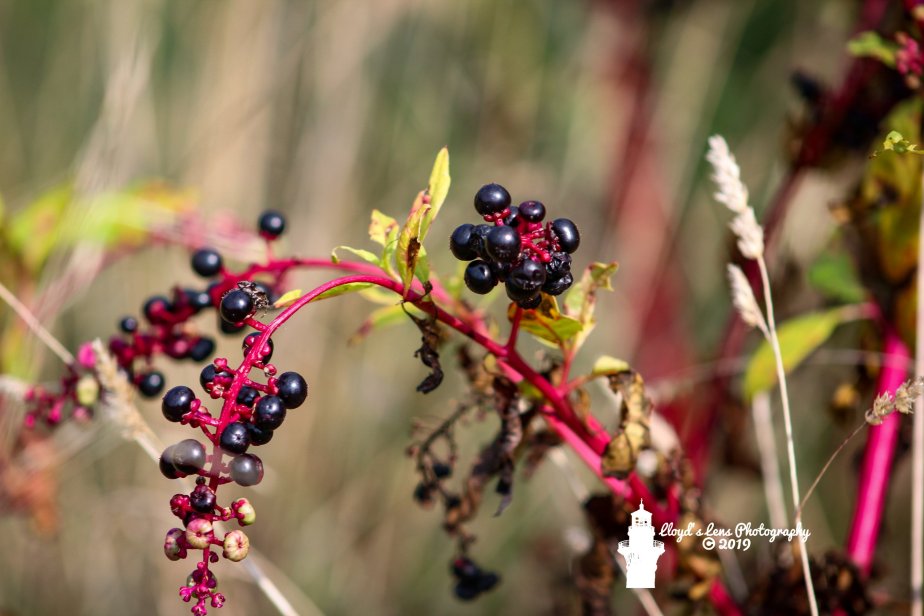
Hello friends! Tonight’s feature image is titled “Pokeweed Berries 81419”. The image was taken specifically for this article. Unless stated otherwise all photos are my original work and are available as prints by following the instructions at the bottom of the article.
My Appalachian ancestors were resourceful people as was the case with most early settlers. They had to fabricate almost everything they had. Iincluding ink.
For those who are unfamiliar with the plant in tonight’s feature image it’s Pokeweed. Sometimes called Poke salet or just plain old Poke. It’s a wild edible plant that requires a little processing in order to safely consume and never when the stems are red. One day we’ll do a Forage Friday post about Poke and the hows as well as the whens of eating Poke greens but for now treat it like poison. Tonight I want to focus on the berries. As far as I know the berries are always poison. What they are good for is making ink.
I have grown up with the knowledge that the U.S. Constitution was written in poke berry ink. However, that’s just an urban legend. ( It’s not written on hemp either. It’s Parchment which is an animal product. ) While I’m a little disappointed to find out that such an important document wasn’t created with the aid of a native plant Poke berry ink was a more common medium back at the time. It was used for less important writing. During the civil war soldiers used it to write letters to home and I’m sure that it was used for anything that didn’t require a permanent record. That’s because the ink just doesn’t last well. It reacts to U.V. light and soon turns brown. Eventually it fades away so much that it can’t be read.
Before I started writing I did a quick Google and found a few facts about poke berry ink. Using the raw unprocessed juice doesn’t work. Apparently the juice alone rots quickly and the message is lost. The prefered method is by fermenting the ink. The alcohol from the fermentation process acts as a preservative. One person said that you can use vinegar to mix up poke berry ink and there seems to be plenty of recipes online.
My personal experience with poke berries as ink just may have been the original paintball game. I remember that we used to make slingshots with rubber bands and use the berries as ammo. The purplish red stain left little doubt as to who was hit.
I hope to do an actual post on poke greens in the Spring but for now the berries are what’s in season. Those who homeschool might step out and collect a jar full of them and look up some of the ink recipes for a historical expiriment.
Hello Friends and thank you for your support of my page. If you have enjoyed the photos or the writings please let me know by commenting and sharing my work on your social media. I also want to invite you to Follow Lloyds Lens Photography on Facebook
If you would like to Follow me on Facebook the web address is
Did you know that I also do portraits by appointment? If you’re interested in a portrait session either message me on Facebook or Use the Contact form. The YouTube link below takes you one of my slideshows.
I’m now using Zazzle to fulfil orders. What this means for you is a secure way to place an order, discount codes & a broader product selection! Simplymessage me on Facebookoruse the contact form on my websiteand tell me which image you want and I’ll reply with a direct link to where you can place the order.
Lastly, all of the photos and writings are my original work unless otherwise specified and are not to be copied or reproduced without expressed written permission from the photographer
Hello friends! Tonight’s feature image is titled “A Panther’s View Of The Gauley River” and is available for purchase by following the instructions at the bottom of the article.
The road across Panther Mountain in Nicholas County West Virginia is rough and gnarly. My big blue truck is built for off road travel but the road up the mountain is quite narrow. In some places the tires on one side are only a couple of feet from dropping off into the valley below. But, those spots offer spectacular views of the mountains that I call home. Most people only travel this road on ATVs but I have yet to acquire one. Meeting up with another 4 wheel drive on this road means that someone has carefully back up to a spot that’s wide enough to let the other guy by.
I have often wondered why my ancestors would choose to settle in a place where the mountain’s shadow means short days and dark winters. Where the rocky terrain means poor agriculture and travel beyond the property line was a challenge. But then I look out of window to see something like this and it all makes sense.
We call them our mountains but truth be told the mountains don’t belong to us. We belong to the mountains. Or with them if you prefer.
I have high hopes the rains will come in time to save us from a brown fall. If it does then I think that I’ll travel back to this spot and try to capture the fall colors.
Hello Friends and thank you for your support of my page. If you have enjoyed the photos or the writings please let me know by commenting and sharing my work on your social media. I also want to invite you to Follow Lloyds Lens Photography on Facebook
If you would like to Follow me on Facebook the web address is
Did you know that I also do portraits by appointment? If you’re interested in a portrait session either message me on Facebook or Use the Contact form. The YouTube link below takes you one of my slideshows.
I’m now using Zazzle to fulfil orders. What this means for you is a secure way to place an order, discount codes & a broader product selection! Simplymessage me on Facebookoruse the contact form on my websiteand tell me which image you want and I’ll reply with a direct link to where you can place the order.
Lastly, all of the photos and writings are my original work unless otherwise specified and are not to be copied or reproduced without expressed written permission from the photographer
Hello friends! Tonight’s feature image is titled “Purification Of Molasses”. Typically this is where I state that the image us available for purchase however tonight’s post is a little different. The photos in this post are not for sale.
The alarm on my phone insistently assaults my ears as I rub the sleep from my eyes. I haven’t had to get out of bed this early on a Saturday for a long time. Even my little buddy Scout raises his head slowly and opens one eye as if to say, “Dude, it’s still dark outside.” But I’m excited to get out of house even if it is a rough start. Today I get to do something that I have not been a part of for over thirty years. Today my cousins are making molasses.
My big blue truck rolls down the long gravel driveway. I neglected to ask what part of the farm they’ll be set up on but it wasn’t long until I heard the familiar rumble of the tractor’s diesel engine. Daniel and his son Matthew have been already been working for quite a while.
Daniel and Matthew working the cane mill.
Daniel’s father Wesley was a master farmer in my opinion. As I questioned Matthew about his renewed interest in making molasses I learned that my great uncle Wesley used to make 300 gallons of molasses per year and one year he produced 500 hundred gallons of the sweet treat. To put that in perspective, it takes about 10 gallons of Sorghum juice to make a gallon of molasses. Which means that he had to process about 3K gallons of raw product.
In real life Daniel makes it look easy. That’s what I lifetime of experience does for you.
Matthew says that his interest in molasses was rekindled by stories of his grandmother’s molasses cookies. I remember those cookies. Every year at family reunion and again at Christmas. As I read Matthew’s answers to my questions I can smell and taste those sweet spices from my own childhood memories. Nothing from a factory could ever compare to food made with ingredients that was raised and processed on your own land.
A tractor load of Sorghum going through the mill.
Matthew became intrigued the process because his dad (Daniel) started raising sorghum to help suppliment the crop of another farm in the area. If the sorghum wasn’t needed then it could be fodder for the animals they raise. Even when they strip the leaves from the cane they’re fed to animals. Nothing goes to waste. Matthew and I both have concerns about how well most people in the world would survive if they had to go back to living off the land. It’s one thing to raise a few veggies in the garden but it’s another thing entirely to provide proper nutrition for your whole family plus the animals.
Daniel works steady feeding the mill and it wasn’t long before the wagon was empty. But we’re far from done.
Our ancestors were able to provide everything for themselves but they didn’t do it all by themselves. The comunity was extended family and no one branch could provide it all. One branch might specialize in sorghum, another might raise corn and still others would be good making clothes or welding equipment. The cane mill was built in a factory with cast iron parts but gear system that allows the tractor to power it was custom made.
A closeup shot of the linkage between the tractor and the mill. The running gears are mesmerizing to watch.
While they were working they told me that one molasses maker uses a similar mill but it’s powered by a horse walking in circles.
I asked Matthew if making the molasses made him feel closer to our Appalachian heritage. He says yes that it somewhat does.
The mill has only been set up for a couple of weeks but the father and son team has been working together for 40 plus years. They barely need to speak in order to coordinate the efforts. They’ve got most factories that worked in far outpaced in efficiency.
Sorghum juice flowing from the mill.
As the cane is crushed the juice drips from the 4 drums inside and runs down the spout into a large tub.
The first stage of filtering
The juice is first filtered through a burlap cloth. This takes out large pieces of crushed cane and catches most of the foam.
The fine pulp must also be removed.
The next filter is a fine mesh bag that takes out small pieces of pulp and more foam.
The evaporation pan has to be scrubbed before you can start cooking
The evaporation pan is an outside piece of equipment and has to kept with a coat of vegetable oil to prevent rust. The oil is scrubbed off before the cooking process can start.
Daniel lights the first fire to heat the water for scrubbing.
The water is heated up for scrubbing process.
Adding juice to the evaporation pan
Most people think that the raw juice is clear for some reason. The finished product is brown but the raw juice is green. There are still impurities in the mix that has to be removed.
A second fire is lit to evaporate the juice.
The second fire is lit. Fire is called a purifying element. The juice will be slowly simmered over the next several hours. This not only drives off the water but it also causes impurities to come out of suspension.
A handmade skimmer
The impurities form a film on the surface and handmade skimmers are used to remove it.
“If you don’t get all the green out it will taste green.”
“If you don’t get all the green out it will taste green.”
The skimming is labor intensive but it’s a necessary part of the process. Daniel never takes his eyes off of the evaporation pan as the juice simmers. His face is a portrait of concentration and discipline as he works. I made a comment about how important it is to keep the skimmer moving. He said that if you don’t get all the green out it will taste green. Earlier, another camera man was filming for local access T.V. and dipped a finger into some of residual juice that didn’t drain out of the first catch basin. He said that the unprocessed juice tasted like peas only sweet.
I wasn’t able to stay for the final product this time but I’ve eaten molasses that Daniel and his father made when I was a kid. It’s probably the best quality food around and certainly better than the corporate version found in the big box stores.
What’s more is knowing that Matthew is preserving a taste of my childhood and an important part of our Appalachian heritage.
Hello Friends and thank you for your support of my page. If you have enjoyed the photos or the writings please let me know by commenting and sharing my work on your social media. I also want to invite you to Follow Lloyds Lens Photography on Facebook
If you would like to Follow me on Facebook the web address is
Did you know that I also do portraits by appointment? If you’re interested in a portrait session either message me on Facebook or Use the Contact form. The YouTube link below takes you one of my slideshows.
I’m now using Zazzle to fulfil orders. What this means for you is a secure way to place an order, discount codes & a broader product selection! Simplymessage me on Facebookoruse the contact form on my websiteand tell me which image you want and I’ll reply with a direct link to where you can place the order.
Lastly, all of the photos and writings are my original work unless otherwise specified and are not to be copied or reproduced without expressed written permission from the photographer