Forage Friday #48 Mint

Hello friends! Tonight’s feature image is titled “Rest & Healing” and is available for purchase by the instructions at the bottom of the article.

There’s not many life experiences that I enjoy more than the smell of the wild peppermint on a humid July afternoon. I enjoy it so much that I combed through weeds along my creek and collected the peppermint to transplant to the edges of my garden. It wasn’t long before the peppermint just went crazy and took over the whole vegetable bed. Then it outpaced the grass in that section of the yard. And I loved every bit of it! I carefully kept the mint out of vegetables by removing the whole plant and keeping the stems and leaves to cure by hanging upside down in a cool dark place. We have a tendency to say that we “dry” the leaves and roots that we use for teas but when it’s done right it’s more of a curing process that preserves the oils in the plant. When you search the internet for ways to cure fresh mint leaves most of them involve heat. It’s suggested to put them in oven or even the microwave but I’ve never really trusted this. The mint oil is volatile and dissipates when heated. Drying the leaves with heat will make your house smell good but that smell is the very oils that you re trying to preserve escaping into the atmosphere. A slower, cooler process means that the leaves will retain more of the oils. How long to hang them really depends on the environment. In humid air it’s going to take a little longer than if the weather is dry. In general, a couple of days should be good. Just keep an eye on them and when they have the texture and feel of a good tea they’re ready. They should be dry enough to prevent mold. You can place the cured leaves in a clean mason jar but don’t screw the lid down too tight. The jar can still have moisture in it and set up conditions for mold to grow.

The reasons for foraging any wild mint should be pretty obvious. Mints are big part of tea blends and candies but it’s also a big part some high end Gourmet food. I like my meals pretty simple but I’ve seen different mints incorporated in salads, pastas, fish and of course mint and lamb is a classic combination.

Medical uses are also pretty well known. Mints were and still are one of the mainstays of herbalism. Menthol is known to have antiseptic properties and mint was used to wash wounds to prevent infections. In researching for this article I even came across a commercial product that uses peppermint oil as a base for sterilizing textiles.

As a digestive aid peppermint is said to relax the digestive muscles and provide relief from dyspepsia.

Mints are also used in balms which was the inspiration for the title of tonight’s feature image. I couldn’t help but think about the need for healing when I noticed the condition of the little butterfly’s wings. I had to wonder if he landed on the mints to sooth his tattered wings.

Peppermint and mints in general are said to be antiviral and specifically the milder herpes viruses that cause cold sores.

One of the things that I like to use the wild mints for is pest control. When outdoors in places where I’m likely to encounter mosquitoes and gnats I rub down with a few mint leaves to keep them at bay. A good trick that I picked up from Tom Brown Jr’s books is to stuff a few mint leaves into the trim on a hat and that reduces the number of gnats in my face. A simple spray of lemon scented herbs such as Spicebush leaves and mints can be misted around camps and picnic areas. Make a tincture of the herbs by soaking them in vodka or grain alcohol for several days. Then I’d mix it 50/50 with water and place it in misting bottle and refresh as needed.

I suppose that a whole series could be done on mints and we may revisit them at a later date.

My Forage Friday posts are really just to get people interested enough to look up what these plants can be used for and to share ideas so please remember to do further research and never rely on a single source for information. I’m not a medical professional so any of the medicinal uses stated here are just anecdotal.

Hey Friends! Just a quick reminder that graduation will be here before you know it. Lloyds Lens Photography is available for portraits!!

This slideshow requires JavaScript.

To book me simply reach out using the Contact Page and we’ll set a date. If you’re within a 50 mile radius of Summersville West Virginia all travel fees are waived.

Hello Friends and thank you for your support of my page. If you have enjoyed the photos or the writings please let me know by commenting and sharing my work on your social media. I also want to invite you to Follow Lloyds Lens Photography on Facebook

If you would like to Follow me on Facebook the web address is

https://www.facebook.com/aviewfromthelens/

If you’re enjoying my blog and don’t want to miss a post then you can sign up for email alerts on my website.

https://lloydslensphotographyllc.com/

Did you know that I also do portraits by appointment? If you’re interested in a portrait session either message me on Facebook or Use the Contact form. The YouTube link below takes you one of my slideshows.

https://youtu.be/FDcrY6w8oY8

Have you checked out the Zazzle Store?

I’m now using Zazzle to fulfil orders. What this means for you is a secure way to place an order, discount codes & a broader product selection! Simplymessage me on Facebookoruse the contact form on my websiteand tell me which image you want and I’ll reply with a direct link to where you can place the order.

Clicking on the photo takes you tohttps://www.zazzle.com/lloydslensphotos?rf=238248269630914251

Lastly, all of the photos and writings are my original work unless otherwise specified and are not to be copied or reproduced without expressed written permission from the photographer.

Thank you again for your support of my page!❤

Forage Friday #47 Horse Hoof Fungus (Amadou)

Hello friends! Tonight’s feature image is titled “Amadou 81019” and was taken specifically for this article. All of the photos are my original work and are available for purchase by the instructions at the bottom of the article.

The predawn sky was overcast and the mists had drenched the landscape for days. The young hunter knew to stay hidden in the thickest part of the Spruce seedlings growing on the edge of the cliff. Even in the dark he knew to keep still. His prey could detect the slightest sound. As the dark sky began to turn red he calmly notched his dart into the hook of his Atlatl and prepared to cast it into the valley below. Peering through the evergreen boughs revealed a huge Mastodon on the edge of water. Then he heard the signal to attack from the hunt-chief and a swarm of stone tipped darts flew to their mark bringing the behemoth to the ground. The whole tribe gathered at the kill to gather their share of the meat and to prepare a feast right there on the spot. The young hunter watched as his grandfather used a stone axe to chop a growth from one of the nearby trees and split it open. A chip of flint was then used to scrape our some of spongy flesh from the inside of the mushroom. The old man buffed the material and placed it on a slab of bark and struck out few sparks into the small pile which soon began to smolder. The spongy material was Amadou and it held the magic of fire.

Tonight’s Forage Friday post is not an edible plant but it is one that has a multitude of uses that makes it worth exploring. The mushrooms in the Fomes family produce a substance called Amadou. From the dawn of history it’s been used as a fire starter and was even found in the possibles kit of Otzi the ice man recovered from the Italian Alps. The mushrooms are said to have a horrid flavor so they’re not considered to be edible but if you like to eat a warm meal they are great for getting a fire going.

That may be how mankind’s relationship started with Amadou but that’s not where it ended. As it turns out Amadou is also a wonderful textile. At some point in history people from the region of Transylvania figured out that if you soak Amadou in the ashes of birch wood it can be pounded and stretched into sheets that have the soft qualities of felt but the look of leather. The sheets are then made into purses, pouches belts and especially hats. All of these items are decorated with ornaments that are made by pressing the Amadou into carved wooden molds and steaming them. One of demonstration videos on YouTube says that an old-fashioned steam iron is the best tool for that job.

Amadou is highly absorbent and was once used like gauze in dental work and as bandages. The absorbent quality also made it popular with fly fishing for drying flies.

For next part of the article I need to be clear about some common confusion. The most abundant source of Amadou is the horse hoof fungus which is also known as false tinder fungus and should not be confused with Chaga/true tinder fungus. Chaga is a wonderful medicinal fungus that grows on dying birch trees that I’ve been told is a beautifully tasting tea. Horse Hoof Fungus may hold a medical use but not for humans. Expiriments have shown that honeybees that feed on the sugary resin that collects on the underside of the mushroom have fewer incidents of a wing deformation that is caused by a virus. To the best of my knowledge no testing gas been done to see if any of the extracts are effective for humans in any way so until that’s confirmed this one is only for the bees.

Here in Appalachia the horse hoof fungus is part of a traditional art. If you can locate one that’s young and still growing you can make an engraving on the underside and the mushroom will grow into the carving and it also holds paint very well making it a great canvas.

Finally, you can sharpen your knife with the underside of mushroom by using it like a strop. When done correctly there’s a squeak.

I hope that you have enjoyed tonight’s Forage Friday post. If so, let me know in the comments!

Hey Friends! Just a quick reminder that graduation will be here before you know it. Lloyds Lens Photography is available for portraits!!

This slideshow requires JavaScript.


To book me simply reach out using the Contact Page and we’ll set a date. If you’re within a 50 mile radius of Summersville West Virginia all travel fees are waived.

Hello Friends and thank you for your support of my page. If you have enjoyed the photos or the writings please let me know by commenting and sharing my work on your social media. I also want to invite you to Follow Lloyds Lens Photography on Facebook

If you would like to Follow me on Facebook the web address is

https://www.facebook.com/aviewfromthelens/

If you’re enjoying my blog and don’t want to miss a post then you can sign up for email alerts on my website.

https://lloydslensphotographyllc.com/

Did you know that I also do portraits by appointment? If you’re interested in a portrait session either message me on Facebook or Use the Contact form. The YouTube link below takes you one of my slideshows.

https://youtu.be/FDcrY6w8oY8

Have you checked out the Zazzle Store?

I’m now using Zazzle to fulfil orders. What this means for you is a secure way to place an order, discount codes & a broader product selection! Simplymessage me on Facebookoruse the contact form on my websiteand tell me which image you want and I’ll reply with a direct link to where you can place the order.

Clicking on the photo takes you tohttps://www.zazzle.com/lloydslensphotos?rf=238248269630914251

Lastly, all of the photos and writings are my original work unless otherwise specified and are not to be copied or reproduced without expressed written permission from the photographer.

Thank you again for your support of my page!❤
Forage Friday #46 Dryad Saddle

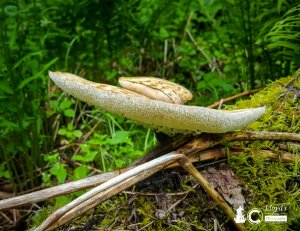
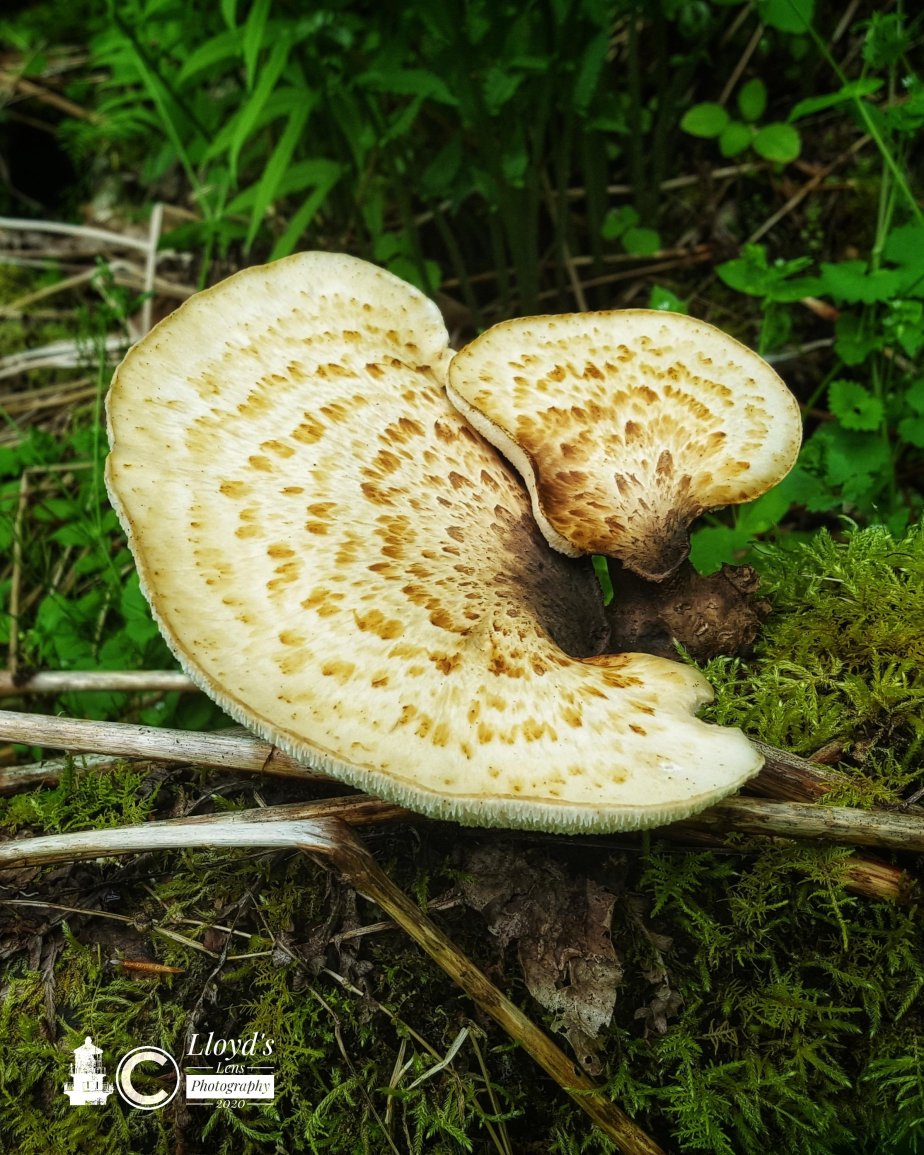
Hello friends! Tonight’s feature image is titled “Dryad Saddle 5420a” and is available for purchase by the instructions at the bottom of the article.

Never eat any wild plants or fungus unless you are positive about the identification.

The Spring rains of 2019 were slowly coming to and and I decided to take a tour of my property and survey what had popped up. Right in my back door I found a fungus that I really had not paid much attention to in the past. The dark scales growing in concentric rings was what first caught my attention. Now, I must admit that fungus is a little bit of a weak spot in my knowledge and experience. It’s just not something that I looked into much. My forestry classes were centered on management of the timber for its lumber value and the only thing that we were rewired to learn was how to either prevent fungal infections in the lumber or how to treat them once they were found. Most instructors simply presumed that the students who grew up in Appalachia learned mushroom hunting from their families. My family just didn’t do a lot of foraging and so there was a gap in my experiences. I knew that there was a fungus called Dryad Saddle but I didn’t really know that it was good for anything beyond composting fallen trees in the woods.

But there it was proudly standing out from a storm thrown log at the edge of my yard.

Image titled Dryad Saddle 5420b

By early May the main fruit body ( mushroom ) was at least 10 inches wide. Now that I’ve had a little help from Nicole Sauce and her Living Free In Tennessee podcast I’ve learned what the fungus is ( Nicole provided confirmation of the ID via a Facebook comment last year) and a little more about how to use it and I’m looking forward to finding it again so I can try it for the first time.

Okay, for starters the mushroom in tonight’s pictures is way too mature for good eating. Once polypores get larger than about 3 inches they’re way too tough to eat. So I decided to leave it to develop and spread it’s spore into the surrounding fallen logs. Running my hand over the mushroom confirmed that it had indeed turned leathery.

Image Titled Dryad Saddle 5420c

After touching the Dryad Saddle my hand smelled a little like cucumbers and watermelon rind which is one of the ways to confirm the identification. I did learn however that in this stage I could have used it to make broth for a soup. I would have probably needed to chop it with an axe because the outside of mushroom was like touching boot leather. All of the processes that I read describe removing pieces due the toughness. The perfect size for cooking is said to be about the size of the palms of your hand. The smaller mushroom growing from the base of the Dryad Saddle may have been about right in retrospect.

Image Titled Dryad Saddle 5420d

Another identification characteristic is the droplets of honeydew that form on the gills on the underside of the mushroom. I didn’t try a taste but judging by the amount of insects I found under this one I’m guessing that it’s sweet. And that’s another thing to be mindful of with a larger specimen of Dryad Saddle as well as other mushrooms is that insects absolutely love them and a larger specimen means it’s probably going to have bugs.

Assuming that the Dryad Saddle grows back this Spring or that some of its spawn finds a foothold I’ll be trying it for the first time. I’m kinda anxious to have this new experience so if anyone reading this article has any tips I’d love to hear them. Just drop a comment below! 😊

Hey Friends! Just a quick reminder that graduation will be here before you know it. Lloyds Lens Photography is available for portraits!!

This slideshow requires JavaScript.


To book me simply reach out using the Contact Page and we’ll set a date. If you’re within a 50 mile radius of Summersville West Virginia all travel fees are waived.

Hello Friends and thank you for your support of my page. If you have enjoyed the photos or the writings please let me know by commenting and sharing my work on your social media. I also want to invite you to Follow Lloyds Lens Photography on Facebook

If you would like to Follow me on Facebook the web address is

https://www.facebook.com/aviewfromthelens/

If you’re enjoying my blog and don’t want to miss a post then you can sign up for email alerts on my website.

https://lloydslensphotographyllc.com/

Did you know that I also do portraits by appointment? If you’re interested in a portrait session either message me on Facebook or Use the Contact form. The YouTube link below takes you one of my slideshows.

https://youtu.be/FDcrY6w8oY8

Have you checked out the Zazzle Store?

I’m now using Zazzle to fulfil orders. What this means for you is a secure way to place an order, discount codes & a broader product selection! Simplymessage me on Facebookoruse the contact form on my websiteand tell me which image you want and I’ll reply with a direct link to where you can place the order.

Clicking on the photo takes you tohttps://www.zazzle.com/lloydslensphotos?rf=238248269630914251Lastly, all of the photos and writings are my original work unless otherwise specified and are not to be copied or reproduced without expressed written permission from the photographer.

Thank you again for your support of my page!❤
Forage Friday #45 Moss

Hello friends! Tonight’s feature image was taken specifically for this article as were all the photos in the post. All of the photos are my original work and are available for purchase by the instructions at the bottom of the article.

Last night I mentioned that the moss was starting to show a bright green of new growth. And that was a little bit of a foreshadowing of tonight’s Forage Friday post.

While not really thought of as a wild edible plant moss is considered to be a medicinal herb.

Some of my first reading on medicinal herbs came from Tom Brown Jr is survival books. He mentions that Stalking Wolf ( his Apache teacher) taught him to bandage wounds with sphagnum Moss. I was pretty intrigued with the idea that A clump of “dirty old moss” could be applied to a wound as a sterile dressing. But it is a historical fact that simple moss has been used to heal wounds since the caveman days. Moss was a major resource for wounded soldiers in World War I and is credited with saving “thousands” of lives. The Cotton had been allocated for uniforms and explosives ( nitrocellulose is made with cotton ) leading a shortage of cotton bandages. So the go to became viles of dried sphagnum moss. The secret it seems, was in the low PH factor of the moss making it impossible for pathogenic bacteria to flourish in the wound. ( I have found conflicting information about the PH of different types of moss. Some sources say that Sphagnum is neutral PH and peat is acidic. I have not taken the time to test this out for myself)

Further reading over the years has revealed that sphagnum was also used for diapers and feminine napkins with the same effect of limiting bacterial growth.

Image Titled “Star Shaped Sphagnum Moss 2120”

There are 12,000 different species of moss! But generally we think about either Sphagnum or Peat. There’s a granite moss in North America that’s red instead of green and it doesn’t seem to mentioned in the medicinal context.

Sphagnum is also said to help a sore throat and again it is probably due to the antimicrobial properties. In fact peat moss has been known to produce mummies in the lands of Celts and we occasionally hear that an anthropologist has been called in to deal with a body that was discovered in a bog.

Image Titled “Moss In Bloom” due to the sporophyte structures.

In the early Spring moss goes into spore and takes on the look of an alien jungle from a 1950s black and white science fiction movie. I always thought that it reminded me of a tiny alien jungle. When I was a kid I would look at the moss and imagine that crew of the Enterprise wading through those funny shaped pods.

Living walls have become popular. While not as effective as a tree, moss along with algae and lichens absorb 14 billion tons of carbon and fix 50 million tons of nitrogen per year. So in urban areas where a person might have nowhere to plant a tree the living wall fills the niche. The simple way this is being done is from mix buttermilk, moss and water retention gel in a blender and paint it on an outside wall. I would suggest that you make it shady spot since the moss doesn’t do well in direct sunlight.

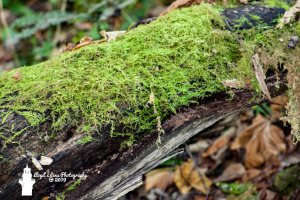
Image Titled “Finding North”.

With the moss preferring to be in the shade and old saying is that it point a North. Well, yes and no. Moss likes shade and the shadiest side of a tree is going to be on the north side of the tree. The truth is that moss can grow on the south side of a tree if it’s shaded enough so the old trick is best used by sampling a number of trees and going with the average and even then it only going to give you a general idea of North.

Finally, the last resource that moss can provide is as a cash crop. In the final image below is only about 3 years worth of growth of moss on my property. When I was housebreaking my pup I leaned that I could train him to go to a large plastic tray like a cat would go to a litter box if I filled the tray with moss. I have since replaced the moss with sawdust for easy clean-up but the point is that moss is a renewable resource and Now that I know that it can be propagated using the buttermilk paint techniques I can seed it in places where I have harvested for a quicker turnaround time. As a child, I had neighbors who would collect and bale dried moss to sell to a buyer for use in potting soil mixes. They never made a living from it but the moss along with other herbs gathered in the forest provided a little extra money for Christmas funds, vacation or just to splurge on the latest desire. What they accomplished by searching the mountains could conceivably be done by seeding the moss in a designated area that’s a little easier for harvest. One might even use the idea to create ready made terrariums for decor.

The Moss I harvested just a few years ago it’s almost ready to harvest again.

Moss in general is a commonly overlooked resource that provides a variety of benefits and I’m certain that I’ve left out a lot but perhaps you have some knowledge that you’d like to share in the comments.

Hello Friends and thank you for your support of my page. If you have enjoyed the photos or the writings please let me know by commenting and sharing my work on your social media. I also want to invite you to Follow Lloyds Lens Photography on Facebook

If you would like to Follow me on Facebook the web address is

https://www.facebook.com/aviewfromthelens/

If you’re enjoying my blog and don’t want to miss a post then you can sign up for email alerts on my website.

https://lloydslensphotographyllc.com/

Did you know that I also do portraits by appointment? If you’re interested in a portrait session either message me on Facebook or Use the Contact form. The YouTube link below takes you one of my slideshows.

https://youtu.be/FDcrY6w8oY8

Have you checked out the Zazzle Store?

I’m now using Zazzle to fulfil orders. What this means for you is a secure way to place an order, discount codes & a broader product selection! Simplymessage me on Facebookoruse the contact form on my websiteand tell me which image you want and I’ll reply with a direct link to where you can place the order.

Clicking on the photo takes you tohttps://www.zazzle.com/lloydslensphotos?rf=238248269630914251Lastly, all of the photos and writings are my original work unless otherwise specified and are not to be copied or reproduced without expressed written permission from the photographer.

Thank you again for your support of my page!❤
Forage Friday #43 Wild Garlic

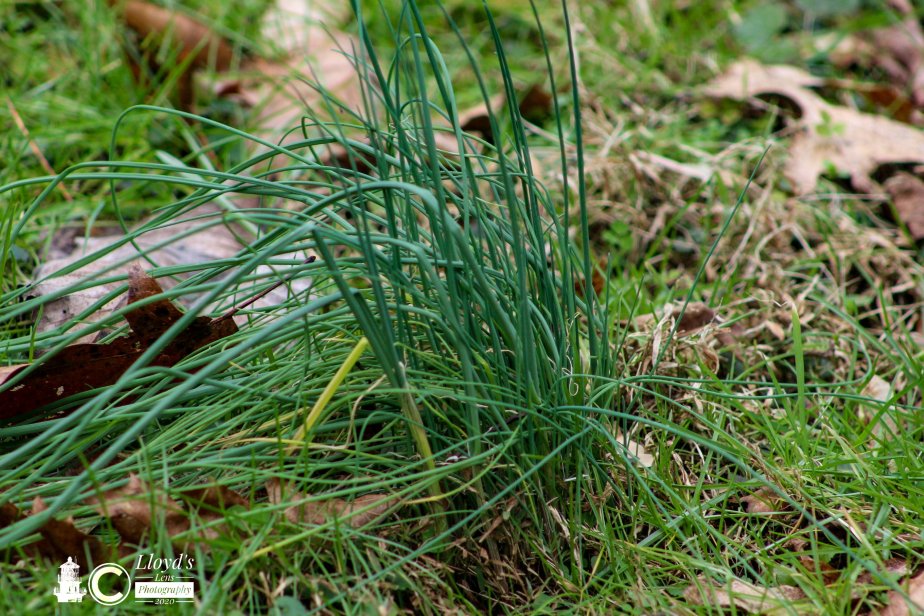
Hello friends!Tonight’s feature image was taken just for Forage Friday. The purpose of photo is to show wild garlic in its natural state.

Disclaimer: Wild Garlic and Wild Onions have multiple dangerous look-alikes. Not the least of which is an Appalachian plant known as Fly Poison (Amianthium). Fly Poison is said to be so toxic that people have died because they touched the leaves and failed to wash their hands before eating.

As I was crossing my yard I suddenly picked up a strong odor of onion rose up from the grass. I looked down to find that I had just stepped on a cluster of garlic.

Locally known as “wild onions” or “Crow Garlic” this stinky little plant is just as useful as it’s larger cousins found in grocery stores and gardens. As children thus was one of the first plants that I learned. I was taught to pinch off a bit of the leaf and smell it before I tried it. The rule of thumb is to never eat a plant that looks like a onion but doesn’t smell like an onion. As stated in the disclaimer the Fly Poison plant is one that has a reputation for causing fatalities. I am pretty sure that I have fly poison on my place as well but it doesn’t come up until Spring where the wild garlic is available almost all year round.

The green leaves of wild garlic can simply be snipped with a set of shears and sprinkled like chives. Mixed into butter for garlic bread or just tossed into a salad. The bulb is small but as you can see in the photo they grow in clumps and collectively a colony of wild garlic can provide a fair amount of mass. When it goes to seed the top will have a cluster of tiny bulblets that will eventually take root.

I find the flavor to be a bit stronger than regular garlic so it doesn’t take advantage much to get the flavor.

Like the garden variety of garlic wild garlic has a long history of being used in folk medicine. Science has proven that garlic has some antibiotic and antimicrobial use and it’s high in some vitamins and minerals including a form a sulphur that can be absorbed by the body.

About those vampires and garlic. I thought it be a fun fact to look up how that came to be but like everything else the internet is ablaze with debate. Some say origin goes back as far ancient Egypt while others believe that Bram Stoker was the first to weaponize garlic against the forces of darkness. Being a Gen-Xer it’s my opinion that the use of holy water laced with garlic was pure genius by my favorite vampire hunters from the 80s. Namely, the Frog Brothers.

The world may never know for sure how garlic became the bane of vampires. But no matter if the Frog Brothers drop by to fill their super soakers with their special anti vampire blend of holy water and garlic juice or if you want a little garlic bread to go with your spaghetti there’s a fine source of flavor and medical plant that’s probably in your back yard right now.

Hello Friends and thank you for your support of my page. If you have enjoyed the photos or the writings please let me know by commenting and sharing my work on your social media. I also want to invite you to Follow Lloyds Lens Photography on Facebook

If you would like to Follow me on Facebook the web address is

https://www.facebook.com/aviewfromthelens/

If you’re enjoying my blog and don’t want to miss a post then you can sign up for email alerts on my website.

https://lloydslensphotographyllc.com/

Did you know that I also do portraits by appointment? If you’re interested in a portrait session either message me on Facebook or Use the Contact form. The YouTube link below takes you one of my slideshows.

https://youtu.be/FDcrY6w8oY8

Have you checked out the Zazzle Store?

I’m now using Zazzle to fulfil orders. What this means for you is a secure way to place an order, discount codes & a broader product selection! Simplymessage me on Facebookoruse the contact form on my websiteand tell me which image you want and I’ll reply with a direct link to where you can place the order.

Clicking on the photo takes you tohttps://www.zazzle.com/lloydslensphotos?rf=238248269630914251Lastly, all of the photos and writings are my original work unless otherwise specified and are not to be copied or reproduced without expressed written permission from the photographer.

Thank you again for your support of my page!❤