The Blue Winged Wasp

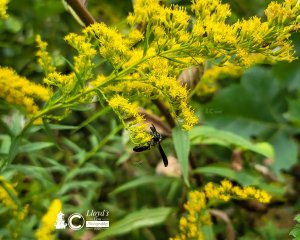
Hello Friends! Tonight’s Feature Image is titled “Blue Winged Wasp 90820a” and is available for purchase by clicking the thumbnail and reaching out to me on the contact page.

Our Friend Cindy asked me for help identifying a wasp that she spotted. What she described is a Blue Winged Wasp.

The late summer sun casts its glow across the open field illuminating the insects that buzz about a few inches above the grass. They seem to ignore me as I wade through them although several nearly collide with my bare legs. They’re definitely wasps and at first glance they look like yellow jackets swarming but they made no aggressive movements so I persisted until I spotted one at eye level. This wasp feeds on pollen and nectar which means it’s not a yellow jacket or hornet of any kind. It’s docile behavior gave me confidence to move in for a closer look however I cautious about crowding it. The body is black and the wings are iridescent blue like a mud dauber but it’s abdomen is orange with two large yellow spots. This is a “Digger Wasp” which is also known as a Blue Winged Wasp or sometimes Blue Winged Digger. The scientific name is Scotia dubia. This gentle wasp is actually a friend of gardeners.

It gets the name Digger Wasp because when it’s not feeding on pollen and nectar it’s hunting grubs in the lawn or garden. It specifically targets scarab beetles like June bugs and Japanese Beetles. Somehow it’s able to detect them underground well enough to distinguish scarab beete grubs from the hundreds of other grubs the feed on the tender roots of our lawns and vegetables. The online community was was sparse on the finer points of how this is accomplished but I suspect that those heavy club like antenna are the secret. Insects use their antenna to smell with. If you look closely at moths and butterflies you’ll notice that their antenna are either feathered or club shaped. In most butterflies the antenna end in bulbs. These bulbs are clusters of olfactory nerves that can sense oders over great distance. In the Blue Winged Wasp we see that the antenna are thick the entire length. I wasn’t really able to confirm it but it stands to reason that the antenna are thick because they contain a lot of these nerve clusters. I suspect that they know where the beetle larvae is by smelling them below ground. Once they have their target they will tunnel right down to the grubs and paralyze them with a sting. Sometimes they they lay a single egg right there where they captured the grub but other times they’ll bury it to hide it while they dig a better hole to place it in and then lay the egg after the grub has been moved. The grubs are not dead. They’re only paralyzed and when the egg hatches the wasp larvae eats the grub. A Blue Winged Wasp larvae will then spin an underground cocoon and transform into an adult Blue Winged Wasp.

The Blue Winged Digger Wasp is a solitary wasp. They are found in clusters but only if there’s sufficient scarab beetles to host the eggs. In 2016 a wet Spring led to an increase of Scarab Beetles and then a wave of these predators which is still going strong today in some areas.

There is an interesting tidbit about this wasp’s relationship with certain orchids. Some orchids have adapted to mimic the female in this family of wasps. The male becomes confused and mates with the orchids and by doing so pollenates the orchids.

White any wasp will become aggressive if you step on them or try to catch them the Blue Winged Digger Wasp is not generally considered a problem. When they are not controlling the scarab beetles they are likely pollinating orchids as mentioned before or the females are visiting one of the other wildflowers such as Goldenrod or wingstem.

Image Titled “Blue Winged Wasp 90820b” and is available for purchase by clicking the thumbnail and reaching out to me on the contact page.

Overall, every state extension office between the Eastern Shoreline and the Rocky Mountains listed the Blue Winged Digger Wasp as a beneficial insect so if you have them around they’re only there to help.

That’s it for tonight friends and be blessed throughout your days.

Hey Friends! Just a quick reminder that Lloyds Lens Photography is available for portraits!

To book me simply reach out using the Contact Page and we’ll set a date. If you’re within a 50 mile radius of Summersville West Virginia all travel fees are waived.

If you would like to Follow me on Facebook the web address is

https://www.facebook.com/aviewfromthelens/

If you’re enjoying my blog and don’t want to miss a post then you can sign up for email alerts on my website.

https://lloydslensphotographyllc.com/

Have you checked out the Zazzle Store?

I’m now using Zazzle to fulfil orders. What this means for you is a secure way to place an order, discount codes & a broader product selection! Simplymessage me on Facebookoruse the contact form on my websiteand tell me which image you want and I’ll reply with a direct link to where you can place the order.

Clicking on the photo takes you tohttps://www.zazzle.com/lloydslensphotos?rf=238248269630914251

Lastly, all of the photos and writings are my original work unless otherwise specified and are not to be copied or reproduced without expressed written permission from the photographer

Thank you again for your support of my page!

The Potter Is My Neighbor

Hello Friends! Tonight’s Feature Image is titled “Potter Wasp And Goldenrod 92620a” and is available for purchase by clicking the thumbnail and reaching out to me on the contact page.

My big blue truck pulls into my driveway and I step out to check the mailbox. As I tuned to walk back to the truck I noticed the tell tale signs of wildflowers bobbing up and down when the wind is still. I have allowed nature to have it’s way on the banks of the creek in front of my as a form of erosion control and was blessed with a stand of Goldenrod. Goldenrod is a valuable late season resource for pollinators so it makes me happy to see the bright yellow spray of flowers in the fall. Especially when the bees are working on them. I put the mail in the truck and stepped around with my camera to see what kinds of bees and how many were enjoying the pollen and nectar that the flowers provide. There were a few honeybees but mostly I found native bumblebees and wasps. Typically I have a huge number of Paper Wasps. The brown kind that builds umbrella shaped nests on the eaves of my house. But one of wasps was different. It had blue iridescent wings and a black body with white spots. At first I thought it was a European Paper Wasp but when I did the research it turned out to be a Potter Wasp. This was is a native of the Eastern woodlands but it’s not one that I have seen often or if I did I just assumed it was something else. But now that I’m doing a lot of writing about the Appalachian Wildlife I’m more motivated to get the deeper details.

The Potter Wasp like many of the native bees and wasps seems to be solitary and like the name implies buids it’s nest from mud instead of paper. I’m used to seeing the long tunnel like nests of the Pipe Oregon Mud Dauber which are found on the houses and rocky out croppings of my mountain. But the Potter Wasp nest is much different. It’s actually vase shaped with a wide base and a narrow neck that flares out at the opening. The Potter Wasp will then paralyze a caterpillar and place it in the pot with a single egg. But while she feeds her young meat she herself feeds exclusively on pollen and nectar. And something about Goldenrod seems to really attract wasps in general. It’s not uncommon for me to find as many wasps feeding on the Goldenrod as I do true bees.

A paper wasp feeds on the Goldenrod next to the Potter Wasp

I am hoping to spot and photograph the unique nests of the Potter Wasp soon. I suspect that they are tucked away safely on some of rocks that surround my property and I’ll do a follow-up post when I see them but for now I just know that they’re in the area somewhere enjoying the late season bloom and pollinating my wildflowers.

Image Titled “Potter Wasp And Goldenrod 92620b” and is available for purchase by clicking the thumbnail and reaching out to me on the contact page.

Hey Friends! Just a quick reminder that Lloyds Lens Photography is available for portraits!

To book me simply reach out using the Contact Page and we’ll set a date. If you’re within a 50 mile radius of Summersville West Virginia all travel fees are waived.

If you would like to Follow me on Facebook the web address is

https://www.facebook.com/aviewfromthelens/

If you’re enjoying my blog and don’t want to miss a post then you can sign up for email alerts on my website.

https://lloydslensphotographyllc.com/

Have you checked out the Zazzle Store?

I’m now using Zazzle to fulfil orders. What this means for you is a secure way to place an order, discount codes & a broader product selection! Simplymessage me on Facebookoruse the contact form on my websiteand tell me which image you want and I’ll reply with a direct link to where you can place the order.

Clicking on the photo takes you tohttps://www.zazzle.com/lloydslensphotos?rf=238248269630914251

Lastly, all of the photos and writings are my original work unless otherwise specified and are not to be copied or reproduced without expressed written permission from the photographer

Thank you again for your support of my page!

The Mountain’s Call Part 2

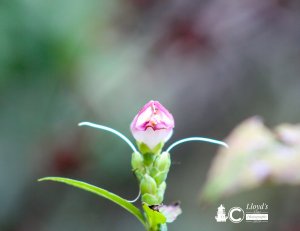
Hello Friends! Tonight’s Feature Image is titled “White Turtlerheads 92520a” and is available for purchase by clicking the thumbnail and reaching out to me on the contact page.

Deeper into the hidden world the Mountain’s call pulls me. The big blue truck rolls beyond the old fence posts covered by roses that have gone feral and surrounded fallow ground with thorns and bright red hips. Below the road and beneath twisted branches squirrels play where once a groomed orchard grew. And still, the sleeping mountain calls me deeper into the seldom seen to show me how well she has been healing. And there in a ditch where the forest meets the road was a treasure I’ve only seen in books and gardens during all my wanderings. A colony of white Turtlerheads! Now I realize that this is a common sight in the garden but in 52 years I have not found them in the wild. Which is odd to me because here we have an Appalachian Native plant that seems to have migrated from forests to gardens.

The plant gets its name from the shape of the flower which resembles a turtle with it’s mouth slightly open.

Image is titled “White Turtlerheads 92520b” and is available for purchase by clicking the thumbnail and reaching out to me on the contact page.

There is a reason for the open mouth look. In the pre-Columbian era this ensured pollination by bumblebees. The opening is slightly more narrow than a bumblebee’s body. But, only the bumblebees are strong enough and the right size to force their way into the mouth to reach the supply of nectar that pools in the bottom of the flower. European honeybees are not strong enough to force their way in and the large carpenter bees are too large to fit in. So the bumblebees are the sole pollinators for Turtlerheads. If you look closely at tonight’s Feature Image you’ll notice a structure that looks amazingly similar to a human tongue. And the top lip seems to have a single “tooth” hanging down. These are the reproductive organs of course. As the bumblebees wiggle their way into the flower they pick up and transfer huge amounts of pollen.

However, the European honeybees have discovered a hack. They chew their way through the side of the flower and rob the nectar without any pollination. None of research actually says it but I conclude that the same pollinators that are so necessary for the food production of the world are also a limiting factor in the success of the Turtlerheads. So what does it matter. Well, it matters to the Baltimore Checkerspot Butterfly that hosts its eggs almost exclusively on the Turtlerheads. The implications being that without the flower we lose the butterfly. Fortunately, we have many cultivars that are planted simply for beauty by some and specifically for preservation of the Baltimore Checkerspot Butterfly by others.

Image Titled “White Turtlerheads 92520c” and is available for purchase by clicking the thumbnail and reaching out to me on the contact page.

But what really made these special is because in the mid 90s I helped cruise the timber that was clear cut before the mountain was strip mined down to bare earth. And we’ll soon be coming up on the 30 year mark in the forest regeneration of this mountain. So to find a plant that I have not found in the wild growing so close to an unlikely location gives me great hope for the full restoration of the forest in this area. It takes a long time for nature to reclaim this kind of thing on her own but she can do it. I have been on land that is beautiful rich forest today but was cleared fifty or more years ago. But don’t think that makes me against mining. These men pull light from darkness and supply the carbon that strengthens the steel that modern world is built from. No, I am pro reclaiming that which was mined. We can have the best of both worlds and all it takes is a little thinking and planning. But that will have to be a topic for another day because this post has gotten way larger than I intended. So good night friends and be blessed throughout your days.

Hey Friends! Just a quick reminder that Lloyds Lens Photography is available for portraits!

To book me simply reach out using the Contact Page and we’ll set a date. If you’re within a 50 mile radius of Summersville West Virginia all travel fees are waived.

If you would like to Follow me on Facebook the web address is

https://www.facebook.com/aviewfromthelens/

If you’re enjoying my blog and don’t want to miss a post then you can sign up for email alerts on my website.

https://lloydslensphotographyllc.com/

Have you checked out the Zazzle Store?

I’m now using Zazzle to fulfil orders. What this means for you is a secure way to place an order, discount codes & a broader product selection! Simplymessage me on Facebookoruse the contact form on my websiteand tell me which image you want and I’ll reply with a direct link to where you can place the order.

Clicking on the photo takes you tohttps://www.zazzle.com/lloydslensphotos?rf=238248269630914251

Lastly, all of the photos and writings are my original work unless otherwise specified and are not to be copied or reproduced without expressed written permission from the photographer

Thank you again for your support of my page!

The Closing Of The Season

Hello Friends! Tonight’s feature image is titled “Summer Azure 90820” and is available for purchase by the instructions at the bottom of the article.

Where the warm breeze ends the tiny wings find their prize. The tall lanky plant with irregular pedals and spiked ball flowers welcomes the little visitor in the waning days of its season. The feeding session has the appearance of an embrace as the little blue butterfly clings gently to it’s host and accepts the sweet gift generated from within the flower’s depths. The shadow of the mountains grows subtly longer with each sunset. With each cool morning it takes the butterflies longer to warm up and begin their work of visiting the blooms and spreading joy. And yet the little Summer Azure is undeterred and performs it’s duty with a look of satisfaction. In it’s contentment the final secret is revealed that the last drop of nectar was the sweetest.

Hey Friends! Just a quick reminder that Lloyds Lens Photography is available for portraits!

To book me simply reach out using the Contact Page and we’ll set a date. If you’re within a 50 mile radius of Summersville West Virginia all travel fees are waived.

If you would like to Follow me on Facebook the web address is

https://www.facebook.com/aviewfromthelens/

If you’re enjoying my blog and don’t want to miss a post then you can sign up for email alerts on my website.

https://lloydslensphotographyllc.com/

Have you checked out the Zazzle Store?

I’m now using Zazzle to fulfil orders. What this means for you is a secure way to place an order, discount codes & a broader product selection! Simplymessage me on Facebookoruse the contact form on my websiteand tell me which image you want and I’ll reply with a direct link to where you can place the order.

Clicking on the photo takes you tohttps://www.zazzle.com/lloydslensphotos?rf=238248269630914251

Lastly, all of the photos and writings are my original work unless otherwise specified and are not to be copied or reproduced without expressed written permission from the photographer

Thank you again for your support of my page!

An Observation Of Honeybees And Wingstem

Hello Friends! Tonight’s feature image is titled “Honeybee On Wingstem 90820a” and is available for purchase by the instructions at the bottom of the article.

Nothing in this world is insignificant. Throughout my life I’ve endeavored to learn how to live. I’m not talking about the pursuit of a paycheck or optimal health or any of the hardline assets that we collect. I desire the experience of something more than mere existence as a cog in the machine. I find it odd that we as a society are so focused on the “What’s In It For Me” factor to the point that if we don’t see instant gratification we think of something as worthless. Tonight’s feature image shows such a thing. Not so much the honeybee but the flowers they are so engaged with right now. It’s called Wingstem. It has no known medical value. It’s not collected as food and in spite of pleasing color it’s not a garden flower. In fact if I were to have pulled back from the plant and shot it at a wide angle you would see that it’s spindly and twisted. And yet at the very moment the shutter snapped it’s showing us it’s value as a food for the honeybee. Unless you’ve been living under a rock for the past decade you’ll know that the honeybee population is of great concern. Whole colonies are dying out and I’ve heard a few theories about what might be happening. Personally I think there’s multiple factors but one thing for sure is that bees have to eat. I noticed that even though there’s still a lot of pollen for them right now they don’t seem to be collecting it. They’re also ignoring the ironweed and Joe Pye weed that all the other pollenators are going nuts for right now. The only flower that this colony is focused on is the Wingstem. I’m not a bee expert so I’m not sure what it is about this particular wildflower that only the honeybees are interested in but my pattern recognition says that the nectar from Wingstem is very important to them right now. Wingstem is one of those plants that humans consider a weed because it’s of no direct use to us and most people cut it back when it turns up. But we definitely need the honeybees and they seem to it. Perhaps God made the Wingstem so unappealing to us because it’s for the bees to have all to themselves.

Hey Friends! Just a quick reminder that Lloyds Lens Photography is available for portraits!

To book me simply reach out using the Contact Page and we’ll set a date. If you’re within a 50 mile radius of Summersville West Virginia all travel fees are waived.

If you would like to Follow me on Facebook the web address is

https://www.facebook.com/aviewfromthelens/

If you’re enjoying my blog and don’t want to miss a post then you can sign up for email alerts on my website.

https://lloydslensphotographyllc.com/

Have you checked out the Zazzle Store?

I’m now using Zazzle to fulfil orders. What this means for you is a secure way to place an order, discount codes & a broader product selection! Simplymessage me on Facebookoruse the contact form on my websiteand tell me which image you want and I’ll reply with a direct link to where you can place the order.

Clicking on the photo takes you tohttps://www.zazzle.com/lloydslensphotos?rf=238248269630914251

Lastly, all of the photos and writings are my original work unless otherwise specified and are not to be copied or reproduced without expressed written permission from the photographer

Thank you again for your support of my page!