Forage Friday #72 Water

Hello Friends! Tonight’s feature image is titled “Living Waters 82520” and is available for purchase by the instructions at the bottom of the article.

Water, water, every where.

Nor any drop to drink.

– Samuel Taylor Coleridge

Rime Of The Ancient Mariner

A warm breeze rustled the turning leaves as Little Elk Creek rippled it’s way towards the Gauley River. Over pebble and over stone it winds its way from the top of the mountain. A historical marker sign on the Nicholas County and Fayette County border says this is the path that Pocahontas traveled to reach John Rolfe in Virginia. In my imagination I see her treading softly along the creek bank in my yard on her way to meet her lover. In her bundle is a small birch bark container. She steps down into ditch near one of the deeper pools and dips her cup into the water to enjoy a moment of harmony in nature and have a drink. Hollywood has done a fantastic job of creating in our minds the image of a pristine forest where people have no fear of things like cryptosporidium and brain eating amoebas. Unfortunately it wasn’t always possible to find a clean source of water.

The Native Americans knew full well that a person could get sick from drinking wild water. The records indicate that they had a large number of botanical treatments to heal people who became sick from waterborne illnesses. We also have records of some of the ways that they would have purified water. When a fire was practical they boiled it. If they were at base camp then it’s likely that a clay pot would be used. But that would awkward to transport on the trail and so a pan made from birch bark would fit the bill. As long as the bark container is full of water it will not burn.

Most people today drink water that has been chemically treated and filtered. The use of sand to filter water goes back to ancient times and some people still use this method today. Adding a little charcoal to a couple of layers of the sand will also help to filter water.

Some trees like Sycamore are natural water filters. The method of collecting fresh water from a tree is the same for collecting sap for maple syrup. Simply tap the tree and as long as the sap is flowing you can fill a bucket. But not all trees would be suitable because the sap just isn’t pleasantly flavored. Tree of heaven for example is absolutely terrible smelling. Maple, Sycamore and birch would be my choices.

Drinking water from a vine is one that we see on T.V. and movies. But there’s a right way and a wrong way to do this too. I’m only comfortable with drinking from grape vines. To best of my knowledge all of the other woody vines in West Virginia are toxic. But don’t cut the root end of the. Find the roots and trace the vine up the tree until you find where it comes back down the tree. Cut off the tip and place a thumb on the end. Shake the vine a few times and when you take your thumb off of the end water will flow out.

Image Titled “Driving In The Rain 82220”.

Rain is a great resource for fresh water. I remember my grandfather Dempsey drinking rainwater that collected in a woiden barrel.

There’s also wells an cisterns and ice in winter.

I focused on the sources of wild water and really only touched on the purifying processes. Filtering and boiling is always a good idea and the simplest way to to make wild water potable.

Hey Friends! Just a quick reminder that Lloyds Lens Photography is available for portraits!

To book me simply reach out using the Contact Page and we’ll set a date. If you’re within a 50 mile radius of Summersville West Virginia all travel fees are waived.

If you would like to Follow me on Facebook the web address is

https://www.facebook.com/aviewfromthelens/

If you’re enjoying my blog and don’t want to miss a post then you can sign up for email alerts on my website.

https://lloydslensphotographyllc.com/

Did you know that I also do portraits by appointment? If you’re interested in a portrait session either message me on Facebook or Use the Contact form. The YouTube link below takes you one of my slideshows.

https://youtu.be/FDcrY6w8oY8

Have you checked out the Zazzle Store?

I’m now using Zazzle to fulfil orders. What this means for you is a secure way to place an order, discount codes & a broader product selection! Simplymessage me on Facebookoruse the contact form on my websiteand tell me which image you want and I’ll reply with a direct link to where you can place the order.

Clicking on the photo takes you tohttps://www.zazzle.com/lloydslensphotos?rf=238248269630914251

Lastly, all of the photos and writings are my original work unless otherwise specified and are not to be copied or reproduced without expressed written permission from the photographer

Thank you again for your support of my page!

Joy On Wings

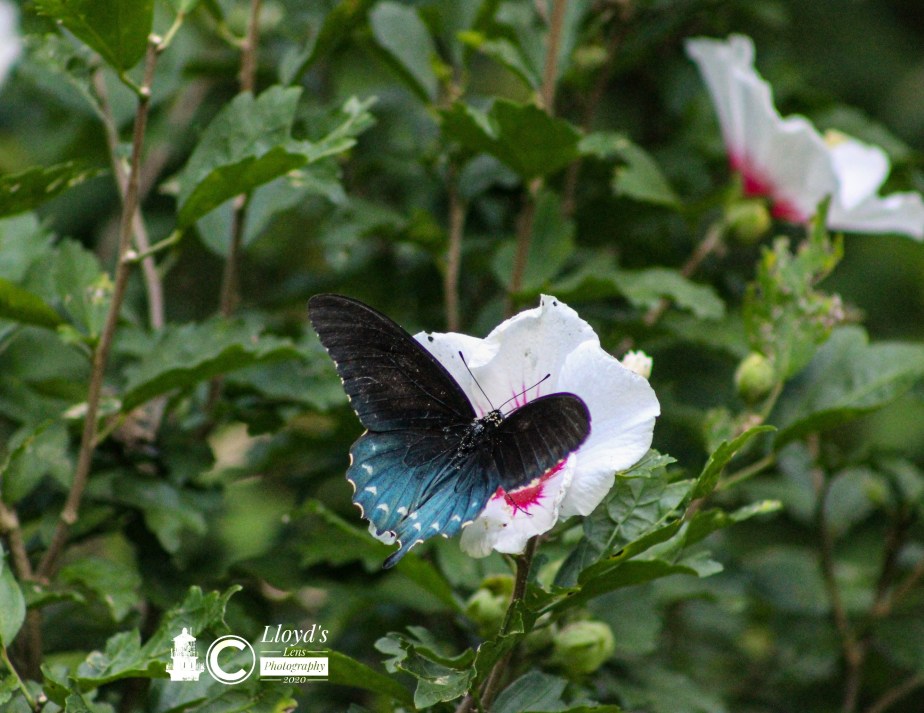
Hello Friends! Tonight’s feature image is titled “Simple Blessings 80420” and is available for purchase by following the instructions at the bottom of the article.

Joy travels on wings of ebony and blue. Nimbly dodging the twigs and thorns she makes her way through the shrubs.

She avoids the silken threads with the greatest skill and with delicate grace rises above her troubles.

Her existence is an aerial dance through the landscape and her ultimate expression of life.

I sometimes wonder what the Lord was thinking at her creation.

It shall be a humble worm.

It shall be regeneration and change.

It shall be rebirth in beautiful living color.

It shall be swift.

It shall be the sweetness on a balmy breeze.

It shall be innocence.

It shall be loved and it shall be an expression of my joy.

Life is meant to be all these things and more. Find your joy and live in it.

Hey Friends! Just a quick reminder that Lloyds Lens Photography is available for portraits!

To book me simply reach out using the Contact Page and we’ll set a date. If you’re within a 50 mile radius of Summersville West Virginia all travel fees are waived.

If you would like to Follow me on Facebook the web address is

https://www.facebook.com/aviewfromthelens/

If you’re enjoying my blog and don’t want to miss a post then you can sign up for email alerts on my website.

https://lloydslensphotographyllc.com/

Did you know that I also do portraits by appointment? If you’re interested in a portrait session either message me on Facebook or Use the Contact form. The YouTube link below takes you one of my slideshows.

https://youtu.be/FDcrY6w8oY8

Have you checked out the Zazzle Store?

I’m now using Zazzle to fulfil orders. What this means for you is a secure way to place an order, discount codes & a broader product selection! Simplymessage me on Facebookoruse the contact form on my websiteand tell me which image you want and I’ll reply with a direct link to where you can place the order.

Clicking on the photo takes you tohttps://www.zazzle.com/lloydslensphotos?rf=238248269630914251

Lastly, all of the photos and writings are my original work unless otherwise specified and are not to be copied or reproduced without expressed written permission from the photographer

Thank you again for your support of my page!❤

Forage Friday #71 Broadleaf Plantain

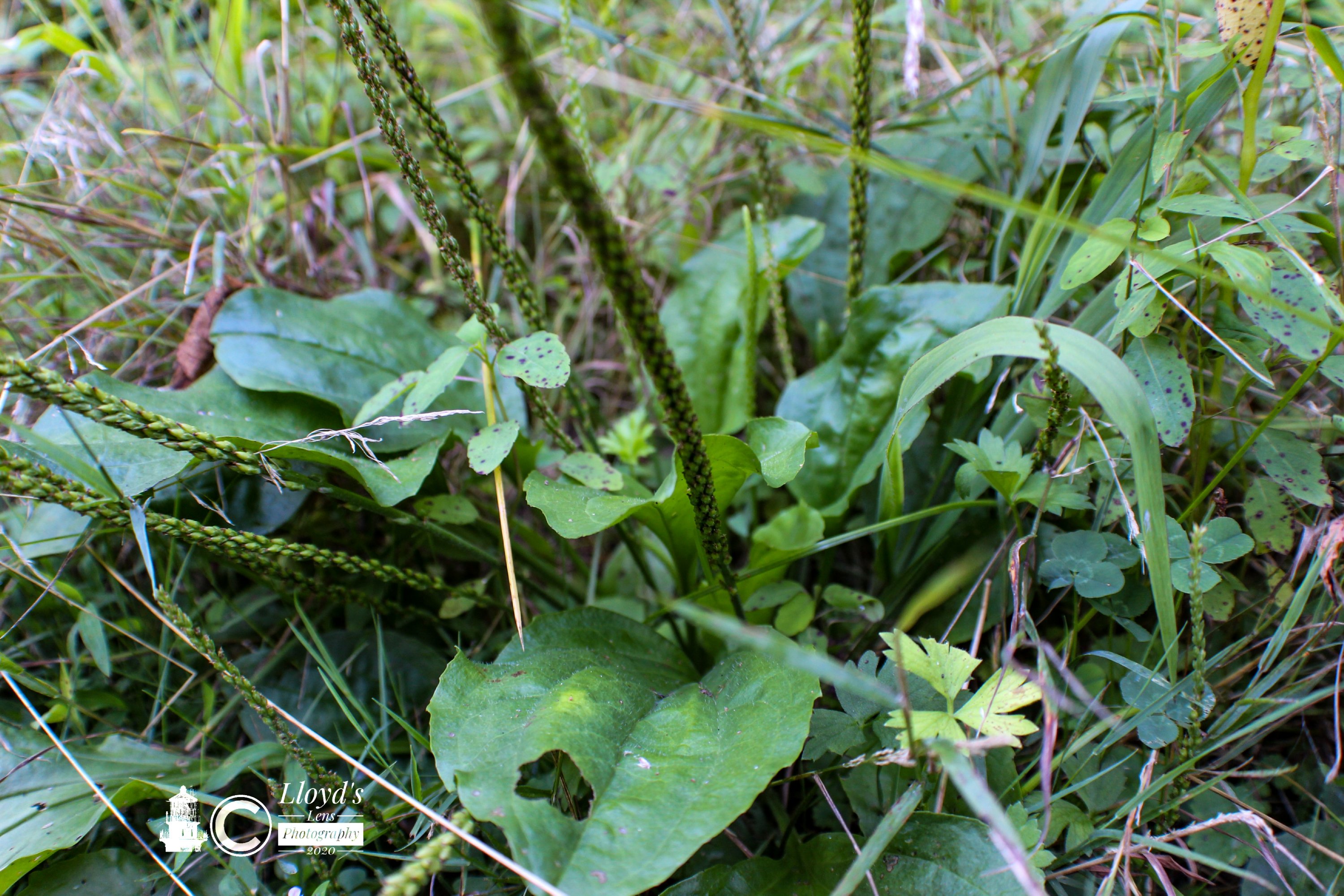
Hello Friends! Tonight’s photos were taken especially for Forage Friday.  All of the photos found on my blog are my original work and are available for purchase by the instructions at the bottom of the article.
Please remember that Forage Friday is only intended to be a conversation starter and all of the information is presented as trivia.
The sachem knelt down in the meadow and studied the strange plant. Many things were changing since he was a boy learning about medicine from his elders. The white men who lived in squares brought with them strange animals and soon after strange plants began to grow.  Some of them made war on his people but others were good neighbors and traded well with his family.  He carefully dug up the alien lifeforms to learn more about them. He tested one of large leaves and soon learned that it was horribly bitter and astringent. The fibers inside the leaves were strong enough to make cordage but compared with other sources they were weak and short.  The strange stock of seeds yielded tiny oily seeds might make good grain. Because the plant was one of the plants his people called White Man’s Footprint he decided to take it down into the valley to his friend Mr. McLaughlin to see if it was useful.

When we think of early American history we have a tendency to think that all of teaching was done by the natives and all of the learning was done by the colonists. And while the establishment tended to clash with the natives history records that there were friendly relationships between some tribes and some colonies even up into the civil war. Broadleaf Plantain is one of those plants that would have brought on a little role reversal in those early days.  Not only was it a European native species but it was probably brought here on purpose because of its long history in European herbalism.

You may not think that you’ve ever used this wild plant but if you’ve consumed a product containing psyllium fiber then you’ve consumed the seed husks from a stalk exactly like the one in tonight’s feature image. In fact a quick Google search shows that the seeds and seed husks from Broadleaf Plantain have quite a commercial market. The seeds and seed husks are generally added to a variety of products as the laxative however it also seems to help regulate blood sugar in type 2 diabetes.  As a type 2 myself I can say that my numbers are definitely better when I consum psyllium fiber on a regular basis and of course keep an eye on diet and exercise.  There’s so many uses for psyllium fiber that I think it’s worth the effort to consider looking over the more than 200 species and farming it on a commercial scale. Because there’s so much information on the internet about psyllium fiber I’m going to move away from seeds and husks and talk about the leaves.

One of first personal experiences I’ve had with Plantago leaves was when I was much younger and working as a janitor. We did a lot of work with concentrated sodium hydroxide (lye) in those days and some still might. During the night one night I managed spill the chemical onto my foot which I didn’t notice at first. By the time I started to feel the discomfort of a chemical burn the skin on the top of my foot had been dissolved a couple of layers deep and a couple of inches across.  When I got home I pulled up some of the older leaves and made pultice for the burn. After a a few days my employer forced me to see a doctor and when he saw the wound he said it looked like it had healing for a couple of weeks.   The scar from the burn was so light that the only time it can be seen is when I have a dark tan.
In addition to that crushing the leaves between 2 spoons and allowing juice to flow into minor cuts seems to help prevent infection and seal the wound.  In an old Apothecary shop one would have found jars full of the dried and powdered leaf. The powder would have been used as a styptic by rubbing it into a wound. The large oval leaves of Broadleaf Plantain.

A pultice of the leaves would have been recommended to fight cellulitis.

A salve made from the leaves is said to draw out splinters and thorns.

Just crushing the leaves and applying them to bee stings and insect bites provides instant relief.

Broadleaf Plantain leaves are rich in vitamin A which is absorbed through the skin and may help wound repair.  It’s also rich in vitamins C and K as well as iron.

If I really sat down and thought about it I suppose that I could go on for several pages. But then, that would rob you of the fun of discovery for yourself.

In closing,  I have eaten Broadleaf Plantain as part of cream cheese based spread. It’s not bad at all that way but I suspect the cheff would have cooked the leaves in several changes of water to get rid of the extremely astringent tannic acid found in the leaf.  I’ve also chewed up raw leaf to put on a bee sting and can say that it’s probably the worst thing I’ve ever tasted raw. 

Hey Friends! Just a quick reminder that Lloyds Lens Photography is available for portraits!


https://youtu.be/UPXlC0uaXW4

To book me simply reach out using the Contact Page and we’ll set a date. If you’re within a 50 mile radius of Summersville West Virginia all travel fees are waived.

If you would like to Follow me on Facebook the web address is

https://www.facebook.com/aviewfromthelens/

If you’re enjoying my blog and don’t want to miss a post then you can sign up for email alerts on my website.

https://lloydslensphotographyllc.com/

Did you know that I also do portraits by appointment? If you’re interested in a portrait session either message me on Facebook or Use the Contact form. The YouTube link below takes you one of my slideshows.

https://youtu.be/FDcrY6w8oY8

Have you checked out the Zazzle Store?

I’m now using Zazzle to fulfil orders. What this means for you is a secure way to place an order, discount codes & a broader product selection! Simplymessage me on Facebookoruse the contact form on my websiteand tell me which image you want and I’ll reply with a direct link to where you can place the order.

Clicking on the photo takes you tohttps://www.zazzle.com/lloydslensphotos?rf=238248269630914251

Lastly, all of the photos and writings are my original work unless otherwise specified and are not to be copied or reproduced without expressed written permission from the photographer

Thank you again for your support of my page!❤

Forage Friday #70 Wood Sorrel

Hello Friends! Tonight’s feature image is titled “Wood Sorrel 81020” and was taken just for Forage Friday. All of the photos found on my blog are my original work and are available for purchase by the instructions at the bottom of the article.

Please remember that Forage Friday is only intended to be a conversation starter and all of the information is presented as trivia.

The relentless August sun glares down on the meadow and sweat rolls down the young hunter’s face. He breaks open a rotting log to find the fat grubs just under the bark and places them in a rawhide box which he carries to the edge of a pond. A simple gorge hook made from a splinter of turkey bone is threaded through the grubs and tossed into the pond. It isn’t long before there are 4 decent sized sun fish are landed and a willow rod is threaded through the gills. The youth secures them in the shallow water at the pond’s edge and starts his fire. Clay is collected from the small stream feeding pond along with a trailing three leafed plant with tiny yellow flowers. The plant has bean-like pods that are not much larger than a grain of rice and the whole top is gathered. By now the small campfire has burned down to embers and the young man tests the heat by holding his hand over the pit until it’s uncomfortable. The fish are dressed out with a stone chip that’s five times sharper than a modern scalpel and stuffed with the tart plant. The fish are then packed in the clay and carefully buried in the hot pit. The youth has several of these plants left and nibbles them to quench his thirst as he Leisurely completes his camp tasks. He notes the time by counting hand widths between the sun and the horizon. The fish should be done cooking by now and he opens the pit up again. The Clay has baked into perfectly sealed containers that slow cooked the fish. The sour herb imparted a lemon flavor to the meat that rivals anything found in a modern day restaurant. The youth chants a native blessing over his meal and thanks the creator for the bounty of the land.

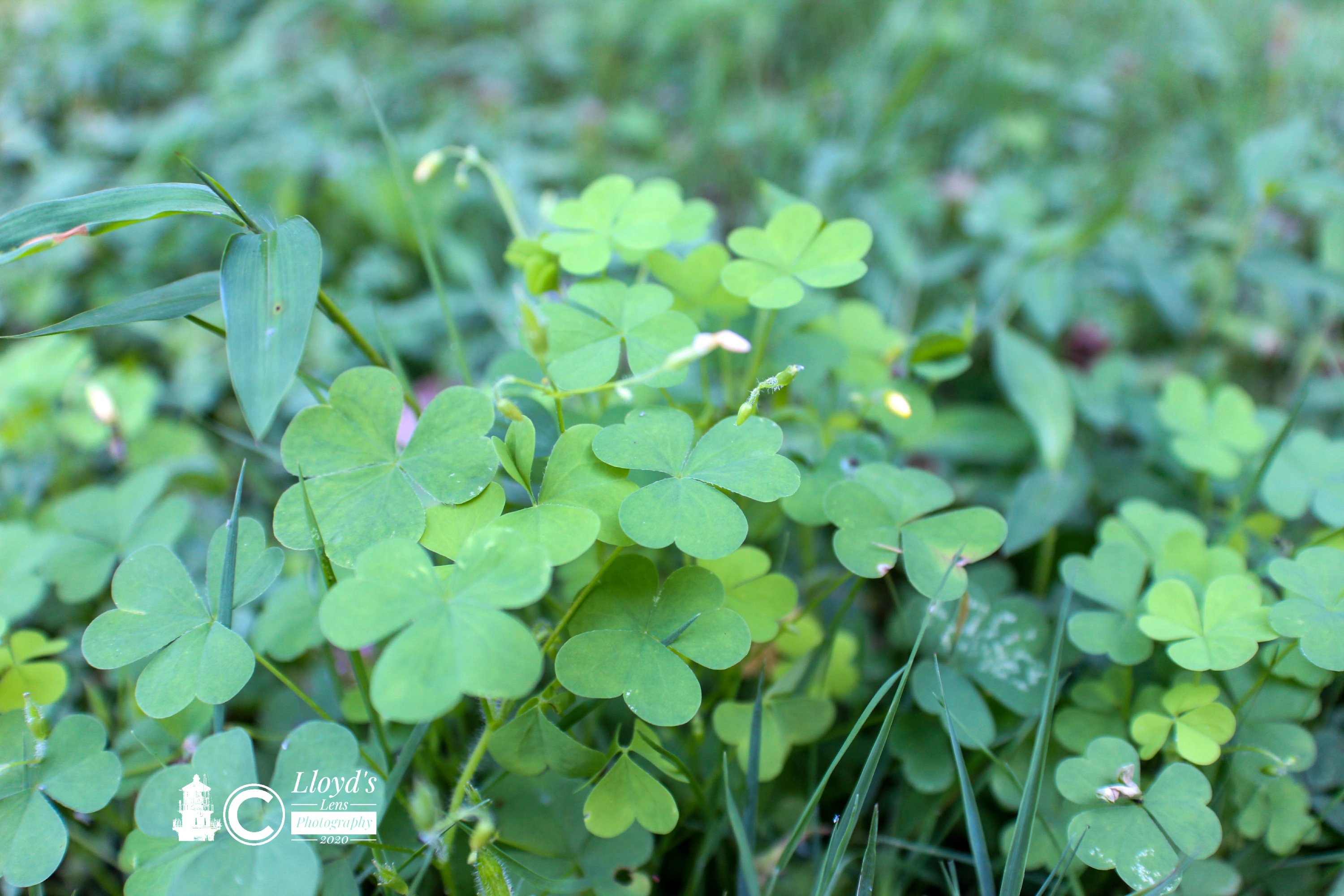
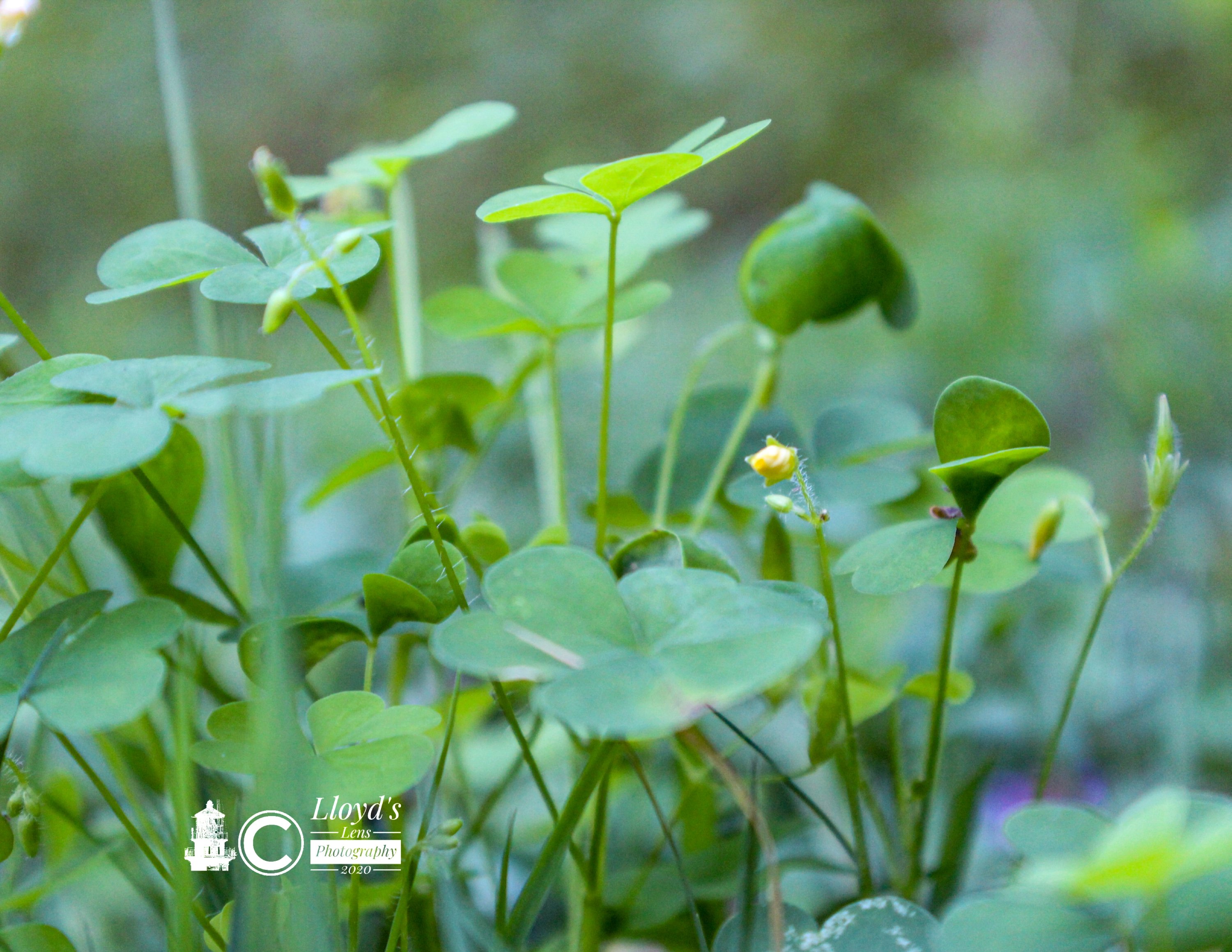
Image Titled “Wood Sorrel 71020b” showing the color difference between the herb and the rest of the grass.

One of the first plants most kids learn how to forage in the Appalachian Mountains is Wood Sorrel. My guess is that it’s also true for the rest of the world because there are 1,810 species that are found worldwide including some cultivated varieties that are sold as shamrocks around St. Patrick’s Day in Spring. However, true shamrocks are Trifolium species ( clovers) while Wood Sorrels are Oxalis species. Both plants are edible but the Oxalis is far superior in flavor. As foreshadowed by the fiction story in tonight’s post Wood Sorrel has a sour flavor that’s likened to lemon but I’ve found it to be more like Sweet-Tarts candy. One YouTube channel referred to them as “Nature’s Sour Patch Kids.”

Wood Sorrel is excellent in salads and as a flavoring on meats as well as in soups. Nutritionally Wood Sorrel is rich in Vitamin C and boasts to be richer in bioavailable iron than even spinach. The vitamin C available from from one serving (1 cup) of Wood Sorrel provides 106% of the recommended daily intake. It’s for this reason that Wood Sorrel was used to treat scurvy in the old days. Additionally it supplies the same percentage of vitamin A. There also seems to be a multitude of other vitamins and minerals including small amounts of zinc and copper.

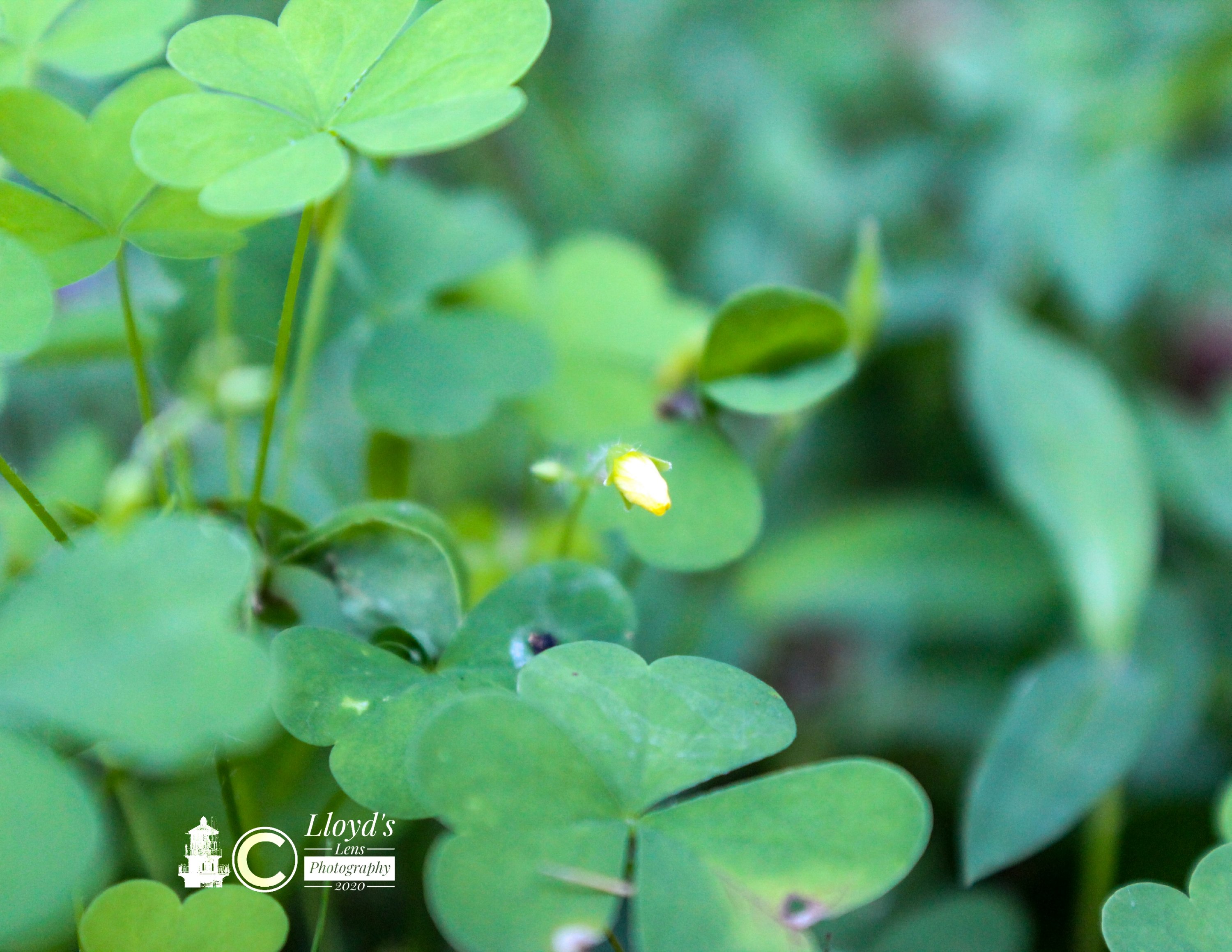
Image Titled “Wood Sorrel 71020c”.

Other medicinal values include gargling the juice for sore throat and mouth ulcers, as a compress for anti-inflammatory effects and as a digestive aid. Which brings us to the obligatory notes on oxalic acid. All throughout all of reference materials we find dire warnings of the high content of oxalic acid. It’s “Sorta true”. The whole family of plants is named for the high amount of oxalic acid which among other things can lead to kidney stones and if you get enough of it there is risk of kidney failure. The as if you eat too much spinach or too much broccoli. We can also add kale to this list of plants that contains “dreadful” (sic) oxalic acid. So if your doctor or nutritionist has advised that you avoid green leafy vegetables then perhaps you should also avoid the Oxalis family.

For a more in depth look at oxalic acid and nutrition I’m going to refer to one of the better videos on YouTube.

Wood Sorrel is actually something that I enjoy but it’s not something that I eat massive amounts of. It’s best used as an accent herb along with other forage plants like violet, dandelion greens and chicory or as an addition to a garden salad. The zesty flavor helps offset greens that are a little on the bland side.

As a last little tid-bit I did encounter several people making Wood Sorrel lemonade that sound very intriguing. They simply made a light colored tea and sweetened to taste. Due to the mineral content of the plant my guess is that it’s pretty high in electrolytes as well.

Hey Friends! Just a quick reminder that Lloyds Lens Photography is available for portraits!

To book me simply reach out using the Contact Page and we’ll set a date. If you’re within a 50 mile radius of Summersville West Virginia all travel fees are waived.

If you would like to Follow me on Facebook the web address is

https://www.facebook.com/aviewfromthelens/

If you’re enjoying my blog and don’t want to miss a post then you can sign up for email alerts on my website.

https://lloydslensphotographyllc.com/

Did you know that I also do portraits by appointment? If you’re interested in a portrait session either message me on Facebook or Use the Contact form. The YouTube link below takes you one of my slideshows.

https://youtu.be/FDcrY6w8oY8

Have you checked out the Zazzle Store?

I’m now using Zazzle to fulfil orders. What this means for you is a secure way to place an order, discount codes & a broader product selection! Simplymessage me on Facebookoruse the contact form on my websiteand tell me which image you want and I’ll reply with a direct link to where you can place the order.

Clicking on the photo takes you tohttps://www.zazzle.com/lloydslensphotos?rf=238248269630914251

Lastly, all of the photos and writings are my original work unless otherwise specified and are not to be copied or reproduced without expressed written permission from the photographer

Thank you again for your support of my page!

Forage Friday #69 Hog Peanut.

Hello Friends! Tonight’s feature image is titled “Hog Peanut 71620a”. All of the photos found on my blog are my original work . Any purchase or license inquiries should be directed to the contact page.

Please remember that Forage Friday is only intended to be a conversation starter and all of the information is presented as trivia. Medicinal uses of the featured plant is historical and not an endorsement of treatment.

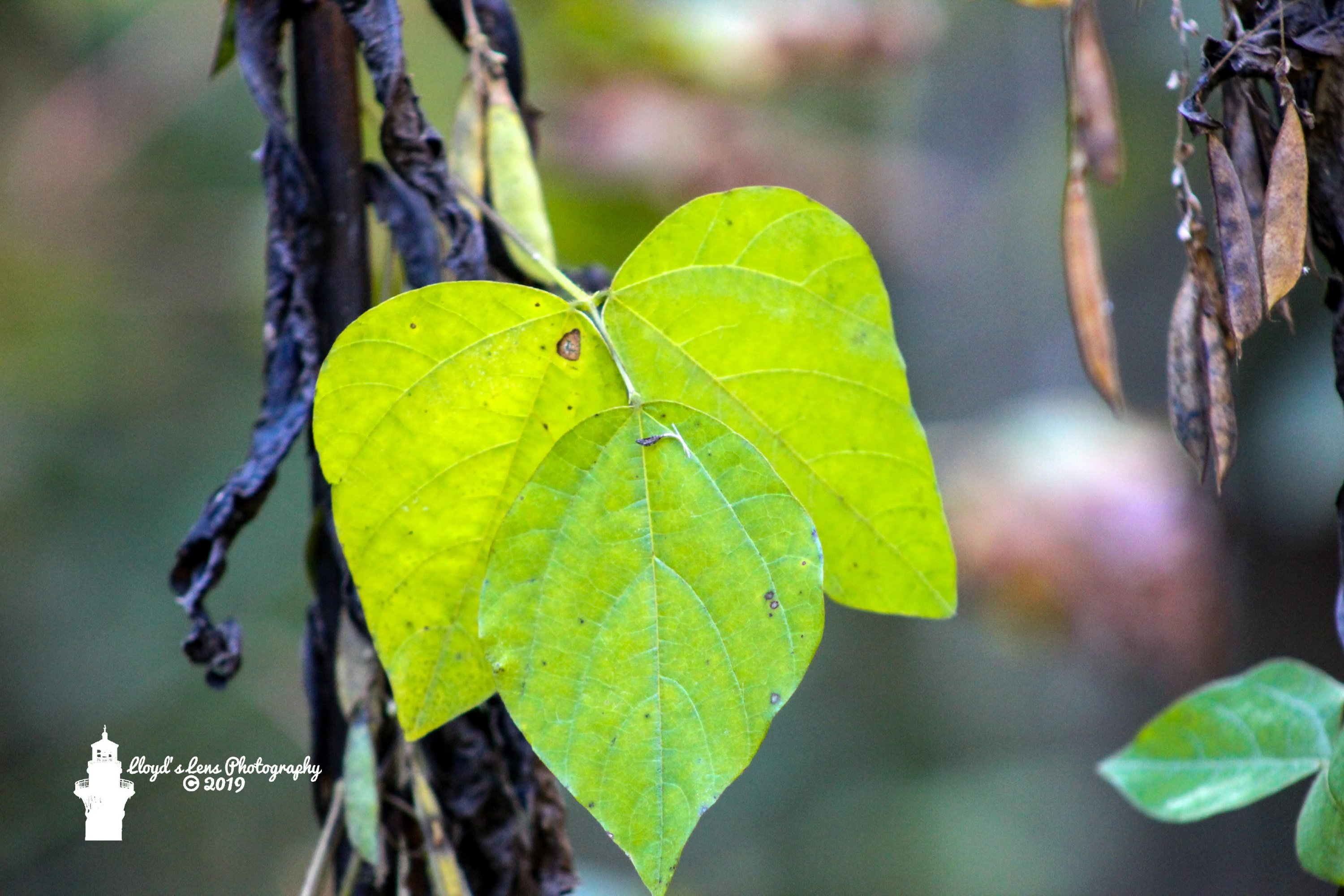
On a cool crisp October morning last year I was strolling the perimeter of my yard her I spotted something familiar. A three lobed leaflet attached to dying vine that twisted and curled around the stem of Joe Pye Weed. Most of leaves were gone and all but a few of the remaining leaves were a pale yellow. At first I thought it was poison ivy and since I am not allergic to poison ivy I reached down to take a leaflet and get a better look. That’s when I noticed the pods hanging from a dried out piece of the vine.

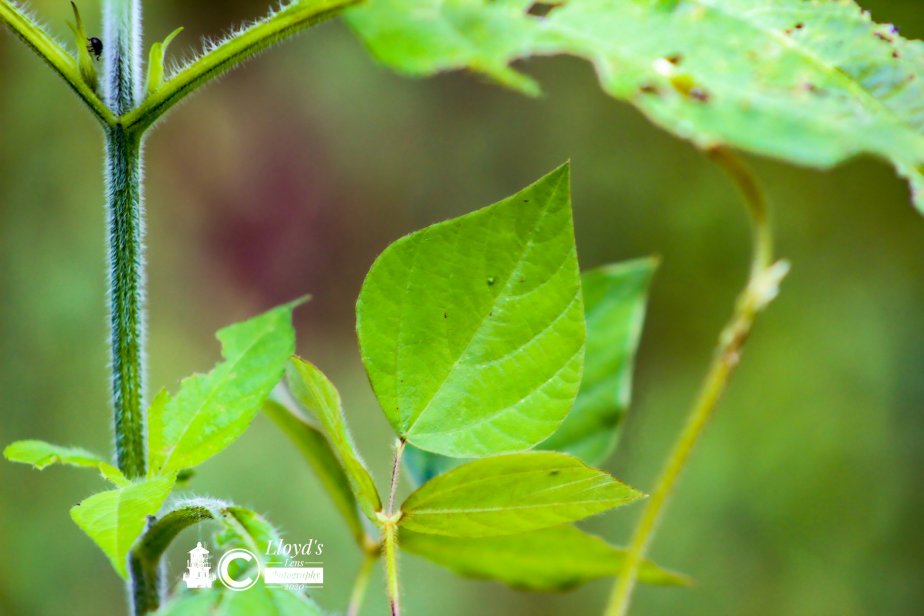
Image Titled “Hog Peanut 81520” showing the leaflet and dried seed pods.

Tracing the vine from the dry pods to the live leaf confirmed that it was all part of the same plant. This spot was once a garden and I began to wonder if the former owners had planted peas or beans here that for some reason spontaneously germinated while I wasn’t looking. The flat pods reminded me of snow peas so I was a little mournful that I’d missed out. I could have collected a few and planted them in the Spring but since they had volunteered I wondered if they would come back again on their own. So I left nature to do what she would with the vine. In meantime I snapped a picture of the leaflet that was so vigorously clinging to life.

I spent the winter occasionally looking over photos on the internet and had almost settled on a wild bean variety. I should note here that while different types of garden beans and peas are a staple of civilization throughout the world other types are poison. For example, Red Kidney Beans contain a chemical called Phytohaemagglutinin which in high doses is considered to be toxic. In Red Kidney Beans the process of soaking and cooking removes the toxins so we can enjoy them in chilli. Other plants that are commonly called beans like castor bean produce deadly toxins like ricin. So it’s wise to not just grab a pod off of a vine and chow down.

When I found out that the plant which just turned up in this spot was a Hog Peanut I was thankful that it is in fact edible. But it’s not the bean part of Hog Peanut that’s eaten. It’s the underground nut.

Hog Peanut produces two types of flower. The upper flowers become the pods that are seen in tonight’s feature image and then there’s a different flower that’s near or even sometimes just under the soil that provides a larger single seed that enclosed in a fibrous husk like a peanut. And just like the peanut it’s normally boiled before eating.

According to the USDA the Chippewa gathered the and consumed the “fruits and the roots”. Which I find a little confusing since so many other sources say that the pods are not eaten.

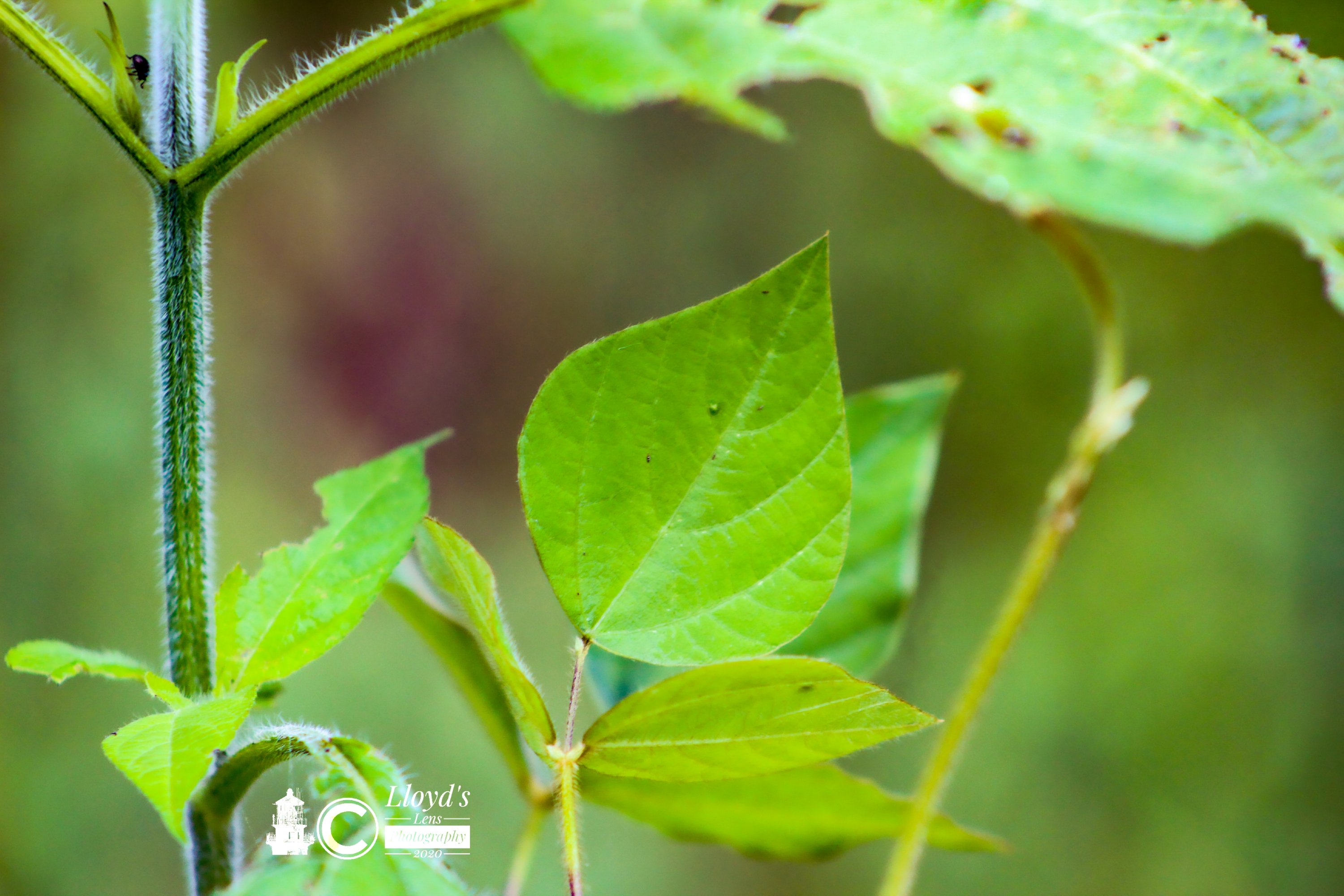
Image Titled “Hog Peanut 71420a” showing the climbing habit of Hog Peanut vines.

Native Americans also made medicine from hog peanut. The Chippewa used it as a digestive aid and the Cherokee used a tea made from the roots to wash snake bites.

The nuts are harvested in winter and with the flowers not appearing until August ( mine has not bloomed yet ) it makes sense that they wouldn’t be ready until late in the year.

I would also be amiss not to mention that the sources which do say that the pods are edible say to harvest them in the fall. They also say that the pods need to be cooked.

Some of non-food benefits are that Hog Peanut is good shelter for beneficial insects like lacewings and parasitic wasps as well as a host for skipper butterflies. Cutleaf bees also seem to prefer Hog Peanut leaves to use in their nests.

I’ve been so impressed with this gift of God through nature that I believe I’ll save a few of these seeds to plant in a designated area. Evenif I find that the “fruits and roots” are not to my liking it is beneficial to Wildlife.

Before I close I wanted to share my segment on the West Virginia Public Broadcasting documentary “Edible Mountain” working with producer Chuck Kleine was a real pleasure and I believe the start of a lifelong friendship. As I have reviewed the videos in the series I’m honored to be included with such a group of people who are keeping the skills and traditions of foraging alive.

If you would like to learn how to make Sumac Lemonade here’s the video and please continue on to the whole series and learn from the other presenters.

Hey Friends! Just a quick reminder that Lloyds Lens Photography is available for portraits!

To book me simply reach out using the Contact Page and we’ll set a date. If you’re within a 50 mile radius of Summersville West Virginia all travel fees are waived.

If you would like to Follow me on Facebook the web address is

https://www.facebook.com/aviewfromthelens/

If you’re enjoying my blog and don’t want to miss a post then you can sign up for email alerts on my website.

https://lloydslensphotographyllc.com/

Did you know that I also do portraits by appointment? If you’re interested in a portrait session either message me on Facebook or Use the Contact form. The YouTube link below takes you one of my slideshows.

https://youtu.be/FDcrY6w8oY8

Have you checked out the Zazzle Store?

I’m now using Zazzle to fulfil orders. What this means for you is a secure way to place an order, discount codes & a broader product selection! Simplymessage me on Facebookoruse the contact form on my websiteand tell me which image you want and I’ll reply with a direct link to where you can place the order.

Clicking on the photo takes you tohttps://www.zazzle.com/lloydslensphotos?rf=238248269630914251

Lastly, all of the photos and writings are my original work unless otherwise specified and are not to be copied or reproduced without expressed written permission from the photographer

Thank you again for your support of my page!