Forage Friday #124 When In Doubt.

Hello Friends! Tonight’s Feature Image is titled “Ghost In The Woods 91021a” and is available for purchase by clicking the thumbnail and reaching out to me on the contact page.

Please remember that Forage Friday is presented as trivia and not to be mistaken for medical advice.

⚠️ I have not positively identified this particular mushroom.⚠️

The old saying is when in doubt, leave it out. I’ve said before that mushrooms are a bit of a weak spot in my knowledge base. The ones that I have experience with I know well. I’ve been able to pick them and smell them and confirm that there’s no dangerous lookalikes or that they exhibit some feature that separates the specimen from all other possibilities. However, I’ve not yet gone after oyster mushrooms. Which is a little odd because they’re one of the top choice forage mushrooms out there. However, most of my knowledge of mushrooms is theoretical. I know that in addition to being edible and flavorful that oyster mushrooms can eventually remove petroleum from the environment. But I just haven’t taken the time to positively identify some and get to know them. Foraging anything new should be approached like a first date. It’s always best to get to know that person before you make any long term commitments. And in the case of mushrooms there’s a good possibility that you’ll spend the rest of your life with it. The danger is that the wrong choice could make the rest of your life a measure of minutes.

In September of 2004 an incident involving the lookalike of oyster mushrooms, the Angelwing mushroom was responsible for a string of deaths in Japan. The 59 victims that died had a history of liver problems and in those cases the rest of their lives worked out to between 13 and 29 days after they first noticed that they were sick. Which leads me to observe that anyone can have an underlying issue that makes a wild edible toxic to them but not others. Up until then the Angelwing mushroom was considered safe to eat and so older references don’t have a warning or if they do it’s not a strong one.

But there’s something going on here that makes me think that this is a oyster mushroom and not an Angelwing. That’s what it’s growing on. You see, the hazardous Angelwing mushroom grows on conifer trees and especially hemlock. The huge mushroom in our photo is definitely growing on a maple tree as seen in the next photo.
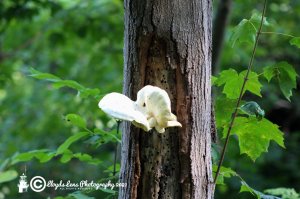
Image Titled Ghost In The Woods 91021b.

The small twig emerging from the right of the photo and behind the tree is covered in maple leaves. It’s growing out of the same tree as the mushroom and oyster mushrooms favor hardwoods.

Ghost In The Woods 91021c.

As we can see in the above photo this mushroom has gills and a pretty stout looking stem as well as a pinkish tone. The gills stop at the base of the stem which means it could be an Elm Oyster Mushroom and they are known to grow on maple trees. Elm Oyster isn’t a true Oyster Mushroom but it’s not toxic either. The fungus was growing in a state park and in a spot that was only accessible to me through my lens so I left it alone and didn’t collect any samples for closer study but if you think that you have a positive ID please drop a comment and give me your opinion.

Good night friends and be blessed throughout your days.

Announcement 2.0

For those who have been following me on Facebook and know of the struggle content providers have to get circulation from big tech I’ve been recommending for people to adopt MeWe as a social media platform. One of the problems I’ve run into on MeWe is that people don’t know how to navigate the platform. So to help with that I’ve created a permanent page on my website as a basic Basic Beginner’s Guide To MeWe I’ve tried to anticipate all basic questions there and You can bookmark the page to have as a reference and if you have any questions or suggestions don’t hesitate to contact me. I do still have a day job and I help admin several pages on both platforms so replies might be a little slow but I will answer you.

We also have the Lloyd’s Lens Photography Discussion Group on MeWe that is set up as a fully functional community. There you’ll not only be able to see and connect with me but you can also make your own posts and interact with each other.

I want you to join my group on MeWe: https://mewe.com/join/lloydslensphotographydiscussiongroup

Click the link below to jump to the Basic Beginner’s Guide To MeWe.https://lloydslensphotographyllc.com/guide-to-mewe/embed/#?secret=GJGnIQEVHc

Hey Friends! Just a quick reminder that Lloyds Lens Photography is available for portraits!

To book me simply reach out using the Contact Page and we’ll set a date. If you’re within a 50 mile radius of Summersville West Virginia all travel fees are waived.

If you’re enjoying my blog and don’t want to miss a post then you can sign up for email alerts on my website.

WELCOME TO LLOYD’S LENS PHOTOGRAPHY

https://lloydslensphotographyllc.com/embed/#?secret=ZBipPVJdZw

Click here to visithttps://lloydslensphotographyllc.com/

Have you checked out the Zazzle Store?

I’m now using Zazzle to fulfil orders. What this means for you is a secure way to place an order, discount codes & a broader product selection! Simply use the contact form on my websiteand tell me which image you want and I’ll reply with a direct link to where you can place the order.

Clicking on the photo takes you tohttps://www.zazzle.com/lloydslensphotos?rf=238248269630914251Lastly, all of the photos and writings are my original work unless otherwise specified and are not to be copied or reproduced without expressed written permission from the photographerThank you again for your support of my page!♥️

Forage Friday #123 Butterfly Weed

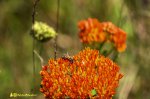
Hello Friends! Tonight’s Feature Image is titled “Sweet Endeavors 90321” and is available for purchase by clicking the thumbnail and reaching out to me on the contact page.

Please remember that Forage Friday is presented as trivia and not to be mistaken for medical advice.

⚠️ WARNING. Butterfly Weed is listed in my source materials as both toxic and edible. Most sources say that it should only be used in small amounts. Please do further research from multiple sources before considering Butterfly Weed as forage. For tonight’s post we’re speaking specifically of Asclepias tuberosa.

When I first learned that Butterfly Weed was listed as edible I was fairly surprised. Butterfly Weed is in the milkweed family and as such I was always told it was toxic. Milkweed’s association with the Monarch Butterfly further reinforced that belief because in eighth grade science we all learned that Butterflies get their toxins from the food they eat as caterpillars. Here’s what to consider. Caterpillars concentrate toxins in special organs and carry that poison throughout their lives. And as caterpillars they consume the most toxic part of milkweed. And while Butterfly Weed is in the milkweed family it lacks the milky latex sap that gives this group of plants their name. Butterfly Weed sap is clear and that’s a good identification trait to remember. Also consider it to be important that the parts safe for humans isn’t the leaves and stems. Those are toxic to us and should be avoided.

The parts of Butterfly Weed that are Forage for humans are the unopened flower buds and the young shoots. One of my gotos for information is Green Dean of Eat The Weeds and he does recommend changing the water a few times when foraging the milkweed family. With that in mind let’s take a look at Butterfly Weed.

The unopened buds should be harvested when young and are said to taste like peas. They are toxic when raw even though they lack the milky sap. The other thing that I found interesting is that the nectar contains no toxins. Butterfly Weed yields up so much nectar and it’s so sweet that the sugars will often crystallize on the flowers. These lumps of sugar can be eaten on the spot or evaporated down into syrup the same way molasses is. I do also see the potential to simply collect the lumps of hardened nectar to be powered up and stored as a natural sweetener or if you’re a bee keeper with access to Butterfly Weed in sufficient quantities it might be stored and fed to the bees at times when you do your supplemental feeding. I certainly think it’s more likely to contain micro nutrients than sugar purchased at a store and more organic than corn syrup. If you’re a person who has plenty of room to raise Butterfly Weed and can meticulously harvest the lumps when they’re available then there might be a niche market for such a resource. However I should point out that unless you are able to develop a technique or technology to make it extremely efficient it may not be worth the effort to do on an industrial scale.

Old timers would often speak of “Pleurisy Root” and that is one of the names for Butterfly Weed. Traditionally Native Americans used the plant for a variety of lung ailments as well as Rheumatism. The powdered roots were applied externally to heal bruises and wounds.

Butterfly Weed is a native of the Appalachian Mountains and the bright orange flowers are a wonderful addition to native landscaping. As the name suggests it does attract butterflies and other pollinators. Like the common milkweed that seed pod contains a fluffy mass of fibers that were once used in life jackets by the Navy. And while we don’t need it for life jackets anymore I do wonder if it would make a nice natural textile.

That’s it for tonight’s Forage Friday! Good night friends and be blessed throughout your days.

Announcement 2.0

For those who have been following me on Facebook and know of the struggle content providers have to get circulation from big tech I’ve been recommending for people to adopt MeWe as a social media platform. One of the problems I’ve run into on MeWe is that people don’t know how to navigate the platform. So to help with that I’ve created a permanent page on my website as a basic Basic Beginner’s Guide To MeWe I’ve tried to anticipate all basic questions there and You can bookmark the page to have as a reference and if you have any questions or suggestions don’t hesitate to contact me. I do still have a day job and I help admin several pages on both platforms so replies might be a little slow but I will answer you.

We also have the Lloyd’s Lens Photography Discussion Group on MeWe that is set up as a fully functional community. There you’ll not only be able to see and connect with me but you can also make your own posts and interact with each other.

I want you to join my group on MeWe: https://mewe.com/join/lloydslensphotographydiscussiongroup

Click the link below to jump to the Basic Beginner’s Guide To MeWe.https://lloydslensphotographyllc.com/guide-to-mewe/embed/#?secret=GJGnIQEVHc

Hey Friends! Just a quick reminder that Lloyds Lens Photography is available for portraits!

To book me simply reach out using the Contact Page and we’ll set a date. If you’re within a 50 mile radius of Summersville West Virginia all travel fees are waived.

If you’re enjoying my blog and don’t want to miss a post then you can sign up for email alerts on my website.

WELCOME TO LLOYD’S LENS PHOTOGRAPHY

https://lloydslensphotographyllc.com/embed/#?secret=ZBipPVJdZw

Click here to visithttps://lloydslensphotographyllc.com/

Have you checked out the Zazzle Store?

I’m now using Zazzle to fulfil orders. What this means for you is a secure way to place an order, discount codes & a broader product selection! Simply use the contact form on my websiteand tell me which image you want and I’ll reply with a direct link to where you can place the order.
Clicking on the photo takes you tohttps://www.zazzle.com/lloydslensphotos?rf=238248269630914251Lastly, all of the photos and writings are my original work unless otherwise specified and are not to be copied or reproduced without expressed written permission from the photographerThank you again for your support of my page!♥️

Forage Friday #122 Wild Sunflowers

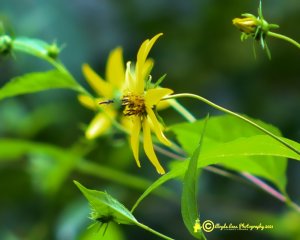
Hello Friends! Tonight’s Feature Image is titled “Sunshine After Rain 82821” and is available for purchase by clicking the thumbnail and reaching out to me on the contact page.

Please remember that Forage Friday is presented as trivia and not to be mistaken for medical advice.

FULL DISCLOSURE: I’m not positive about the identity of the sunflowers in tonight’s post. They Sunflowers but I’m on the fence about if they’re Woodland Sunflower or Pale Leaf Sunflower or if I have photos of both species. While online sources say that both species produce edible parts I’m only able to confirm that Pale Leaf Sunflower has edible roots.

Nothing signals that we’re in the last days of Summer like the appearance of sunflowers. In our modern world we think of sunflowers as giants with huge blossoms full of large seeds to roasted and covered with salt. And the they are wonderful! However, that hybrid comes to us from Russia. But it’s not necessarily alien to North America. The history of the giant sunflowers that we all know and love started in the New World when Native Americans began to cultivate a particular type of yellow flower that blooms in August. I’m not sure what species of sunflowers were the first and there’s several to choose from. Jerusalem Artichoke has the most widely used roots and are available in stores. They’re often grown in gardens and were important to rural families because they produced massive amounts of edible tubers. They do escape the garden and are often found in the wild but there’s already quite a bit of information about them on the internet. The same goes for the iconic giant sunflowers that are grown commercially.

The living ancestors of both of these plants would have looked a lot like the one in tonight’s Feature Image. Only about four feet tall with flowers that are only a few inches in diameter. The wild sunflowers also have much smaller seeds that require a little more work to prepare.

Image Titled “inbound pollinator 82821”

Although small compared to the hybrid sunflowers the wild versions are highly productive. They make up the difference by producing multiple blooms and really drawing in the pollinators. The tiny sweat bee in the image above is probably less than one quarter inch long. But the bee is a mighty little powerhouse itself and soon this sunflower will have a bunch of ripe seeds that goldfinches absolutely love. I’ve observed from my feeders that goldfinches are messy eaters. I think that they drop as many seeds as they eat and thus help spread a colony of sunflowers.

Native Americans used the seeds from wild sunflowers to make flour or just eat out of hand. And even found that the unopened blossoms were delicious. Eventually the sunflowers spread to central and south America were the people cultivated them further and developed more productive races that eventually became separate species.

So here’s the thing about types of wild sunflowers. I’ve struggled to decide if I have Helianthus divaricatus which is Woodland Sunflower or Helianthus Stumosus which is Pale Leaf Sunflower. That’s important because the vast majority of online sources only list Pale Leaf Sunflower as a wild edible. Neither plant is considered toxic but when I see a difference in the amount of listings I have to presume that there’s a reason why one is giving preference above the other. And only Jerusalem Artichoke and Pale Leaf Sunflower are noted as having the edible tubers. There is something special about the tubers of the Jerusalem Artichoke which I suspect that Pale Leaf Sunflower shares and that’s the type of starch stored in it. It contains a substance known as Inulin and inulin is capable of helping diabetics control blood sugar. It digests slowly and thus stability is achieved.

Native Americans would grind the seeds of these wild sunflowers and boil the mass to release the oils in the seeds. In addition to food uses they used the sunflower oil as a base for paint. I’m not aware of Native Americans making soap but I do understand that at some point someone realized that the oil from sunflowers could be mixed with lye from wood ashes and made into soap.

Before signing off tonight I do want to point out that there are some look-alikes that are often found nearby wild sunflowers.

Wingstem 82821

The first being wingstem. The most noticeable difference between wingstem and sunflower is its namesake. The stem of wingstem has “wings” in the form of grasslike flanges running up the length of the stem and the seed head is more globe like. Wingstem isn’t listed as toxic but it’s said to taste awful.

Cutleaf Coneflower 82821

The next is cutleaf coneflower. I haven’t really researched it yet but it’s in the buttercup family and that means it’s potentially toxic. Notice the cone shape center of the flower that gets taller as it matures and the petals that seem to droop. I’ve noticed a few leaves that seem to opposite of each other but the overall pattern of leaf growth is the alternate pattern. It’s said that Native Americans used cutleaf coneflower as a detoxifying tonic in early Spring but I have not yet looked into it so for now it’s off the table.

That’s it for tonight’s Forage Friday! Good night friends and be blessed throughout your days.

I currently share my posts to different groups on various social media platforms. Some groups have the comments shut off after a certain time period. That’s OK because our admins and moderators are volunteers and have busy lives of their own. They shouldn’t need to constantly babysit comments. But if you want to add your own thoughts to the post there’s a public comment section at the very bottom of the page on each post.

Announcement 2.0

For those who have been following me on Facebook and know of the struggle content providers have to get circulation from big tech I’ve been recommending for people to adopt MeWe as a social media platform. One of the problems I’ve run into on MeWe is that people don’t know how to navigate the platform. So to help with that I’ve created a permanent page on my website as a basic Basic Beginner’s Guide To MeWe I’ve tried to anticipate all basic questions there and You can bookmark the page to have as a reference and if you have any questions or suggestions don’t hesitate to contact me. I do still have a day job and I help admin several pages on both platforms so replies might be a little slow but I will answer you.

We also have the Lloyd’s Lens Photography Discussion Group on MeWe that is set up as a fully functional community. There you’ll not only be able to see and connect with me but you can also make your own posts and interact with each other.

I want you to join my group on MeWe: https://mewe.com/join/lloydslensphotographydiscussiongroup

Click the link below to jump to the Basic Beginner’s Guide To MeWe.https://lloydslensphotographyllc.com/guide-to-mewe/embed/#?secret=GJGnIQEVHc

Hey Friends! Just a quick reminder that Lloyds Lens Photography is available for portraits!

To book me simply reach out using the Contact Page and we’ll set a date. If you’re within a 50 mile radius of Summersville West Virginia all travel fees are waived.

If you’re enjoying my blog and don’t want to miss a post then you can sign up for email alerts on my website.

WELCOME TO LLOYD’S LENS PHOTOGRAPHY

https://lloydslensphotographyllc.com/embed/#?secret=ZBipPVJdZw

Click here to visithttps://lloydslensphotographyllc.com/

Have you checked out the Zazzle Store?

I’m now using Zazzle to fulfil orders. What this means for you is a secure way to place an order, discount codes & a broader product selection! Simply use the contact form on my websiteand tell me which image you want and I’ll reply with a direct link to where you can place the order.

Clicking on the photo takes you tohttps://www.zazzle.com/lloydslensphotos?rf=238248269630914251Lastly, all of the photos and writings are my original work unless otherwise specified and are not to be copied or reproduced without expressed written permission from the photographerThank you again for your support of my page!♥️

Forage Friday #121 American Bellflower

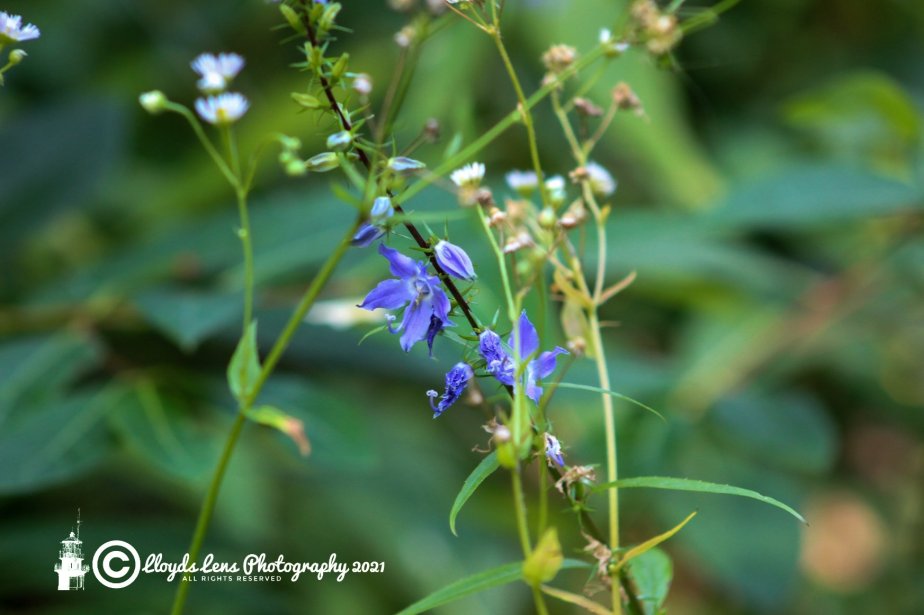
Hello Friends! Tonight’s Feature Image is titled “American Bellflower 72421a” and is available for purchase by clicking the thumbnail and reaching out to me on the contact page.

Please remember that Forage Friday is presented as trivia and not to be mistaken for medical advice.

In my Forage Friday articles I often imagine what my ancestors goals were as they gathered from the Appalachian Mountains. In my mind’s eye I see them in times of bounty and hardship. Certainly they would have selected plants from both native and introduced species. I have bloodlines from both sides of the Atlantic Ocean and I often wonder how many of the early ones interacted with each other and drew from each other’s knowledge to create the best of both worlds. Certainly each would want to cultivate that wich is most helpful and plant them as near to home as possible. Today things are a little easier. Our ability to cover distance by vehicle and preservation technology provides a great deal of food security. But that strength comes with a real vulnerability as we all learned in 2020. Things didn’t get bad enough here to force me into relying on the plants that I cover in Forage Friday but we’re really only a short disaster away from depending on what we have at hand. One resource that I encountered recently was American Bellflower ( Campanulastrum americanum)

I noticed the beautiful blue star shaped flowers growing on tall spikes in mottled sunlight and immediately jumped out of the truck with the camera. The insects zipping through the light certainly resembled a fireworks show. It’s become my mode of operation to take photos first and then look up the plant and learn all about it. It wasn’t until I’d done a little research that I learned American Bellflower was a wild edible. It’s is native to my mountain home and I imagine it was used but it doesn’t really seem to have made it into the culture like ramps, pojeweed and goldenseal. The internet says that in spite of being non-toxic that the flavor is rather bland. I’ve also not found it in large quantities and for those two reasons I presume it was overlooked. Flowers, foliage and roots are all edible and there are a few species that are grown specifically as a garden vegetable. I presume it’s used to add bulk to things that are strongly flavored such as garlic mustard.

Native Americans were said to have used it in teas for respiratory issues such as tuberculosis. However, there’s not much more than that at a glance. One source suggests that it might have been used for inflammation and epilepsy.

All sources agree that its most often cultivated as an ornamental and with its showy flowers and ability to attract pollinators its a great addition to the landscape.

Good night friends and be blessed throughout your days.

Announcement 2.0

For those who have been following me on Facebook and know of the struggle content providers have to get circulation from big tech I’ve been recommending for people to adopt MeWe as a social media platform. One of the problems I’ve run into on MeWe is that people don’t know how to navigate the platform. So to help with that I’ve created a permanent page on my website as a basic Basic Beginner’s Guide To MeWe I’ve tried to anticipate all basic questions there and You can bookmark the page to have as a reference and if you have any questions or suggestions don’t hesitate to contact me. I do still have a day job and I help admin several pages on both platforms so replies might be a little slow but I will answer you.

We also have the Lloyd’s Lens Photography Discussion Group on MeWe that is set up as a fully functional community. There you’ll not only be able to see and connect with me but you can also make your own posts and interact with each other.

I want you to join my group on MeWe: https://mewe.com/join/lloydslensphotographydiscussiongroup

Click the link below to jump to the Basic Beginner’s Guide To MeWe.https://lloydslensphotographyllc.com/guide-to-mewe/embed/#?secret=GJGnIQEVHc

Hey Friends! Just a quick reminder that Lloyds Lens Photography is available for portraits!

To book me simply reach out using the Contact Page and we’ll set a date. If you’re within a 50 mile radius of Summersville West Virginia all travel fees are waived.

If you’re enjoying my blog and don’t want to miss a post then you can sign up for email alerts on my website.

WELCOME TO LLOYD’S LENS PHOTOGRAPHY

https://lloydslensphotographyllc.com/embed/#?secret=ZBipPVJdZw

Click here to visithttps://lloydslensphotographyllc.com/

Have you checked out the Zazzle Store?

I’m now using Zazzle to fulfil orders. What this means for you is a secure way to place an order, discount codes & a broader product selection! Simply use the contact form on my websiteand tell me which image you want and I’ll reply with a direct link to where you can place the order.

Clicking on the photo takes you tohttps://www.zazzle.com/lloydslensphotos?rf=238248269630914251Lastly, all of the photos and writings are my original work unless otherwise specified and are not to be copied or reproduced without expressed written permission from the photographerThank you again for your support of my page!♥️

Forage Friday #120. Wild Basil

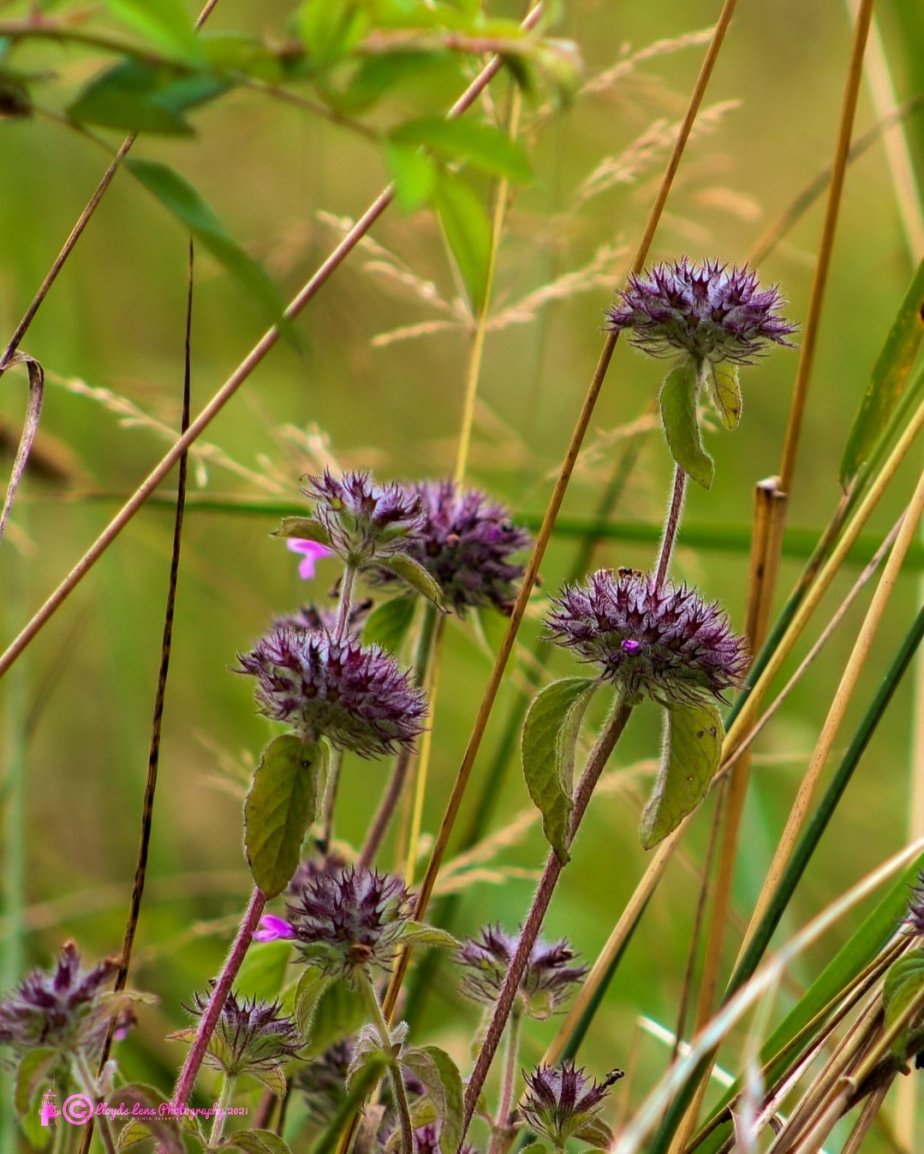
Hello Friends! Tonight’s Feature Image is titled “Wild Basil 81321a” and is available for purchase by clicking the thumbnail and reaching out to me on the contact page.

Please remember that Forage Friday is presented as trivia and not to be mistaken for medical advice.

A little skipper butterfly first drew my attention to the small purple flowers that seemed to be stuck in pincushions growing under a barbed wire fence. The cluster of small hairy plants reminded me of something from a Dr. Seuss landscape in one of his books. The aroma and square stem let’s me know that this is one of the mints. The flavor is also minty with a peppery undertone. This is wild Basil. But it’s not really the same as Basil from the herb section of a grocery store or the infamous garden herb. Both are in the mint family and the flavor is close enough to Holy Basil that they’re used in similar ways. I’ve not looked it up specifically but it’s a bit of a “no brainer” that in tough times wild basil would have been used to flavor meats and stews. I can easily imagine people of my grandfather’s generation sweeping the edges of the Appalachian forests and collecting wild basil along with the other herbs of mid to late summer. Some would be used fresh and the rest hung to cure on a wire where the wind could help dry them but the sun and rain couldn’t ruin them. The leaves would be broken up and perhaps the stem would be ground to a powder. The end product was stored in a Mason jar or repurposed tobacco tin for winter uses.

Image Titled “Wild Basil 81321b”.

The plant is astringent and could have used to treat skin irritation. It’s considered to be a cardiostimulant in traditional medicine. Old time doctors would have recommended this plant to aid in digestion and since it’s got at least some eugenol it may have been part of a compound for managing blood sugar. Although I can’t really confirm that at this time. It’s listed as an expectorant which means it’s believed to help aid in expelling phlegm. It’s not really hard to imagine a family member with a cough being fed a broth that contains a good amount of any of the mints and especially ones like wild sage and wild basil. Such home remedies were prevalent in the post Civil War Era when the South was still rebuilding.

That’s it for tonight’s Forage Friday. Good night friends and be blessed throughout your days.

Announcement 2.0

For those who have been following me on Facebook and know of the struggle content providers have to get circulation from big tech I’ve been recommending for people to adopt MeWe as a social media platform. One of the problems I’ve run into on MeWe is that people don’t know how to navigate the platform. So to help with that I’ve created a permanent page on my website as a basic Basic Beginner’s Guide To MeWe I’ve tried to anticipate all basic questions there and You can bookmark the page to have as a reference and if you have any questions or suggestions don’t hesitate to contact me. I do still have a day job and I help admin several pages on both platforms so replies might be a little slow but I will answer you.

We also have the Lloyd’s Lens Photography Discussion Group on MeWe that is set up as a fully functional community. There you’ll not only be able to see and connect with me but you can also make your own posts and interact with each other.

I want you to join my group on MeWe: https://mewe.com/join/lloydslensphotographydiscussiongroup

Click the link below to jump to the Basic Beginner’s Guide To MeWe.https://lloydslensphotographyllc.com/guide-to-mewe/embed/#?secret=GJGnIQEVHc

Hey Friends! Just a quick reminder that Lloyds Lens Photography is available for portraits!

To book me simply reach out using the Contact Page and we’ll set a date. If you’re within a 50 mile radius of Summersville West Virginia all travel fees are waived.

If you’re enjoying my blog and don’t want to miss a post then you can sign up for email alerts on my website.

WELCOME TO LLOYD’S LENS PHOTOGRAPHY

https://lloydslensphotographyllc.com/embed/#?secret=ZBipPVJdZw

Click here to visithttps://lloydslensphotographyllc.com/

Have you checked out the Zazzle Store?

I’m now using Zazzle to fulfil orders. What this means for you is a secure way to place an order, discount codes & a broader product selection! Simply use the contact form on my websiteand tell me which image you want and I’ll reply with a direct link to where you can place the order.
Clicking on the photo takes you tohttps://www.zazzle.com/lloydslensphotos?rf=238248269630914251Lastly, all of the photos and writings are my original work unless otherwise specified and are not to be copied or reproduced without expressed written permission from the photographerThank you again for your support of my page!♥️