Forage Friday #109 – Hawthorne

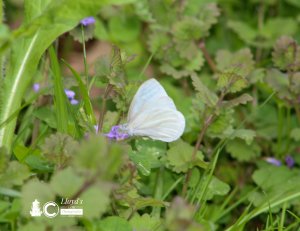
Hello Friends! Tonight’s Feature Image is titled “Hawthorne 52221a” and is available for purchase by clicking the thumbnail and reaching out to me on the contact.

Please remember that Forage Friday is presented as trivia and not to be mistaken for medical advice.

I imagine that my Celtic ancestors would have been able to tell us as much about hawthorns as they could hazelnuts. The tree is a European native and has been known to live as long as four hundred years. In a time before the kings when the clans elected chieftains and elders the hawthorn would have been a family heirloom. It’s a member of order of Rosales and like roses is known for the foreboding thorns that gaurd it’s boughs. Some types of hawthorn have branching thorns that look like a miniature version of honey locus thorns and others bare branches that look as if they grow bayonets. I’ve not decided wich specific brand of hawthorn in in tonight’s Feature Image but I’m leaning towards cockspur hawthorn which is nativetoNorthAmerica. For Forage Friday purposes it really doesn’t matter much because all hawthorns yield edible berries.  However,  the seeds can actually be deadly. Like others of the maleae tribe which is the apple tribe the seeds contain a type of cyanide. Now when I eat apples I eat seeds and all and have never suffered any kind of ill effects. But I only eat a few apples. So I only ingest a tiny amount of seeds and there’s a purposes for that and it’s best covered by a certified expert. However just to satisfy curiosity the substance known as amygdalin only occurs in very small amounts in apples. It’s estimated that at minimum one would need to consume 150 crushed apple seeds to be harmful. Some studies have shown that in such low amounts as would be found in the occasional single apple can help to prevent some cancers.  (Please seek expert advice before consuming apple seeds or any other herbal remedies for that matter.) So let’s think about it for a minute.  Apples are not hawthorns and therefore may contain a much higher dose of amygdalin. When amygdalin reaches the small intestine it’s converted into hydrogen cyanide and thus a deadly poison. If an adult accidentally swallows a seed or two it’s not considered to be a big deal. But if a small child swallows the same amount then it could have dire consequences. I don’t say this to scare people away from hawthorn. It’s a cultural staple of our ancestors. Just don’t eat the seeds.

After careful removal of the seeds the berries can be eaten raw but one of the favorite ways to enjoy it is to make hawthorn jelly. There’s a little timing involved. The hawthorn is rich in pectin and has the most pectin just when it’s first ripe. As the berries age they become more sugary and lose pectin. For those who are interested in self-sufficient living having access to a few hawthorn trees means growing their own pectin. A writer at Eat The Weeds UK has provided an interesting recipe for hawthorn jelly and so rather than steal someone else’s work I am providing a link to their original content .

This same author also has an interesting recipe for something that they call Dragon’s Breath Hawthorne Relish .

Famed SAS survivalist Ray Mears has a no cook method for making not only a hawthorn jelly but a way to dehydrate it in the sun. The example he provided on set was still edible after three years.

In addition to the berries hawthorn provides edible leaves, flower buds and even the young shoots are edible. All of this in combination with the potential for using the thorny tree as a protective trimmed hedge makes hawthorn a great option to have on the homestead.

Typically when I cover the medicinal values of a Forage Friday plant I draw on decades of reading and YouTube videos but tonight’s source is Mount Sinai. According to them hawthorns can help treat an array of cardiac problems including irregular heartbeat, high blood pressure, hardening of the arteries, chest pain and even heart failure. The included that even the leaves and flowers are used. This brings up an important point. Even though the hawthorn provides a powerhouse of food values for people who are already on medication for heart problems hawthorn could represent a hazard of over medication. So please consult a physician if you’re in this category.

That’s all I for tonight’s Forage Friday. Good night friends and be blessed throughout your days.

Announcement 2.0

For those who have been following me on Facebook and know of the struggle content providers have to get circulation from big tech I’ve been recommending for people to adopt MeWe as a social media platform. One of the problems I’ve run into on MeWe is that people don’t know how to navigate the platform. So to help with that I’ve created a permanent page on my website as a basic Basic Beginner’s Guide To MeWe I’ve tried to anticipate all basic questions there and You can bookmark the page to have as a reference and if you have any questions or suggestions don’t hesitate to contact me. I do still have a day job and I help admin several pages on both platforms so replies might be a little slow but I will answer you.

We also have the Lloyd’s Lens Photography Discussion Group on MeWe that is set up as a fully functional community. There you’ll not only be able to see and connect with me but you can also make your own posts and interact with each other.

I want you to join my group on MeWe: https://mewe.com/join/lloydslensphotographydiscussiongroup

Click the link below to jump to the Basic Beginner’s Guide To MeWe.https://lloydslensphotographyllc.com/guide-to-mewe/embed/#?secret=GJGnIQEVHc

Hey Friends! Just a quick reminder that Lloyds Lens Photography is available for portraits!

To book me simply reach out using the Contact Page and we’ll set a date. If you’re within a 50 mile radius of Summersville West Virginia all travel fees are waived.

If you’re enjoying my blog and don’t want to miss a post then you can sign up for email alerts on my website.

WELCOME TO LLOYD’S LENS PHOTOGRAPHY

https://lloydslensphotographyllc.com/embed/#?secret=ZBipPVJdZw

Click here to visithttps://lloydslensphotographyllc.com/

Have you checked out the Zazzle Store?

I’m now using Zazzle to fulfil orders. What this means for you is a secure way to place an order, discount codes & a broader product selection! Simply use the contact form on my websiteand tell me which image you want and I’ll reply with a direct link to where you can place the order.

Clicking on the photo takes you tohttps://www.zazzle.com/lloydslensphotos?rf=238248269630914251Lastly, all of the photos and writings are my original work unless otherwise specified and are not to be copied or reproduced without expressed written permission from the photographerThank you again for your support of my page!♥️

Forage Friday #108 False Solomon’s Seal

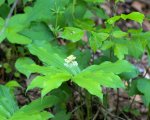
Hello Friends! Tonight’s Feature Image is titled False Solomon’s Seal 51821 and was taken specifically for Forage Friday. All photos found on my website are my original work and are available for purchase by clicking the thumbnail and reaching out to me on the contact page.

Please remember that Forage Friday is presented as trivia and not to be mistaken for medical advice.

The old man tread cautiously along the path. Large rocks near the trail would be a perfect place for a rattlesnake. He carried an odd walking stick that still had a branch protruding from one side and the tip was cut to a wedge shape. He used the stick to gently push back the undergrowth before taking a step. A basket made of woven willow shoots hung from his shoulder and rested on his hip. His wide brimmed hat partially obscured his face and he whistles an old Scottish tune as works. He takes note of the types of trees that surround him and quickly assesses the ferns and other so called weeds. Soil science as we know it today is unknown to him. But he knows the pointers that gives him an idea of what grows here. He’s wise enough to know that he should only harvest no more than one third of the bounty that his maker has blessed him with. A little of this and a little of that goes into the basket. A few mushrooms from the old stumps. A couple of bulbs are dug from the hillside using the wedge of his stick as a lever. The protruding branch allows him to dig in by stepping on it. He rejects the false hellebores and their poison. A little farther down the trail he spots his prize growing in the dappled sunlight. He has found the False Solomon’s Seal. The treasured shoots have a flavor somewhat like asparagus although slightly bitter. They will go into the pot and the rootlike rhizomes will be quickly broken up and replanted a little closer to his cabin. His gray beard parts with a smile as he begins his harvest.

False Solomon’s Seal was a native treasure. Being a perennial plant that is propagated in a similar was as potatoes it’s also one that’s easy to establish if you have the right growing conditions. It likes rich, well drained soil and as I said in the story, it wants dappled light.

The spot where I found the one in tonight’s Feature Image was growing among hardwoods like birch, maple and Hornbeam. There is a ditch below the roots that usually holds water but plant itself is above that. One of the problems in the mountains is the steep grade of the mountains leading to fertility loss in the higher elevations. It also means that the fertility will be concentrated in spots where the water settles in divits and benches. It’s in these places where most herbs are able to take advantage of the sediments and flourish.

The young shoots are collected from the place where they naturally break off from the main stem. If you start near the top and gently flex the stem while working your way down there will be a spot where the stem snaps off. Usually everything above that spot is tender enough to eat. Below that spot the stem is still edible but may be tough to chew. So it’s a good technique for conservation to find that natural breaking point and leave the rest to regrow and reproduce. The exception of course is when you want to propagate the plant.

The rhizomes of this plant are generally referred to as a root and is segmented. Each segment represents one year of growth just like the rings of a tree. And just like the stem it will have places where it naturally breaks. These nodes can be planted and will generate a whole new plant similar to planting the eyes of a potato.

The roots are edible but only if you follow a special process. Native Americans would soak them in lye overnight to neutralize the toxins and then after a thorough rinse they can be parboiled. They would also dry them and use the roots in teas to treat constipation and coughing.

In summer the pyramid of flowers at the tip of the stem will give rise to ruby red berries. The berries are edible but large quantities are laxative. When we review accounts of Native Americans using the berries they generally mix them with something else like cranberries. The mix would sometimes be crushed into a juice or dried berries added to a tea.

Traditional medicinal uses include using a tea made from the leaves to wash rashes for the relief of itching and to staunch bleeding. The root seems to have been valued more for medicine than food. The root tea was used as a laxative and stomach tonic. The root tea was also used as a treatment for Rheumatism but I’m not sure if that was a wash or if it was internal. The most interesting use for the root was to “cure” insanity. The method was to place the dried root in a fire and the crazy person would breathe the smoke to regain sanity. It’s usually mentioned as a side note that this was also done to stop babies from crying and it leads me to wonder if burning the roots brings out a sedative quality. Of course that’s a question for a biochemist to answer.

My bottom line opinion is that if you have a place where you can harvest False Solomon’s Seal without damaging the natural population it’s food value makes it worth the effort. It’s a very attractive plant in early Spring and even though the berries are only able to be consumed in limited quantities they are food for songbirds and game birds like turkey and pheasant. The latter two being an indirect harvest.

That’s it for tonight friends. Good night and be blessed throughout your days.

Announcement 2.0

For those who have been following me on Facebook and know of the struggle content providers have to get circulation from big tech I’ve been recommending for people to adopt MeWe as a social media platform. One of the problems I’ve run into on MeWe is that people don’t know how to navigate the platform. So to help with that I’ve created a permanent page on my website as a basic Basic Beginner’s Guide To MeWe I’ve tried to anticipate all basic questions there and You can bookmark the page to have as a reference and if you have any questions or suggestions don’t hesitate to contact me. I do still have a day job and I help admin several pages on both platforms so replies might be a little slow but I will answer you.

We also have the Lloyd’s Lens Photography Discussion Group on MeWe that is set up as a fully functional community. There you’ll not only be able to see and connect with me but you can also make your own posts and interact with each other.

I want you to join my group on MeWe: https://mewe.com/join/lloydslensphotographydiscussiongroup

Click the link below to jump to the Basic Beginner’s Guide To MeWe.https://lloydslensphotographyllc.com/guide-to-mewe/embed/#?secret=GJGnIQEVHc

Hey Friends! Just a quick reminder that Lloyds Lens Photography is available for portraits!

To book me simply reach out using the Contact Page and we’ll set a date. If you’re within a 50 mile radius of Summersville West Virginia all travel fees are waived.

If you’re enjoying my blog and don’t want to miss a post then you can sign up for email alerts on my website.

WELCOME TO LLOYD’S LENS PHOTOGRAPHY

https://lloydslensphotographyllc.com/embed/#?secret=ZBipPVJdZw

Click here to visithttps://lloydslensphotographyllc.com/

Have you checked out the Zazzle Store?

I’m now using Zazzle to fulfil orders. What this means for you is a secure way to place an order, discount codes & a broader product selection! Simply use the contact form on my websiteand tell me which image you want and I’ll reply with a direct link to where you can place the order.
Clicking on the photo takes you tohttps://www.zazzle.com/lloydslensphotos?rf=238248269630914251Lastly, all of the photos and writings are my original work unless otherwise specified and are not to be copied or reproduced without expressed written permission from the photographerThank you again for your support of my page!♥️

Forage Friday #106 Yellow Poplar (Tulip Tree)

Hello Friends! Tonight’s Feature Image is titled “Good Morning World 41021” and is available for purchase by clicking the thumbnail and reaching out to me on the contact page.

Please remember that Forage Friday is presented as trivia and not to be mistaken for medical advice.

The glow of an oil lamp illuminated the canvas tent as the surgeon entered inside. He casts a concerned look around the room. So many of his soldiers were suffering with the Remitting Fever. As a surgeon it didn’t matter to him if his patients were wearing a blue or gray coat. All that mattered was that these souls were in need of medicine. And a medicine that he did not have. He did the best he could to make them comfortable until the fever passed and went back outside to sit by the fire and pray for help. The thunder of hooves on the trail broke the constant drone of insects and frogs and soon a rider emerged from the bushes with a few amber bottles. The liquid inside was brown and bitter with the consistency of thin syrup. The surgeon administered the liquid as instructed by the accompanying letter and by morning his prayer had been answered.

During the Civil War malaria was known as the Remitting Fever and was a huge problem for both the Union and the Confederate troops in the South. The prescription for malaria was Quinine made from the bark of cinchona trees but it was expensive and in short supply. I’m not sure how it came to be but I strongly suspect that it was a suggestion from the Cherokee who had allied with the South. Traditionally, the Cherokee had used the bark of the Yellow Poplar to treat fever and according to the history it had been quite successful. Now to be honest I took some creative liberty in the little fiction story above but sometime between the Civil War and the 1800s a method of creating a viable alternative to the expensive Quinine. The complex process involved compounding the powdered inner bark of Black Willow, Dogwood and Yellow Poplar in an alcoholic extract. Further processing involved charcoal filters and a few other substances until the brown syrup like liquid was obtained. The Quinine substitute called for fifty pounds of the combined tree barks and if I read it correctly sixteen gallons of “proof wiskey”.

I doubt that the Cherokee used that level of complexity in their Yellow Poplar preparation. They most likely collected the inner bark from Yellow Poplar roots in the Spring when it peels easily and dried it in strips to use in a tea. In addition to using it for fever it cleared the body of parasites.

The inner bark and fresh leaves were applied as a poultice for Rheumatism and boils. And a salve made from the flower bulbs was used to treat burns and most likely other minor skin injuries.

Of course this is a Forage Friday post and as such I need to address the food value of Yellow Poplar. As I researched for the article the only mention in the way of food was something called “Cherokee Honey”. Prior to the 1800s there was no honeybees in North America. Everything was pollinated by the solitary bees like sweat bees along with other insects and hummingbirds. Without honeybees you don’t have honey. But that’s not to say that there’s no way to sweeten food. The other name for Yellow Poplar is Tulip Tree because of Tulip shaped flowers and as a kid I would either pick the flowers from low hanging limbs or climb a tree to reach them. In the very base of the flowers there’s a nectar that’s as sweet as the bark is bitter. The closest thing to it in the store is Agave nectar. And since we know that Native Americans made maple syrup it’s reasonable to presume that they applied that same skill to evaporate the nectar of the Yellow Poplar until they had syrup that was similar to honey. I don’t know for a fact that it had medicinal values like honey but the tree does produce antimicrobial compounds and the high sugar content would have helped to keep it for a little while. Sucking the raw nectar from a Yellow Poplar flower is like finding wild candy to begin with! I imagine that they may have even mixed it with either Native Honeysuckle or wild berries to get different flavors as well.

Native Americans also called Yellow Poplar the Canoe tree. The wood itself very buoyant and its really easy to carve. The innovation of plywood made Yellow Poplar a valuable resource for West Virginia. By peeling the wood in long sheets and crisscrossing the grain we’ve created a very strong building material. And it replenishes itself pretty fast too making Yellow Poplar a renewable resource.

That’s about all I have for tonight friends. Good night and be blessed throughout your days.

Announcement 2.0

For those who have been following me on Facebook and know of the struggle content providers have to get circulation from big tech I’ve been recommending for people to adopt MeWe as a social media platform. One of the problems I’ve run into on MeWe is that people don’t know how to navigate the platform. So to help with that I’ve created a permanent page on my website as a basic Basic Beginner’s Guide To MeWe I’ve tried to anticipate all basic questions there and You can bookmark the page to have as a reference and if you have any questions or suggestions don’t hesitate to contact me. I do still have a day job and I help admin several pages on both platforms so replies might be a little slow but I will answer you.

We also have the Lloyd’s Lens Photography Discussion Group on MeWe that is set up as a fully functional community. There you’ll not only be able to see and connect with me but you can also make your own posts and interact with each other.

I want you to join my group on MeWe: https://mewe.com/join/lloydslensphotographydiscussiongroup

Click the link below to jump to the Basic Beginner’s Guide To MeWe.https://lloydslensphotographyllc.com/guide-to-mewe/embed/#?secret=GJGnIQEVHc

Hey Friends! Just a quick reminder that Lloyds Lens Photography is available for portraits!

To book me simply reach out using the Contact Page and we’ll set a date. If you’re within a 50 mile radius of Summersville West Virginia all travel fees are waived.

If you’re enjoying my blog and don’t want to miss a post then you can sign up for email alerts on my website.

WELCOME TO LLOYD’S LENS PHOTOGRAPHY

https://lloydslensphotographyllc.com/embed/#?secret=ZBipPVJdZw

Click here to visithttps://lloydslensphotographyllc.com/

Have you checked out the Zazzle Store?

I’m now using Zazzle to fulfil orders. What this means for you is a secure way to place an order, discount codes & a broader product selection! Simply use the contact form on my websiteand tell me which image you want and I’ll reply with a direct link to where you can place the order.

Clicking on the photo takes you tohttps://www.zazzle.com/lloydslensphotos?rf=238248269630914251Lastly, all of the photos and writings are my original work unless otherwise specified and are not to be copied or reproduced without expressed written permission from the photographerThank you again for your support of my page!♥️

Forage Friday #105 Cuckoo Flower

Hello Friends! Tonight’s Feature Image was taken specifically for Forage Friday. All photos found on my website are my original work unless otherwise specified and are available for purchase by clicking the thumbnail and reaching out to me on the contact page.

Please remember that Forage Friday is presented as trivia and not to be mistaken for medical advice.

The rain settles out in my Appalachian Mountains and with the emergence of the sun I’m drawn out of the house for a bit of fresh air. I’ve given a strip of space around my yard back to nature and with the expectation of trimming back some trees that would endangere my house I let what wants to grow there be there. Occasionally something new to me pops up and get to learn all about it and observe it throughout its life cycle. That’s how I was introduced to the cuckoo flower. Cuckoo flower gets its common name because it appears at about the same time that the Cuckoo bird begins to make it’s distinctive call. Which struck me as odd because because the Cuckoo is a native of North America and the Cuckoo flower is native to Europe and Asia. But Cuckoo flower is also known as milk maids so perhaps it didn’t get to be called Cuckoo flower until it arrived here.

Cuckoo flower is a type of mustard and that puts it in the Brassicaceae family just like broccoli and cauliflower. It’s been here in North America long enough to have been naturalized and a common “weed” in yards and gardens. Like many so called weeds cuckoo flower actually comes with some benefits.

For the naturalist and wildlife lovers cuckoo flower attracts the orange tip butterflies which at this point I believe to be a European species but I could be wrong. I have noticed that they seem to attract insects of many types. There are actually three different insects on the flowers in the Featured Image. One looks like a flea beetle and I’m guessing that it’s the wings of a tacinid fly sticking out from behind one of the blooms. The third I haven’t identified. But they all seem to like the cuckoo flower. And with good reason. In spite of the bitter flavor cuckoo flower is rich in vitamin C and can be eaten raw or cooked. The young plants are said to have the mildest flavor and are compared to watercress. But because the flavor is pungent small portions added to other ingredients is recommended.

Cuckoo flower isn’t often mentioned in my herbal manuals but it has been used as a digestive aid. Something that I seldom point out is the timing of gathering medicinal herbs. For cuckoo flower the medicinal values are highest when the plant have flowers. There are mentions that the plants are used internally for chronic skin problems and asthma.

There’s not really much more on cuckoo flower. I’m presuming the short season and strong flavor keeps it from being popular and is therefore left for the butterflies. But if times were tough and we needed nutrients it is a resource that’s available early when regular garden plants are just getting started.

Good night friends and be blessed throughout your days.

Announcement 2.0

For those who have been following me on Facebook and know of the struggle content providers have to get circulation from big tech I’ve been recommending for people to adopt MeWe as a social media platform. One of the problems I’ve run into on MeWe is that people don’t know how to navigate the platform. So to help with that I’ve created a permanent page on my website as a basic Basic Beginner’s Guide To MeWe I’ve tried to anticipate all basic questions there and You can bookmark the page to have as a reference and if you have any questions or suggestions don’t hesitate to contact me. I do still have a day job and I help admin several pages on both platforms so replies might be a little slow but I will answer you.

We also have the Lloyd’s Lens Photography Discussion Group on MeWe that is set up as a fully functional community. There you’ll not only be able to see and connect with me but you can also make your own posts and interact with each other.

I want you to join my group on MeWe: https://mewe.com/join/lloydslensphotographydiscussiongroup

Click the link below to jump to the Basic Beginner’s Guide To MeWe.https://lloydslensphotographyllc.com/guide-to-mewe/embed/#?secret=GJGnIQEVHc

Hey Friends! Just a quick reminder that Lloyds Lens Photography is available for portraits!

To book me simply reach out using the Contact Page and we’ll set a date. If you’re within a 50 mile radius of Summersville West Virginia all travel fees are waived.

If you’re enjoying my blog and don’t want to miss a post then you can sign up for email alerts on my website.

WELCOME TO LLOYD’S LENS PHOTOGRAPHY

https://lloydslensphotographyllc.com/embed/#?secret=ZBipPVJdZw

Click here to visithttps://lloydslensphotographyllc.com/

Have you checked out the Zazzle Store?

I’m now using Zazzle to fulfil orders. What this means for you is a secure way to place an order, discount codes & a broader product selection! Simply use the contact form on my websiteand tell me which image you want and I’ll reply with a direct link to where you can place the order.
Clicking on the photo takes you tohttps://www.zazzle.com/lloydslensphotos?rf=238248269630914251Lastly, all of the photos and writings are my original work unless otherwise specified and are not to be copied or reproduced without expressed written permission from the photographerThank you again for your support of my page!♥️

Forage Friday #104 Garlic Mustard.

Hello Friends! Tonight’s Feature Image was taken specifically for Forage Friday. All photos found on my website are my original work unless otherwise specified and are available for purchase by clicking the thumbnail and reaching out to me on the contact page.

Please remember that Forage Friday is presented as trivia and not to be mistaken for medical advice.

A warm golden glow filters through the budding forest as I carefully positioned myself on the thin berm of the road. I’m trying to find the best angle for photographing the Honeybees as they lovingly work the wild geraniums when I become slightly unbalanced. When I widen my stance for stability I accidentally crush a plant beneath my foot and the strong oder of garlic fills the àir. Then I noticed that I’m standing in a mixed blessing. I’m surrounded by garlic mustard.

I choose the phrase “mixed blessing” carefully. Garlic Mustard is one of a number plants brought to the New Word on purpose by colonists. We have to remember that in those days there really wasn’t a concept of invasive species. They only saw this plant as a strong herb with great value as food and medicine. It’s native to Europe and a faithful garden companion. It hardly ever fails to grow and therefore was worthy of being counted on. All parts of the plant are edible and studies have shown that it’s got a very high nutritional density. One of the presenters I listened to while researching this article commented that it’s the most nutritional wild plant they’ve ever studied. It can be eaten raw or cooked. The flavor is of course garlicky and depending on soil quality can be slightly bitter. My instincts are that when it’s bitter it’s probably got more medicinal values that we’ll look at later.

Garlic mustard outperforms garden greens like spinach and Swiss chard in fiber, vitamin A, B-carotene, vitamin E, vitamin C, calcium, iron, zinc, Manganese, copper, and omega 3 fatty acids.

Genetic studies indicate that the garlic mustard found in my part of the Appalachian Mountains is descendant from varieties found in the British Islands.

You’ll find a myriad of dishes online that have garlic mustard as a basic ingredient. The most popular seems to be pesto. The basic pesto calls for finely chopped garlic mustard leaves, pine nuts ( sometimes English Walnut) one garlic clove, lemon juice, olive oil and sugar. Because there’s so many recipes out there I recommend pulling a few up and getting the specific proportions and variations to find one that suits you.

Other foods that are suggested for including wildcrafted garlic mustard are mashed potatoes, carrots, stews, quinoa, salad and vinaigrette salad dressing.

The traditional medical uses include, anti asthma, antiseptic, expelling worms, used to promote healthy sweating, treat bronchitis, as a poultice for ulcers and to alleviate bites and stings of insects.

But if all the benefits of garlic mustard aren’t enough for you go out and pull a few garlic mustard plants from your favorite trail let me take a moment to explain why garlic mustard is a bad thing.

In previous articles I’ve mentioned the relationship between symbiotic soil fungi and the health of the forest. Sadly, garlic mustard actively kills not only the symbiotic fungus but the herbs that it’s bonded to and even the trees. It’s one of those plants that exudes a suppressive chemical through its roots and native North American species have no defense against it. One of the herbs that are killed by this is our native trilliums. But the loss of the symbiotic fungus is what concerns me the most. The fungus is the communication network between all plants in the forest. It’s literally like the internet just like was portrayed in the movie Avatar. Very old trees act as data nodes storing environmental information in the form of chemicals stored in the wood. Even old stumps that seem to have been long dead are tapped by the fungus to extract the chemical sequence and teach the younger trees and herbs how to deal with changes in the environment. For a basic explanation here’s a quick video that gives a concise overview.

When garlic mustard breaks this connection it actually harms the forest in the whole surrounding area. And a garlic mustard infestation can last for thirty years before the cycle ends naturally. The recovery of the fungus and connection to old growth forest is bound to take at least as long after the garlic mustard is gone.

Image Titled “West Virginia White 42820”. Clicking the image takes you to the original article I published on April 28th 2020.

Pictured above is West Virginia’s own rare butterfly, the West Virginia White. This little butterfly has had a rough time since industrialization. Heavy logging in the early 20th century had nearly destroyed all of its habit and was once predicted to be the first Eastern species to go extinct. It’s natural native host plant is the native mustards such as Collards. The butterfly will lay its eggs and when they hatch the Caterpillar feeds on the collards. Until garlic mustard came along. Whatever chemical signal that the West Virginia White Butterfly uses to find collards is stronger in the garlic mustard. But it’s a trap. Garlic mustard also produces a substance that’s toxic to the West Virginia White Butterfly and is 100% fatal to the caterpillars. Removal of garlic mustard from your property is essential for the survival of the West Virginia White.

So to sum it all up, foraging on garlic mustard provides you with a plant that’s still grown in some Asian and European gardens, has a higher nutritional value than a lot of domestic greens, helps fight deforestation and increases the health of the environment and helps preserve the West Virginia White Butterfly.

One last thought. Garlic Mustard is a biannual and most removal programs recommended allowing the first year plants to grow and harvesting in the second year after the flowers bloom but before the seeds mature. This should prevent the next generation and in just a few short years the cycle is broken.

A closer look at the cross shaped garlic mustard flowers and the deeply veined leaves.

That’s it for this week’s Forage Friday. Good night friends and be blessed throughout your days.

Announcement 2.0

For those who have been following me on Facebook and know of the struggle content providers have to get circulation from big tech I’ve been recommending for people to adopt MeWe as a social media platform. One of the problems I’ve run into on MeWe is that people don’t know how to navigate the platform. So to help with that I’ve created a permanent page on my website as a basic Basic Beginner’s Guide To MeWe I’ve tried to anticipate all basic questions there and You can bookmark the page to have as a reference and if you have any questions or suggestions don’t hesitate to contact me. I do still have a day job and I help admin several pages on both platforms so replies might be a little slow but I will answer you.

We also have the Lloyd’s Lens Photography Discussion Group on MeWe that is set up as a fully functional community. There you’ll not only be able to see and connect with me but you can also make your own posts and interact with each other.

I want you to join my group on MeWe: https://mewe.com/join/lloydslensphotographydiscussiongroup

Click the link below to jump to the Basic Beginner’s Guide To MeWe.https://lloydslensphotographyllc.com/guide-to-mewe/embed/#?secret=GJGnIQEVHc

Hey Friends! Just a quick reminder that Lloyds Lens Photography is available for portraits!

To book me simply reach out using the Contact Page and we’ll set a date. If you’re within a 50 mile radius of Summersville West Virginia all travel fees are waived.

If you’re enjoying my blog and don’t want to miss a post then you can sign up for email alerts on my website.

WELCOME TO LLOYD’S LENS PHOTOGRAPHY

https://lloydslensphotographyllc.com/embed/#?secret=ZBipPVJdZw

Click here to visithttps://lloydslensphotographyllc.com/

Have you checked out the Zazzle Store?

I’m now using Zazzle to fulfil orders. What this means for you is a secure way to place an order, discount codes & a broader product selection! Simply use the contact form on my websiteand tell me which image you want and I’ll reply with a direct link to where you can place the order.

Clicking on the photo takes you tohttps://www.zazzle.com/lloydslensphotos?rf=238248269630914251Lastly, all of the photos and writings are my original work unless otherwise specified and are not to be copied or reproduced without expressed written permission from the photographerThank you again for your support of my page!♥️