Forage Friday #78 Virginia Boneset

Hello Friends! Tonight’s Feature Image is titled Virginia Boneset 92520a” and is available for purchase by clicking the thumbnail and reaching out to me on the contact page.

All of the information covered by Forage Friday is presented as trivia and not to be mistaken for medical advice.

The young Quaker watched and listened closely to his pastor as they visited the home of a church friend. A concerned father and worried mother had called for him to come and see to the needs of their son who had been thrown from a horse. A slight bend in the forearm of the boy indicated that he’d broken his arm. The friends first prayed for the boy and then they prayed that God would guide the pastor to the right treatment. As pastor his job was also to be the doctor for his church. The stepped out of the small cottage with his companion and they searched the edges of the field. Growing in a drainage was a plant whose leaves joined at the base. The pastor rejoiced and pointed out to his apprentice that the joined leaves was a sign from God that this plant would heal the young boy’s bones. They collected the leaves in a basket and took them to boy. They placed leaves over the broken bones and wrapped them in a bandage. The bones would need time to knit but the leaves did their job and it took less time than was expected.

Virginia Boneset is a native Appalachian plant that was used by the many Eastern tribes and colonists alike. As the name suggests it was used to set broken bones and it actually seemed to work. The story above exemplifies a European belief in the Doctrine of signatures. While the doctrine was older than the Quaker church it certainly would have been adopted by them. It was the belief that a plant’s anatomy would give clues on how God intended the plant to be used. The joined leaves was the sign for healing broken bones.
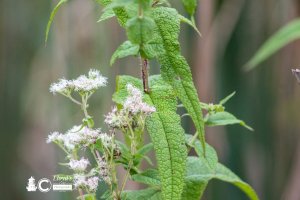
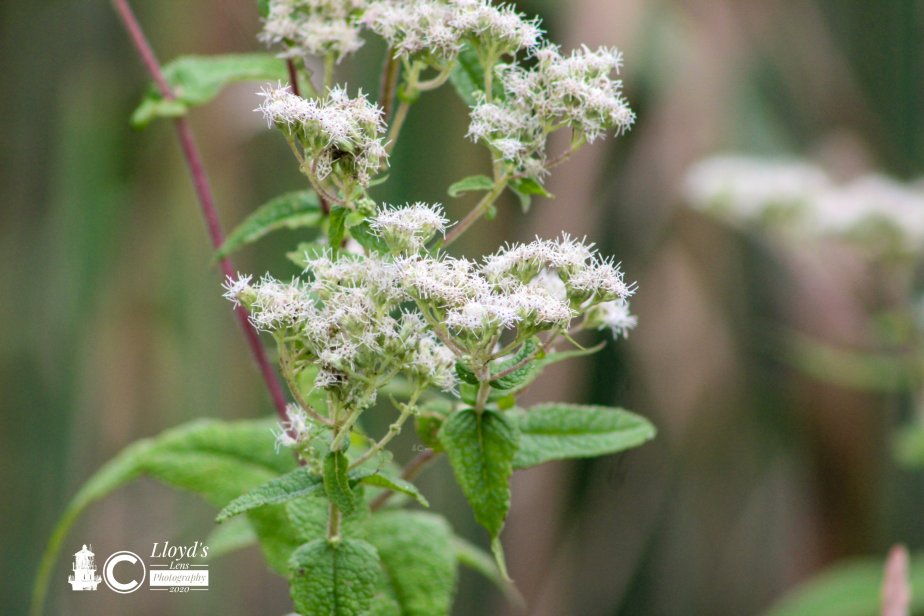
Image Titled “Virginia Boneset 92520b” and is available for purchase by clicking the thumbnail and reaching out to me on the contact page.

In Image “Virginia Boneset 92520b we can see a good example of the leaf base. We can also see that the plants are pretty hairy. This is important because there is a very toxic look-alike in White Snakeroot. The leaves of White Snakeroot do not join and are not as hairy.

Virginia Boneset wasn’t just used as a poultice on broken bones. During the Spanish Flu outbreak of 1819 it was used by some people as a tea to reduce fever and “cure” the flu similar to Joe Pye Weed and in fact the two plants are first cousins. They are also both called “Boneset” and probably produce the same chemicals in their leaves. Which brings me to a warning. It is now thought that like Coltsfoot, Virginia Boneset may contain pyrrolizidine alkaloids that damage the liver. One source suggests that they also have a substance that stimulates T-cell production and that’s why it was effective against viruses but I have not been able to find a second independent source on this and so I’m not sure if that’s so. Virginia Boneset is said to be a diuretic as well and therefore help flush diseases from the body that way.

Image Titled “Virginia Boneset 92520c” and is available for purchase by clicking the thumbnail and reaching out to me on the contact page.

Virginia Boneset is associated with wet conditions as you can see in Image Titled “Virginia Boneset 92520c” with cattails in the background. This photo was taken on the edge of a pond where the ground was moist but not muck.

Virginia Boneset flowers in the late season and some even refer to it as “Late Boneset” because it appears as the Joe Pye Weed is fading away. As such it’s going to be an important late season resource for pollinators such as honeybees and butterflies. If you want to see butterflies as late in the season as possible or if you raise honeybees then allowing this plant to have some space is a good idea.

One last note is that all of the sources I reviewed that have actually drank the tea made from either Boneset say that it is a terrible tasting tea. It’s actually listed as an emetic and known to cause vomiting so there’s no culinary uses for this one.

That’s it for tonight. Please keep in mind that I am presenting this as trivia and history only and be blessed throughout your days.

Hey Friends! Just a quick reminder that Lloyds Lens Photography is available for portraits!

To book me simply reach out using the Contact Page and we’ll set a date. If you’re within a 50 mile radius of Summersville West Virginia all travel fees are waived.

If you would like to Follow me on Facebook the web address is

https://www.facebook.com/aviewfromthelens/

If you’re enjoying my blog and don’t want to miss a post then you can sign up for email alerts on my website.

https://lloydslensphotographyllc.com/

Have you checked out the Zazzle Store?

I’m now using Zazzle to fulfil orders. What this means for you is a secure way to place an order, discount codes & a broader product selection! Simplymessage me on Facebookoruse the contact form on my websiteand tell me which image you want and I’ll reply with a direct link to where you can place the order.

Clicking on the photo takes you tohttps://www.zazzle.com/lloydslensphotos?rf=238248269630914251

Lastly, all of the photos and writings are my original work unless otherwise specified and are not to be copied or reproduced without expressed written permission from the photographer

Thank you again for your support of my page!

Forage Friday #77 Coltsfoot.

Hello Friends! Tonight’s photos were taken specifically for Forage Friday. All photos found on my website are my original work unless otherwise specified and are available for purchase by clicking the thumbnail and reaching out to me on the contact page.

Tonight’s Forage Friday deals with a plant that is considered UNSAFE due to hepatotoxic pyrrolizidine alkaloids ( also known as PAs) which are mostly found in the roots like the PAs in comfrey. According to the US government PAs can damage the liver and cause cancer. Therefore, all of the information covered in this article is presented as trivia and not a recommendation for the treatment of any health issues.

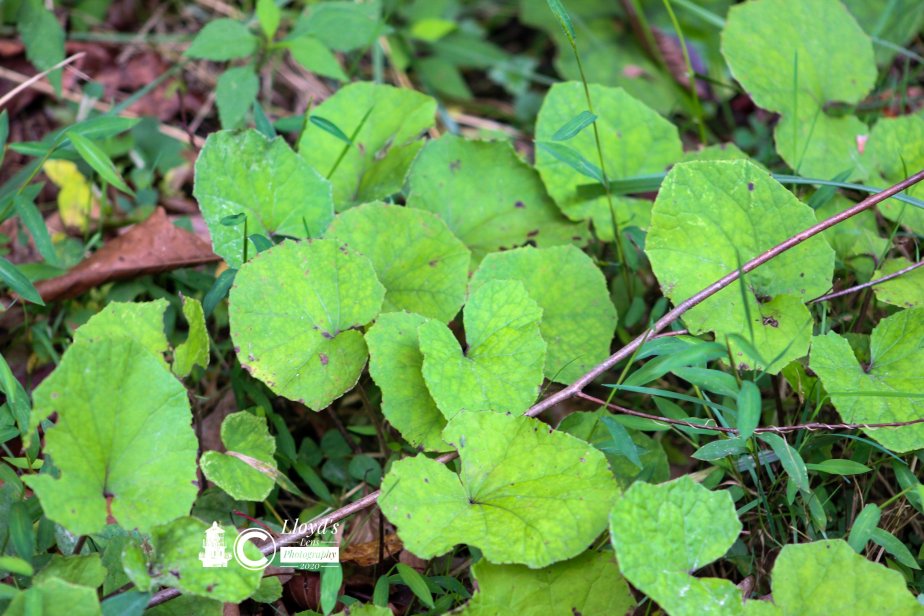
The old mountaineer slowly walked along the dirt road with his eyes fixed on the ditches. Each time he spotted a cluster broad leaves the right size and shape he knelt down and placed a few leaves in his coffee can. Once his can was full he took his time laying the leaves out on trays made from recovered hardware cloth in the dry autumn sun. A second sheet of hardware cloth was placed on top to keep the breeze from claiming his hard work. It didn’t really take long for the constant breeze and sun to do their job while the mountain man checked his traps and drew from the well and completed the rest of his morning chores. He returned to the coltsfoot leaves drying in the wind and checked to make sure that the dew had all been removed by nature. Satisfied that they were dry he returned the can and placed it hot coals. Soon smoke rose up out of can and with no time at all the large leaves were chared black. He removed them from the can and immediately after his homemade ball mill reduced them a powder which went into a small Mason on the breakfast table. The black salt would be a wonderful addition to his next meal.

Among my grandfather’s depression stories was the concept of black salt. A finely ground charcoal made from the leaves of coltsfoot. The tradition of this type of salt goes back to the old days of the first mountain men. It’s a European tradition and a European native plant. I don’t know for sure who discovered that burning it made it salty but there it is. In a situation such as the great depression salt is a Commodity that could be in short supply. Even though West Virginia is home to one of first salt mines in the new world we can’t dig it out of any old hole in the ground and in the days before an interstate highway system transportation was a real problem in the steep Appalachian Mountains. So a little thing like being able to get salt from plants that grew wild often made a difference in the quality of life for our ancestors.

The other traditional use for coltsfoot is medical. The plant was actually smoked like tobacco for improving lung health. And was capable of soothing a cough in that way. The flowers were gathered in early spring and used in various teas and syrups for the same purpose. However, because of the possibility of liver cancer and other diseases said to caused coltsfoot its not really one that I can recommend outside of trivia.

Hey Friends! Just a quick reminder that Lloyds Lens Photography is available for portraits!

To book me simply reach out using the Contact Page and we’ll set a date. If you’re within a 50 mile radius of Summersville West Virginia all travel fees are waived.

If you would like to Follow me on Facebook the web address is

https://www.facebook.com/aviewfromthelens/

If you’re enjoying my blog and don’t want to miss a post then you can sign up for email alerts on my website.

https://lloydslensphotographyllc.com/

Have you checked out the Zazzle Store?

I’m now using Zazzle to fulfil orders. What this means for you is a secure way to place an order, discount codes & a broader product selection! Simplymessage me on Facebookoruse the contact form on my websiteand tell me which image you want and I’ll reply with a direct link to where you can place the order.

Clicking on the photo takes you tohttps://www.zazzle.com/lloydslensphotos?rf=238248269630914251

Lastly, all of the photos and writings are my original work unless otherwise specified and are not to be copied or reproduced without expressed written permission from the photographer

Thank you again for your support of my page!

Forage Friday #76 The Mushroom Dilemma

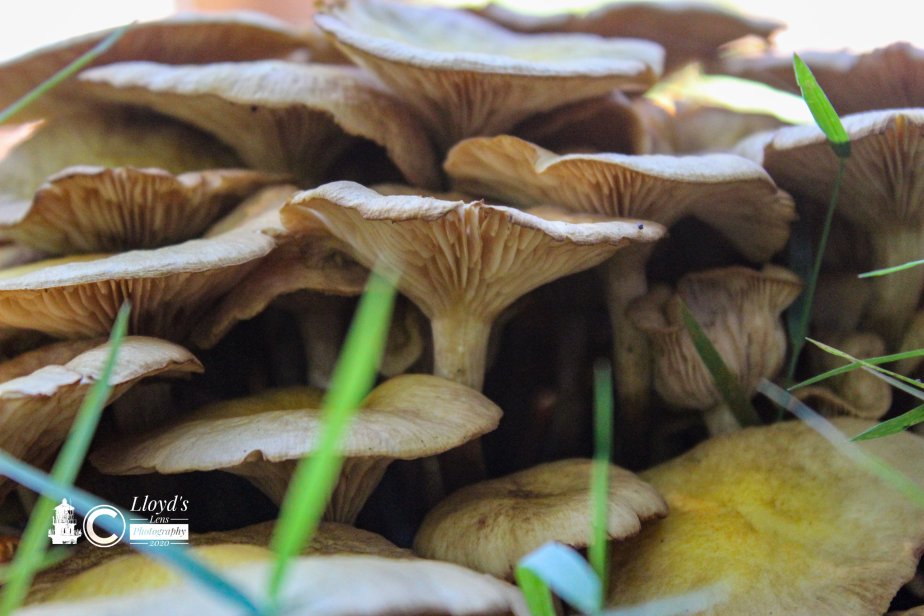
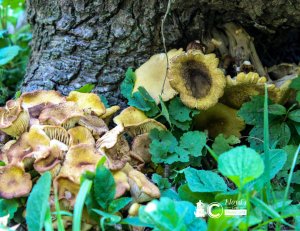
Hello Friends! Tonight’s feature image is titled “Unknown Mushrooms 90520” and is available for purchase by the instructions at the bottom of the article.

Forage Friday is only intended to be a conversation starter and not a replacement for actually receiving an education from a qualified instructor and especially when it comes to mushrooms. My knowledge of mushrooms is extremely limited and therefore I am uncertain about the Identity of mushrooms in tonight’s post.

My forestry instructor once told us a story about an elderly woman who had decided to take up foraging for mushrooms. Now this was in the days before the internet was a common thing and you couldn’t use an app on your phone to get an ID on what you were looking at. So to the library she went and she looked at pictures of mushrooms for days trying to memorize as much detail as she could. And like a lot of people she got it wrong with a few. Her family called for an ambulance and the hospital pumped her stomach, gave her the antidote and after a few days sent her home. Not 2 days later she was back in the ER with the same problem of mushroom poisoning. The doctor was understandably concerned as to why she would endanger herself by eating the same mushrooms that made her sick the first time and asked her why she took the second risk. Her answer was that they looked so pretty. Of course my classmates and I imeadiatly made the connection between mushrooms and pretty colors and we all had a good laugh. But at the end of the day someone almost lost their life twice due to misidentification. There’s also an issue of certain mushrooms being edible but having a bad reaction to other food and drink.

Honey mushrooms are a good example of a mushroom that might make some people sick if consumed with alcohol. And that’s what I currently believe is in tonight’s feature image.

Honey mushrooms are ringless mushrooms that are actually parasites on certain hardwoods. They grow in clusters and are among the more prized by people who forage mushrooms. And they also look a lot like Jack O Lantern mushrooms.

Jack O Lantern mushrooms have a ring and gills and grow on rotting trees.

Unknown Mushrooms found growing on rotting wood in July 2020

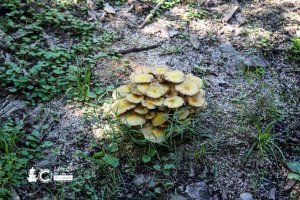
The image on the right is a clump of mushrooms that look like honey mushrooms but because the grass is hiding the stem I cannot tell if they have a ring.

One way thats a little better to tell the difference is the spore print. Honey mushrooms have a white spore print where Jack O Lanterns have a green spore print.

The mushrooms in these photographs were growing on land that doesn’t belong to me so I couldn’t ethically harvest them for testing.

So here’s one that the readers can help me out with. Do you think they’re honey mushrooms or Jack O Lanterns? Let me know in the comments.

Hey Friends! Just a quick reminder that Lloyds Lens Photography is available for portraits!

To book me simply reach out using the Contact Page and we’ll set a date. If you’re within a 50 mile radius of Summersville West Virginia all travel fees are waived.

If you would like to Follow me on Facebook the web address is

https://www.facebook.com/aviewfromthelens/

If you’re enjoying my blog and don’t want to miss a post then you can sign up for email alerts on my website.

https://lloydslensphotographyllc.com/

Have you checked out the Zazzle Store?

I’m now using Zazzle to fulfil orders. What this means for you is a secure way to place an order, discount codes & a broader product selection! Simplymessage me on Facebookoruse the contact form on my websiteand tell me which image you want and I’ll reply with a direct link to where you can place the order.

Clicking on the photo takes you tohttps://www.zazzle.com/lloydslensphotos?rf=238248269630914251

Lastly, all of the photos and writings are my original work unless otherwise specified and are not to be copied or reproduced without expressed written permission from the photographer

Thank you again for your support of my page!

Forage Friday #75 Barberry

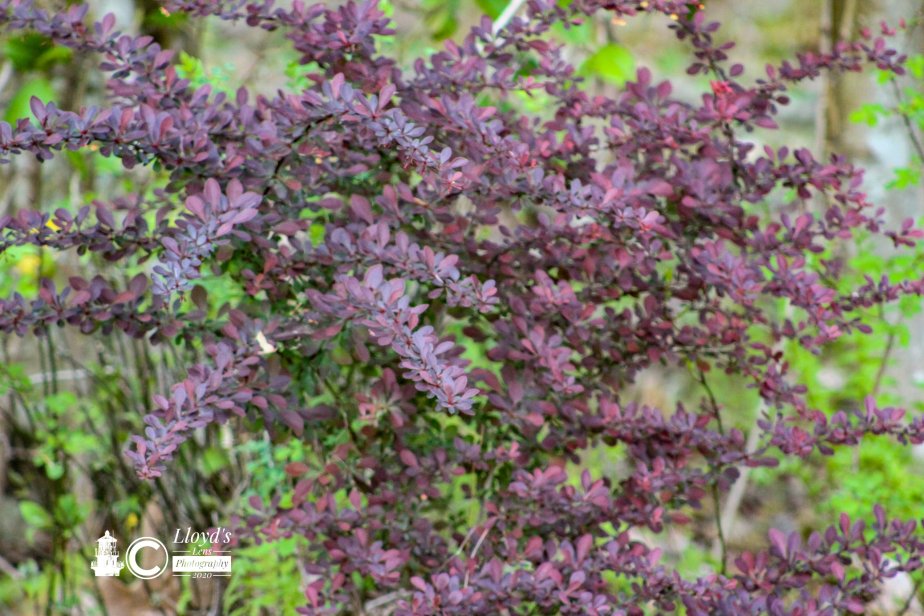
Hello Friends! Tonight’s feature image is titled “Barberry In Spring” and was taken especially for Forage Friday. All of the photos found on my blog are my original work and are available for purchase through the contact page by clicking on the thumbnail image.

Tonight’s Forage Friday post is about plant that is considered edible, medical and toxic. It’s important to remember that my Forage Friday posts are presented as trivia and should not be mistaken for an endorsement of treatment of treatment. I’m only giving you an introduction to the plants and you should do farther research and/or a qualified mentor.

Last Spring I spotted something on my father’s land that I had never paid much attention to before. The compact shrub with maroon leaves stands out against the cool jade background. Had this plant been planted in the right place and groomed well it would make an attractive addition to the yard. This particular shrub is well known in urban and suburban areas. It’s a Japanese Barberry. While this an alien species in the Appalachian Mountains it has become naturalized along with a European variety. We do also have a native species in North America. As far as I can tell all of the species have similar qualities and can probably be used interchangeably.

First let’s look at berry itself. All sources agree that they are rich in Vitamin C like many wild edibles. A 1/4 cup of dried berries is said to contain %213 of a person’s daily value. With such a small quantity required for that value that means the dried fruit can be tossed into a trail mix or used in teas to provide an extra boost of nutrition. Additionally, the berries provide zinc, manganese, copper, and iron as well as some sugars, fiber and protein. Traditional uses include treatments for digestive problems and applied to skin problems. Part of those benefits probably come from the high concentrations of vitamin C. I remember reading several years ago that vitamin C can be applied directly to a minor cut in order to prevent infection.

Native Americans used the native species as part of kinnikinnick. In fact the world is both their name for Barberry and the name of an herbal tobacco preparation. Recipes vary depending on the tribe and individual tastes but in general the stuff in those pipes was not pure tobacco as it used today. It contained Barberry, Staghorn Sumac,tobacco, various mints and other herbs.

The main component found in Barberry is an alkaloid called Berberine. In addition to being a powerful antioxidant Berberine may have a positive impact on the cells ability to utilize insulin. Something that’s of particular interest to me since I’m a type 2 diabetic with insulin resistance. Anything that I can do to avoid artificial pharmaceuticals always piques my interest. ( please remember the disclaimer at the top of the article.) Especially in the age of Covid when the supply chain coming into remote areas could easily be disrupted.

The list of possible uses for this plant also included anti-inflammatory and antimicrobial mouthwash.

As I review the research for tonight’s article I’m seeing a lot of ads for Barberry based supplements and health products as well as nurseries selling the plants as landscape enhancements. I don’t have a figure to quote tonight but if the amount of advertising is any indication Barberry has the potential to become a plant for industrial production with the berries being sold to bulk suppliers of supplement industry and excess plants sold as landscaping. It’s one of the plants that can take us from a wilderness survival standpoint to a cash crop.

That’s about it for tonight. The only other factoid I have to share is that it’s found in urban areas which makes it a possibility for the urban forager but the caveat is that in urban areas the plants are likely to be contaminated with pesticides and other chemicals so extreme caution needs be used there.

Hey Friends! Just a quick reminder that Lloyds Lens Photography is available for portraits!

To book me simply reach out using the Contact Page and we’ll set a date. If you’re within a 50 mile radius of Summersville West Virginia all travel fees are waived.

If you would like to Follow me on Facebook the web address is

https://www.facebook.com/aviewfromthelens/

If you’re enjoying my blog and don’t want to miss a post then you can sign up for email alerts on my website.

https://lloydslensphotographyllc.com/

Have you checked out the Zazzle Store?

I’m now using Zazzle to fulfil orders. What this means for you is a secure way to place an order, discount codes & a broader product selection! Simplymessage me on Facebookoruse the contact form on my websiteand tell me which image you want and I’ll reply with a direct link to where you can place the order.

Clicking on the photo takes you tohttps://www.zazzle.com/lloydslensphotos?rf=238248269630914251

Lastly, all of the photos and writings are my original work unless otherwise specified and are not to be copied or reproduced without expressed written permission from the photographer

Thank you again for your support of my page!

Forage Friday #74 Thistle

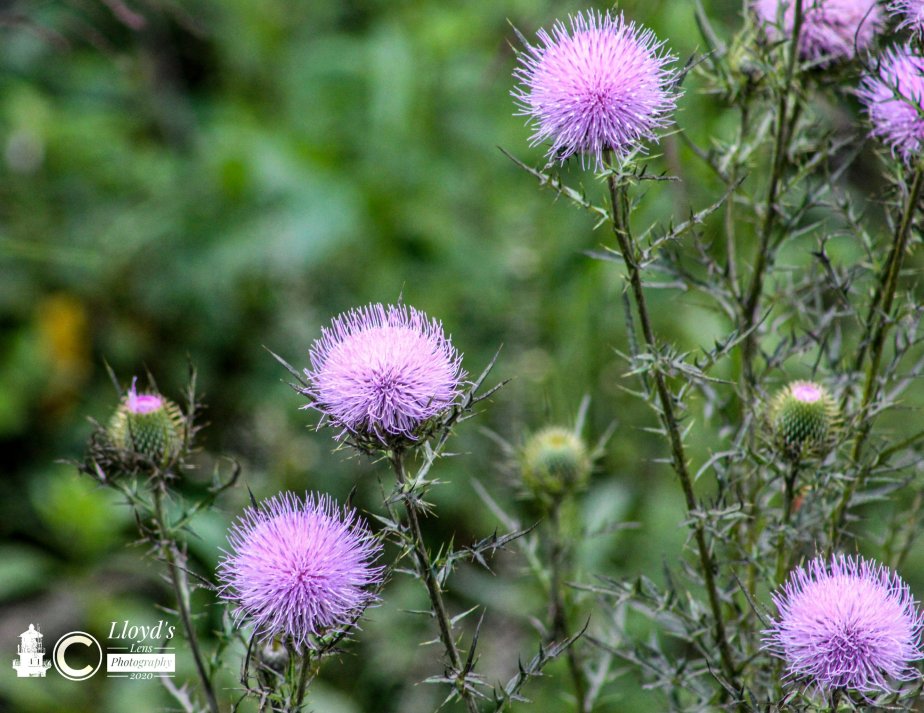
Hello Friends! Tonight’s feature image is titled Thistle In Full Bloom 90120″ and is available for purchase by the instructions at the bottom of the article.

Please remember that Forage Friday is only intended to be a conversation starter and all of the information is presented as trivia.

The first time I read about Thistle as a wild edible was in one of Tom Brown Jr.’s books about wilderness survival. He describes how it was hot and thirsty and his mentor peeled the stem of a Thistle and bit into it. When he did it was so full of water that it sprayed out from the bite. The story goes on to describe how juicy and refreshing raw Thistle can be. My own experience was a little less satisfactory. First of all the Thistle that I tried was bitter and stringy. In those days there was no smartphones and the fledgling internet had little information. Blogging hadn’t really caught on and most websites were nothing more than an online business card with an address and a phone number. Fortunately for me the public library was the best place to access the internet and so it was just as convenient and quick to go to the card catalog and look up a book on the subject. That’s how I learned that not all Thistles are equal. All Thistles are technically edible but they differ in quality. What I had was what is seen in tonight’s feature image. Bull Thistle. Also, part of the problem was that I had waited until they were fully mature and that certainly changes the experience. What was needed was a young plant and not bull Thistle but Milk Thistle. From what I understand Bull Thistle has every benefit of Milk Thistle it’s just not as pleasant flavored.

If you do your foraging in a local supermarket you’ll find Thistle in the form of a commercial standardized extract. In 2018 890 tons Milk Thistle extract was sold into the supplement market and that’s not counting the seeds that are sold as fodder for songbirds. Most people who use any type of Thistle are doing so as an aide to liver function and even the Native Americans used it to support healthy digestion as well as a treatment for arthritis due to it’s anti-inflammatory affect.

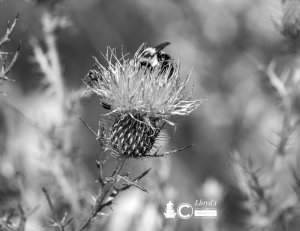
Image Titled “Among The Prickles 90820BW” and is available for purchase by the instructions at the bottom of the article.

Of course if we foraging anywhere other than than the local supermarket we’re going to need to deal with the thorns. If you’re very careful all you really need is a good pocket knife. However, I recommend you also have a good set of gloves and maybe even welding gloves that cover the arm as well as the hand. The thorns are fierce enough to cause permanent eye damage so a decent set of safety glasses might be in order as well.

Those mean thorns are really the only part of the Thistle that is not edible. Then entire plant from the roots to the seeds may be consumed. The roots are said to taste like Jerusalem artichoke or Burdock roots. The stem and midrib of the leaves can be eaten raw but are better as a sautee as is the the flowerhead. Be certain to remove all the thorns!

The seeds are collected when the down appears. To remove the down simply rub the seeds between your hands and winnow them in same manner as separating wheat from chaff. It’s suggested by multiple sources to use an electric coffee grinder to coarsely grind the seeds and sprinkle them on other foods.

I’m going to go out on a limb here and guess that Thistle sprouts might be another option if you have enough bulk seed to make it worth the effort. I would recommend sprouting them like any other herb. It can be as simple as placing the seeds between damp paper towels and leaving them in a warm spot where they can germinate.

Why go to all that trouble? Well, wild plants can be richer in nutrition than even garden veggies. Thistle is high in fiber, protein, calcium, copper, phosphorus, magnesium, and zinc. All of this depends on what’s available in the soil of course but presuming the ground is suitable for gardening the Thistle is better able to accumulate these minerals.

We’ve recently seen how fragile the normal supply chain can be. If you’re a person who has been buying supplements in the store then it makes sense to identify alternative resources just in case. All the better if you have a small space to allow some wild plants to flourish. And if nothing else Thistles will attract butterflies and others pollenators with its flowers and songbirds with its seed.

Hey Friends! Just a quick reminder that Lloyds Lens Photography is available for portraits!

To book me simply reach out using the Contact Page and we’ll set a date. If you’re within a 50 mile radius of Summersville West Virginia all travel fees are waived.

If you would like to Follow me on Facebook the web address is

https://www.facebook.com/aviewfromthelens/

If you’re enjoying my blog and don’t want to miss a post then you can sign up for email alerts on my website.

https://lloydslensphotographyllc.com/

Have you checked out the Zazzle Store?

I’m now using Zazzle to fulfil orders. What this means for you is a secure way to place an order, discount codes & a broader product selection! Simplymessage me on Facebookoruse the contact form on my websiteand tell me which image you want and I’ll reply with a direct link to where you can place the order.

Clicking on the photo takes you tohttps://www.zazzle.com/lloydslensphotos?rf=238248269630914251

Lastly, all of the photos and writings are my original work unless otherwise specified and are not to be copied or reproduced without expressed written permission from the photographer

Thank you again for your support of my page!