Forage Friday #58 Ground Ivy

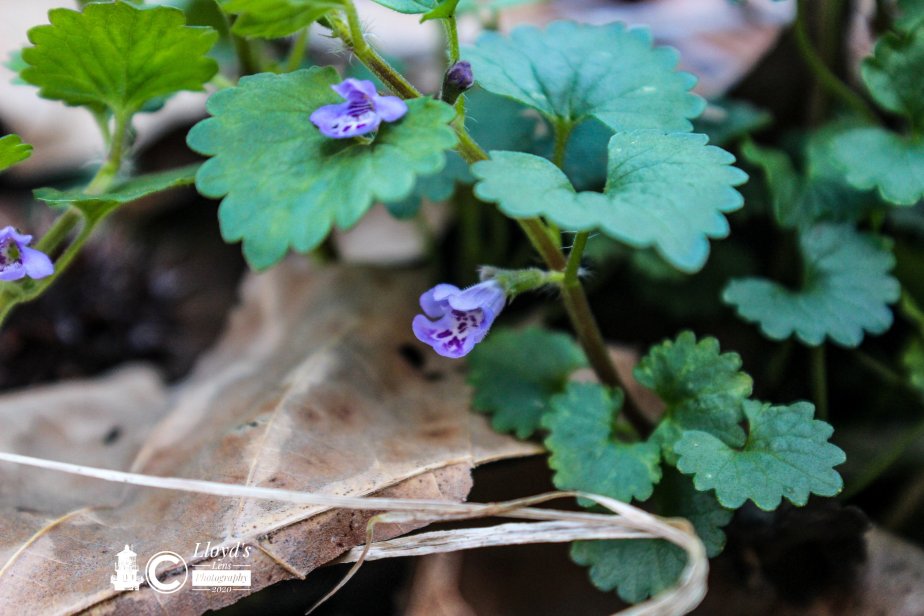
Hello Friends! Tonight’s feature image is titled “Ground Ivy 4220a”. All of the photos found on my blog are my original work and are available for purchase by the instructions at the bottom of the article.

I have only recently discovered that Ground Ivy is in fact edible. I have not eaten it in any qualities at this point and therefore can’t really attest to quality it provides.

In the end, my Forage Friday posts are only presented as trivia and should not be mistaken for an endorsement of treatment when medicinal herbs are discussed.

I never cease to be amazed by the bounty of nature. The Appalachian Mountains are almost a garden of Eden. When most Americans look to the landscape for nourishment we have a tendency to ask how the indigenous peoples may have used a plant. I suppose that’s because of the Thanksgiving story about the failed crops and it’s true that the natives had to rescue the colonial settlers. But we have to remember that they were aliens in a landscape with a that most of their seed was not adapted to. A few of the plants they brought with them have actually done so well that they’re now considered invasive “weeds”. Such is the case with Ground Ivy.
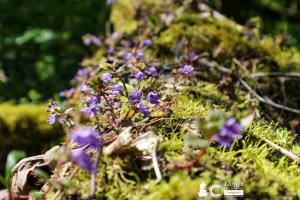
Image Titled “Ground Ivy 41620a” shows just how prolific Ground Ivy can be.

Once it has a foothold ground ivy is tenacious! It will spread out and set root at every opportunity. At this point I have not learned if it was brought here on purpose or by accident. Two things make me think that the herb was brought here on purpose.

1. The Anglo-Saxon name for this plant is “Alehoof” which is said to mean “Ale-herb. And, it was a prime ingredient for brewing before hops was adapted.

2. The accidental import theory is that it traveled here in the stomach of livestock. But ground ivy is toxic to livestock so it wouldn’t be a good fodder and most livestock don’t like the taste of ground ivy and wouldn’t have eaten it.

So it looks like it was intentionally brought aboard the ships.

Ground Ivy is said to be rich in Iron, potassium and Vitamin C as well as flavonoids common to the mint family and the square stem on Ground Ivy puts it in the mint family. Because it’s an evergreen herb it would have been available as a good source all year round.

Historically it was not only added to ale but also to jams and marinades. According to a couple of online sources Ground Ivy mixes well with Garlic, honey and lemon, sesame, the cheese and clove. It’s main function seems to be as a seasoning and more than source suggested using it on grilled meat.

Image Titled Ground Ivy 51920a. Although a creeping plant it does bolt from time to time.

As a medicinal herb ground ivy has a reputation for use with lung ailments and bronchitis like most members of the mint family. According to the USDA/NRCS Ground Ivy has been used to treat disorders of the the bladder and kidneys, digestive problems, gout, coughs and colds, poor vision, tinnitus, partial insanity, asthma and jaundice and much more. (They even say that a wreath woven from ground ivy and other herbs strengthens the eyes enough to reveal witches that might be hiding in your village according to the Swiss. )

Several sources also warned that pregnant women should avoid ground ivy because it can cause a miscarriage which makes me think it’s got some strong phytosterols too.

Another warning comes from my personal experience. The ground ivy seems to provide a good habit for spiders. While obtaining some of tonight’s photos I managed to get a mild spider bite. No super hero powers (Just my luck) but a lot of itching. The bite completely healed in about 3 weeks with the aid of antibiotics and I only mentioned it to encourage you to be cautious. We do have black widows and brown recluse in my area but thankfully it seems to have been just a plain old jumping spider that got me.

This little guy isn’t quite as friendly as Lucas the Spider on YouTube. This isn’t the exact spider that bit me but it’s the same species that I suspect did the biting.

Hey Friends! Just a quick reminder that Lloyds Lens Photography is available for portraits!

This slideshow requires JavaScript.

To book me simply reach out using the Contact Page and we’ll set a date. If you’re within a 50 mile radius of Summersville West Virginia all travel fees are waived.

Hello Friends and thank you for your support of my page. If you have enjoyed the photos or the writings please let me know by commenting and sharing my work on your social media. I also want to invite you to Follow Lloyds Lens Photography on Facebook

If you would like to Follow me on Facebook the web address is

https://www.facebook.com/aviewfromthelens/

If you’re enjoying my blog and don’t want to miss a post then you can sign up for email alerts on my website.

https://lloydslensphotographyllc.com/

Did you know that I also do portraits by appointment? If you’re interested in a portrait session either message me on Facebook or Use the Contact form. The YouTube link below takes you one of my slideshows.

https://youtu.be/FDcrY6w8oY8

Have you checked out the Zazzle Store?

I’m now using Zazzle to fulfil orders. What this means for you is a secure way to place an order, discount codes & a broader product selection! Simplymessage me on Facebookoruse the contact form on my websiteand tell me which image you want and I’ll reply with a direct link to where you can place the order.

Clicking on the photo takes you tohttps://www.zazzle.com/lloydslensphotos?rf=238248269630914251

Lastly, all of the photos and writings are my original work unless otherwise specified and are not to be copied or reproduced without expressed written permission from the photographer

Thank you again for your support of my page!❤

Forage Friday #57 Elm

Hello Friends! Tonight’s feature image is titled “Elm 5920” and was taken especially for Forage Friday. All of the photos on my blog are my original work and are available for purchase by the instructions at the bottom of the article.

Disclaimer: This week’s Forage Friday post deals with a plant that is mostly gathered for its herbalism value. The information is only presented as trivia and should not be mistaken for an endorsement of treatment. Ad always, I encourage you to do your own research and seek the advice of a professional for any medical conditions.

There are few trees in North America that are more majestic than a mature elm tree. The tree has a beautiful spreading canopy that reminds me of an open umbrella.

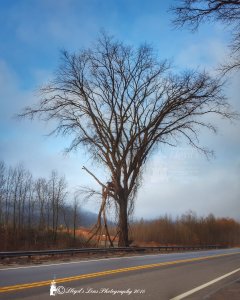
Image Titled “Tipple Elm On Route 60” shows the spread of an American Elm

Even in it’s damaged state the mature elm near a coal tipple outside of Montgomery, West Virginia has a majestic canopy.

The American Elm is capable of reaching a height of 120 feet tall. That’s a little taller than a 10 story building. By contrast, the Japanese make beautful Bonsai trees from elms.

When I started reading about elms for tonight’s post I was actually a little surprised to find that the elm in general has such rich and vibrant history. In 1765 the first meetings of resistance to the British taxes took place under an American Elm in Boston, Massachusetts. That particular tree was the actual “Liberty Tree” referenced by the Founding Fathers. In 1775 the British felled that tree which lead to proliferation of the American Elm being planted as Liberty Trees and even the elm being used on some of the first revolutionary flags.

Elm wood has an interlocking grain that makes it really stable and dimensionally sound. That made it a great wood for things like bows and wheels. Elm chariots were found in a military inventory list in ancient Greece and Greek plows had parts made from elm wood. Elm rots on the ground like any other wood but it’s apparently able to resist rotting in water. Because of this it was prized for building ships and was even the material of choice for the original London Bridge.

When we talk about elm in a Foraging we’re usually referring to slippery elm which also called red elm. It’s the inner bark where the all the medicinal value is. The bark is mucilaginous and has a mild spicy flavor. It was used to treat a wide variety of complaints from simple coughs and colds to bullet wounds. It seems that Native Americans used both white and red elm for the same purposes.

Oddly enough, the FDA has actually given the stamp of Approval for elm bark to used in treating sore throat.

The inner bark has been dried and ground into powder for use as food by many cultures. It’s said that a broth made from elms is good for convalescing children and elders.

In 1812 the Norwegians used strips of elm bark to get through a famine. According to the Wikipedia article elm bark contains 45% crude protein and less than 7% fiber. I have to presume that the rest is carbohydrates. The inner bark of various kinds of trees are used similarly and having actually tasted a few I’m going to say that the pleasant flavor of elm bark could make it a good addition to the others that are not so pleasant.

While we tend to think of foraging as a human activity we also have to recognize that animals need to eat to. Especially if those animals are intended to sustain us in some way. Again, elm turns up as an option there as well. In the Himalayan mountains elm is,so popular as a good fodder for livestock that there’s concern about deforestation. I have a belief that this would be an easy problem to overcome with good propagation techniques and paddock rotation. Elm seems to coppice well and it’s a pretty fast growing tree. I have one that reached a height of 15 feet tall in 8 short years and that’s with me trimming it back every so often.

All of this is really just scratching the surface of what elm trees have to offer and that’s without going into detail about Dutch Elm Disease that has almost taken away the American Elm like Chestnut blight took the American Chestnut. But perhaps we’ll save that for a different post.

Hey Friends! Just a quick reminder that Lloyds Lens Photography is available for portraits!

This slideshow requires JavaScript.

To book me simply reach out using the Contact Page and we’ll set a date. If you’re within a 50 mile radius of Summersville West Virginia all travel fees are waived.

Hello Friends and thank you for your support of my page. If you have enjoyed the photos or the writings please let me know by commenting and sharing my work on your social media. I also want to invite you to Follow Lloyds Lens Photography on Facebook

If you would like to Follow me on Facebook the web address is

https://www.facebook.com/aviewfromthelens/

If you’re enjoying my blog and don’t want to miss a post then you can sign up for email alerts on my website.

https://lloydslensphotographyllc.com/

Did you know that I also do portraits by appointment? If you’re interested in a portrait session either message me on Facebook or Use the Contact form. The YouTube link below takes you one of my slideshows.

https://youtu.be/FDcrY6w8oY8

Have you checked out the Zazzle Store?

I’m now using Zazzle to fulfil orders. What this means for you is a secure way to place an order, discount codes & a broader product selection! Simplymessage me on Facebookoruse the contact form on my websiteand tell me which image you want and I’ll reply with a direct link to where you can place the order.

Clicking on the photo takes you tohttps://www.zazzle.com/lloydslensphotos?rf=238248269630914251

Lastly, all of the photos and writings are my original work unless otherwise specified and are not to be copied or reproduced without expressed written permission from the photographer

Thank you again for your support of my page!❤
Forage Friday #56 Jack-In-Pulpit

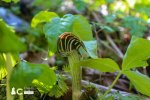
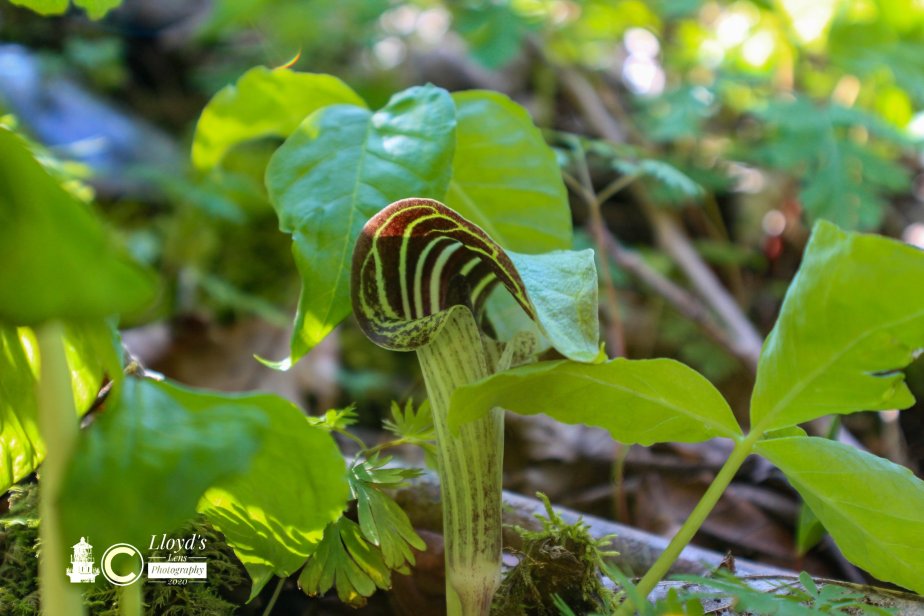
Hello Friends! Tonight’s feature image is titled “Hello Jack 41620a and is available for purchase by the instructions at the bottom of the article.

Disclaimer: Tonight’s wild edible plant is considered to be toxic unless prepared properly. Plants in this family contain high concentrations of calcium oxalate which is can cause sores and numbing if ingested and may even be fatal. My Forage Friday posts are only intended to be for entertainment purposes and I always recommend that you do further research before trying any wild edible plants for the first time..

The mottled light filters through the new leaves in my little forest sanctuary. I have come for another survey of what nature might surprise me with. The area is actually quite small but has really been densely populated by a wide variety of subjects to explore and photograph. This day was no exception. Standing proudly among the ferns and Trillium was Jack-In-Pulpit. Or, as it’s otherwise known “Indian Turnip”.

There is an intrinsic duality to the plant. It has two main names that It goes by. And it is considered both toxic and edible at the same time. As stated in the disclaimer the plant has a high concentration of calcium oxalate. Oddly enough, that’s the same stuff that kidney stones are made of. Not being a chemist I only have a basic understanding of the substance but I do know that the chemical has different forms and the toxicity may vary with each. So if you’re curious about the toxin I’ll need to refer you to the link in the disclaimer. And, it’s a combination of the toxin, the availability of the plant itself and the completely of the process to remove that toxicity that’s kept me from having even a nibble of it.

The process of making Jack-In-Pulpit edible isn’t as simple as leeching the tannins from acorns or cooking Poke Salad in multiple changes of water. And it only seems to be the roots that were consumed by Native Americans. The process involved slowly roasting the roots in the ground for several days and a 6 month long drying process. The results were then ground into a powder that’s rumored to taste like chocolate. But before you crawl through the forest looking for Jack, read on. The plant was also used as a contraceptive. This can only be effective if the plant has phytosterols strong enough to interfere with a woman’s endocrine system and thus prevent pregnancy or, it’s so toxic that she has a miscarriage. Either way, there’s more than a considerable amount of risk. Just because something is natural doesn’t mean it’s not dangerous. The online reference I saw said that only 2 tablespoons of the preparation would cause permanent sterility. My mind kept going back to the Wikipedia article saying that calcium oxalate may be lethal.

The hood of Jack-In-Pulpit Is called a spathe. The spathe gives Jack-In-Pulpit a look that reminds us a carnivorous pitcher plant. But Jack-In-Pulpit practices a catch and release philosophy. In the male phase the spathe will have a small slit near the bottom that allows the pollinators to escape after a good dusting of pollen. And here’s where we see that duality again. Jack-In-Pulpit is capable of going back and forth between male and female flowers. The scent of the flowers is best described as acrid. It’s pollinated by fungus gnats that are attracted by the smell of rotting meat with a hint of garlic.

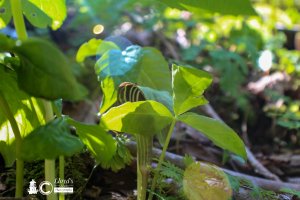
Image Titled “Hello Jack 41620b” showing the 3 loved leaf.

The leaves of Jack-In-Pulpit are really similar to the Trillium. It’s a little hard to tell from this photo but the leaves of Jack-In-Pulpit form a T when viewed from above where the Trillium growing next to it is more equally spread into a triangle.

It’s at this point in the Forage Friday posts that I’ve been considering the possibility of cultivating the forage plants as ornamental plants to sell and raise cash. But Jack-In-Pulpit seems to be one of those plants that only grows well in God’s creation. If you’re talented enough and have just the right spot for them to flourish then nothing’s impossible. But Jack-In-Pulpit is said to resist cultivation and therefore will remain wild and free in my little forest sanctuary.

Hey Friends! Just a quick reminder that Lloyds Lens Photography is available for portraits!

This slideshow requires JavaScript.

To book me simply reach out using the Contact Page and we’ll set a date. If you’re within a 50 mile radius of Summersville West Virginia all travel fees are waived.

Hello Friends and thank you for your support of my page. If you have enjoyed the photos or the writings please let me know by commenting and sharing my work on your social media. I also want to invite you to Follow Lloyds Lens Photography on Facebook

If you would like to Follow me on Facebook the web address is

https://www.facebook.com/aviewfromthelens/

If you’re enjoying my blog and don’t want to miss a post then you can sign up for email alerts on my website.

https://lloydslensphotographyllc.com/

Did you know that I also do portraits by appointment? If you’re interested in a portrait session either message me on Facebook or Use the Contact form. The YouTube link below takes you one of my slideshows.

https://youtu.be/FDcrY6w8oY8

Have you checked out the Zazzle Store?

I’m now using Zazzle to fulfil orders. What this means for you is a secure way to place an order, discount codes & a broader product selection! Simplymessage me on Facebookoruse the contact form on my websiteand tell me which image you want and I’ll reply with a direct link to where you can place the order.

Clicking on the photo takes you tohttps://www.zazzle.com/lloydslensphotos?rf=238248269630914251

Lastly, all of the photos and writings are my original work unless otherwise specified and are not to be copied or reproduced without expressed written permission from the photographer

Thank you again for your support of my page!❤
Forage Friday #54 Spicebush

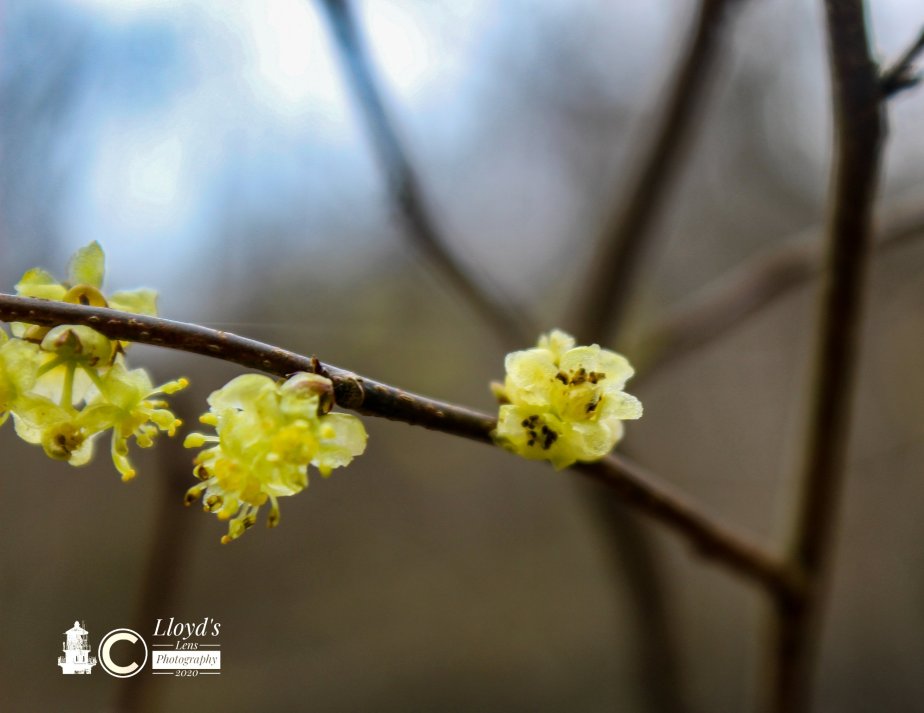
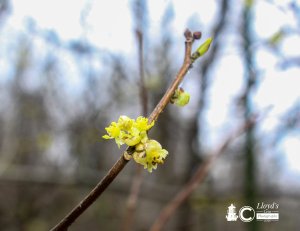
Hello Friends! Tonight’s feature image is titled “Spicebush Flowers 32420a” and is available for purchase by the instructions at the bottom of the article.

Cold air spills over my mountain as I brave the rain and gloom that threatens to chill me to the bone. Desperate for a sign that the gloomy season will be over soon my eyes scan the wilderness for subtle changes in the color of the twigs and buds. I Am not disappointed as my gaze lands on the sunny colored tufts on the fringes of my forest. The Spicebush is in bloom! That was actually a month ago. I was so thrilled to see them that I ran straight up the steep grade to get closer.

Image Titled Spicebush Flowers 32420b.

The flowers are similar to Witch Hazel but the easiest way to tell the difference between them at,a distance is that witch hazel blooms in late fall and they are more frilly. For comparison, I covered witch hazel on December 14th 2019 in Forage Friday post #37.

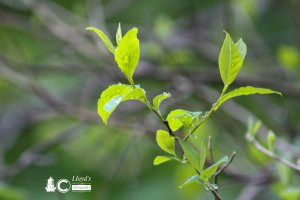
While witch hazel yields a terrific astringent Spicebush yields a sweet lemony tea. The flavor is in the leaves and inner bark and is available all year. However, the inner bark is easiest to harvest in Spring when the sap is up. Otherwise, just prune off the smaller twigs and rinse them well to remove any debris. The flavor isn’t really like lemonade. It’s more like lemon candy.

The tree itself is in laurel family and was a sign of good agricultural land in the settlement days. I have only tried it as a tea but I imagine that the leaves were probably used by Native Americans in preparing fish. A lot of things that I’ve read about the way primitive cultures worldwide cook fish is by first wrapping the fish in ” aromatic leaves”, then sealing it up in wild clay so that it has it’s own little terracotta style oven and it’s dropped right in the coals or even buried in the ground with hot coals. I don’t know for a fact that Spicebush leaves were used but once you crush a handful of the fresh leaves and inhale the scent it makes perfect sense that it would be a prime choice.

It’s also said that Native Americans used the tea medicinally for a variety of health issues.

The berries were made into a tea for coughs, cramps and to induce the menstrual cycle. And an oil from the berries was made into an ointment for rheumatism.

The bark was used for a “blood purifier”, rheumatism, colds and to induce sweating.

I should mention that when I was introduced to Spicebush it was under the name of Carolina allspice. The flavor of the berries is more like allspice from the store and not lemony at all. One of the group’s members when told that the berries were edible yanked several off of a nearby branch and popped them into his mouth. It wasn’t nearly as pleasant as he expected. The face contorted and before anyone could say anything he spit the berries a good 20 feet into the forest. Here’s the trick. In order to get the allspice flavor only the flesh of the fruit is used. The seed is discarded and the flesh is dried, ground into a powder and sweetened before adding to a dish.

Image Titled “Spicebush Leaves 42420a”

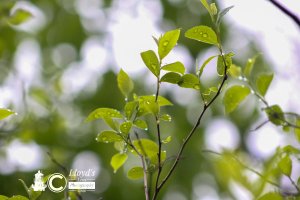
One of the “field uses” if Spicebush is that the lemon scent helps hide you from biting insects like mosquitoes. Especially if you have some wild mint to mix them with.

Image Titled Spicebush Leaves 42420b

The tree itself is also used in landscapes. It seems to be disease resistant and doesn’t seem to mind being pruned at all. The one in tonight’s feature image is too surrounded by other trees that are in leafing out so I wasn’t able to get a good shot of the whole tree but it’s growing almost sideways out of the mountain with interesting twists in the branches and trunk. I think it would take well to being planted in partial shade and shaped like a Bonsai tree.

Do you have any use ideas for such a Bush? If so let me know in the comments below.

Hey Friends! Just a quick reminder that graduation will be here before you know it. Lloyds Lens Photography is available for portraits!

This slideshow requires JavaScript.

To book me simply reach out using the Contact Page and we’ll set a date. If you’re within a 50 mile radius of Summersville West Virginia all travel fees are waived.

Hello Friends and thank you for your support of my page. If you have enjoyed the photos or the writings please let me know by commenting and sharing my work on your social media. I also want to invite you to Follow Lloyds Lens Photography on Facebook

If you would like to Follow me on Facebook the web address is

https://www.facebook.com/aviewfromthelens/

If you’re enjoying my blog and don’t want to miss a post then you can sign up for email alerts on my website.

https://lloydslensphotographyllc.com/

Did you know that I also do portraits by appointment? If you’re interested in a portrait session either message me on Facebook or Use the Contact form. The YouTube link below takes you one of my slideshows.

https://youtu.be/FDcrY6w8oY8

Have you checked out the Zazzle Store?

I’m now using Zazzle to fulfil orders. What this means for you is a secure way to place an order, discount codes & a broader product selection! Simplymessage me on Facebookoruse the contact form on my websiteand tell me which image you want and I’ll reply with a direct link to where you can place the order.

Clicking on the photo takes you tohttps://www.zazzle.com/lloydslensphotos?rf=238248269630914251

Lastly, all of the photos and writings are my original work unless otherwise specified and are not to be copied or reproduced without expressed written permission from the photographer.

Thank you again for your support of my page!❤
Forage Friday #54 Speedwell

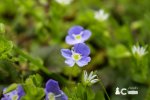
Hello Friends! Tonight’s feature image is titled “Speedwell 32420a” and is available for purchase by the instructions at the bottom of the article.

Tiny purple flowers have just about taken over my whole yard. I have noticed them every spring and always associated them with a change in the climate from cold and snowy to warm and sunny. Give or take a few weeks. What I didn’t know was that they’re a forage plant with ancient origins.

They go by several names. Brookline, Gypsyweed, Birdseye and Speedwell. Overall, there’s over 500 varieties of this little flower. All are listed under the genus Veronica. I have chosen to refer to them as Speedwell.

Image Titled “Speedwell 32420b”.

As you can see by the oak leaf in the lower left foreground in Image “Speedwell 32420b” the plant is quite small but it’s also very plentiful. Almost as plentiful as the small white Chickweed that accompanies it. Everything that I’ve read about Speedwell makes mention of “several varieties” being used for one thing or another. In one culture it’s referred to as a weed another culture uses it for ground cover and in a mixture of both it’s revered as medicine. It is a living example of beauty being in the eye of the beholder.

In full disclosure, this is one of many plants that I have studied but never sampled. So as far as the flavor is concerned I’m taking other people’s word. And as one might expect, individual experiences seem to vary. But with 500 types of Speedwell it’s expected that different varieties would be more palatable than others. Some plants change their chemistry with stages of development and soil conditions so it’s likely that would effect flavors.

The species I believe that I have is Veronica americana. Which is said to have a flavor similar to watercress.

Speedwell seems to have a worldwide reputation as an expectorant. It does seem to emerge at the right time to be handy for use as a remedy for respiratory complaints. Some references say that it’s used to sooth the nervous system and just about all of them recommend that an ointment of Speedwell is good for skin problems.

Please remember that I’m not an expert on herbs and I’m definitely not a doctor. I’m just sharing what others have said. Further research is recommended.

Image Titled “Speedwell 32420c”

The preferred time to gather Speedwell seems to when it’s in bloom. The most popular form of using it seems to be as a tea. The tea is said to be a little on the bitter side and is astringent. It’s probably the astringent qualities that make it useful topically for skin conditions.

The season is just about over by the time this article was written but I do want to try this one. If anyone has used Speedwell I’d love to hear about your experience. Please let me know in the comments.

Hey Friends! Just a quick reminder that graduation will be here before you know it. Lloyds Lens Photography is available for portraits!

This slideshow requires JavaScript.

To book me simply reach out using the Contact Page and we’ll set a date. If you’re within a 50 mile radius of Summersville West Virginia all travel fees are waived.

Hello Friends and thank you for your support of my page. If you have enjoyed the photos or the writings please let me know by commenting and sharing my work on your social media. I also want to invite you to Follow Lloyds Lens Photography on Facebook

If you would like to Follow me on Facebook the web address is

https://www.facebook.com/aviewfromthelens/

If you’re enjoying my blog and don’t want to miss a post then you can sign up for email alerts on my website.

https://lloydslensphotographyllc.com/

Did you know that I also do portraits by appointment? If you’re interested in a portrait session either message me on Facebook or Use the Contact form. The YouTube link below takes you one of my slideshows.

https://youtu.be/FDcrY6w8oY8

Have you checked out the Zazzle Store?

I’m now using Zazzle to fulfil orders. What this means for you is a secure way to place an order, discount codes & a broader product selection! Simplymessage me on Facebookoruse the contact form on my websiteand tell me which image you want and I’ll reply with a direct link to where you can place the order.

Clicking on the photo takes you tohttps://www.zazzle.com/lloydslensphotos?rf=238248269630914251

Lastly, all of the photos and writings are my original work unless otherwise specified and are not to be copied or reproduced without expressed written permission from the photographer.

Thank you again for your support of my page!❤