Forage Friday #28 Chufa Or Nutsedge

Hello friends! Tonight’s feature image is titled “Chufa 82019”. The photos in this post were taken specifically for this article. All of the photos on my blog are my original work and are available for purchase by following the instructions at the bottom of the article.

Every so often I encounter a wild edible plant that has real potential to bbecome a cash crop in the right hands. As the world population grows and as urban sprawl puts pressure on wilderness the demand for high quality nutrition becomes more intense. Many people ( and I am one of them ) believe that the solution is to move away from agriculture ( The tending of fields ) to horticulture ( The tending of plants ). Rather than go into a long time consuming explanation I’ll just say that it’s better to have a decentralized system. And plants like Chufa lend themselves very easily to the broad range of conditions a decentralized system would require.

The part that is harvested is a marble sized tuber called Tiger Nuts. The tuber is collected in November and December and an individual plant is capable of producing around 2000 nuts in lifetime. Being a perennial plant, Chufa doesn’t need to be planted every year. Like a potato, it be required to save some of nuts to replenish with but unless you destroy the plant during harvest it will come back by itself for multiple years.

So, when I decided to write about Chufa my knowledge of the plant came mostly from old dusty books on my shelf. I knew it was a wild edible plant and that it produced an underground nut that you could eat. But, I never took the time to actually gather it and try use it any meaningful way. But after learning a little more and recognizing the potential I thought that I would simply step out onto my property and collect enough to do a presentation. The next image shows my entire harvest.

Today’s harvest was rather sad.

In fact the entire root system of the second plant was devoid of tubers.

None of the plants had tubers for me.

I collected a total of 1 tuber that was about 6 millimeters in diameter. I just sat there asking myself how this could have ever been a staple crop 4000 years ago in Egypt.

Even today it’s grown commercially in the Mediterranean. More research gave me the answer. The nut doesn’t form until after the top dies off. I am actually about 6 weeks too early to harvest the nuts. They have only just started to form. But in the harvest season for Tiger Nuts the ground is often frozen here. And that’s where the solution for harvest intersects with the techniques of urban farming. Chufa adapts very well to a container garden. And because it seems to like wet soil aquaponics would seem to be the best way to bring this plant out of the wild and back into the garden.

I mentioned that it was a staple crop. The ancient Egyptians kept it and so did Native Americans. The nuts were used to make flour, and they are the main ingredient for Spanish horchata which is a drink similar to almond milk. In fact while researching for this article I encountered a lot of comparisons between Chufa and Almonds.

Recently, the consumption of almonds have come under fire because they require so much water to be diverted into a plantation in an area that’s naturally prone to drought. But here in the Eastern Woodlands a Chufa substitute can easily be grown and a harvest extracted in far less time. Plus, these aquaponics systems can be set up in any number of empty industrial buildings that are scattered throughout the rust belt.

But, if you want to try this unique food on a decentralized scale by growing it yourself then I recommend a simple flower pot and decent potting soil. I have seen the plant growing in shade, open fields, rich bottom lands and old strip mines so it will adapt to almost any environment.

Since I wasn’t able to provide an example of how to use Chufa myself I’ll end this post with a link to a very well done video of how to make horchata.

Hello Friends and thank you for your support of my page. If you have enjoyed the photos or the writings please let me know by commenting and sharing my work on your social media. I also want to invite you to Follow Lloyds Lens Photography on Facebook

If you would like to Follow me on Facebook the web address is

https://www.facebook.com/aviewfromthelens/

If you’re enjoying my blog and don’t want to miss a post then you can sign up for email alerts on my website.

https://lloydslensphotographyllc.com/

Click here to visithttps://lloydslensphotographyllc.com/

Did you know that I also do portraits by appointment? If you’re interested in a portrait session either message me on Facebook or Use the Contact form. The YouTube link below takes you one of my slideshows.

https://youtu.be/FDcrY6w8oY8

Have you checked out the Zazzle Store?

I’m now using Zazzle to fulfil orders. What this means for you is a secure way to place an order, discount codes & a broader product selection! Simply message me on Facebook oruse the contact form on my websiteand tell me which image you want and I’ll reply with a direct link to where you can place the order.

Clicking on the photo takes you tohttps://www.zazzle.com/lloydslensphotos?rf=238248269630914251

Lastly, all of the photos and writings are my original work unless otherwise specified and are not to be copied or reproduced without expressed written permission from the photographer.

Thank you again for your support of my page!❤
Forage Friday #27 Tule

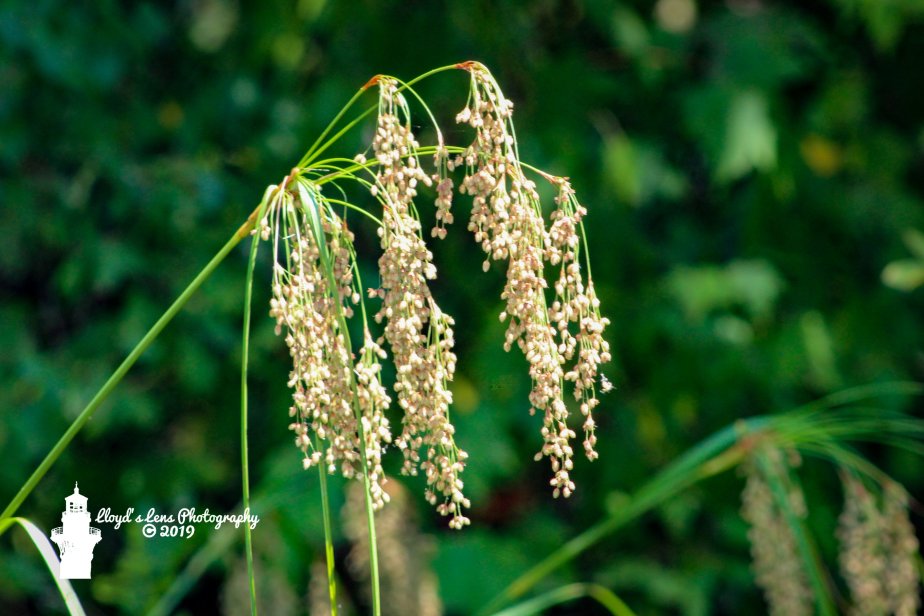
Hello friends!Tonight’s feature image is titled “Tule 82019”. All of the photos are my original work and are available as prints by following the instructions at the bottom of the article. Tonight’s photo was taken specifically for this article.

One of the first survival plants that I learned about was Tule. When I was a kid we always called it Bullrush and I had visions of baby Moses floating around the Nile river in a basket made from Tule. And with good reason, Tule has a history of being used to make rafts and the ropes that bind them together. Native Americans from all over the New World used Tule to make nets, duck decoys, rafts, twine and and just about anything that you can imagine. Even today it’s used to cane seats. The name Tule covers a lot species in the same genera and there’s some minor differences between them but to the best of my knowledge they all have the same properties and the same general look. Tule is often planted near water features in the south and there it is huge. I have seen that type gst to be somewhere in the neighborhood of eight feet tall with a thick base. Where as our local variety maxes out at about six feet tall and remains slender. Most often I see it less than four feet tall. All of Tule that I’ve encountered has a similar seed cluster at the top and it’s always found close to water.

It’s also a food source of course and hence it’s inclusion in a Forage Friday post. According to the Paiute tribe Tule is the food of giants! If you’re a fan of the arcane then you’re probably already aware of the Si-Te-Cah. The Paiute name for a race of red haired giants translates into “The Tule Eaters”. The legend also says they were cannibals but we can look at that topic some other day. The point is that Tule was an important enough part of Native American Culture that it made it into their mythology. From what I’ve read they used the whole plant. Seeds were used for grain. The young shoots are a cooked green. The base of the stem is a vegetable and the roots were boiled and mashed like potatoes. The mashed roots could also be processed into sugar. The process is similar to making molasses. The root starch and pollen is made into flour.

Aside from food uses it’s also mentioned that the stems were used to treat abscesses and snake bites. ( presented as historical reference only. If you’re bitten by a venomous snake please seek a medical professional!)

Plants like Tule are considered to be nothing more than a weed today. But in the days before big agribusiness they were the main food source.

Hello Friends and thank you for your support of my page. If you have enjoyed the photos or the writings please let me know by commenting and sharing my work on your social media. I also want to invite you to Follow Lloyds Lens Photography on Facebook

If you would like to Follow me on Facebook the web address is

https://www.facebook.com/aviewfromthelens/

If you’re enjoying my blog and don’t want to miss a post then you can sign up for email alerts on my website.

https://lloydslensphotographyllc.com/

Click here to visithttps://lloydslensphotographyllc.com/

Did you know that I also do portraits by appointment? If you’re interested in a portrait session either message me on Facebook or Use the Contact form. The YouTube link below takes you one of my slideshows.

https://youtu.be/FDcrY6w8oY8

Have you checked out the Zazzle Store?

I’m now using Zazzle to fulfil orders. What this means for you is a secure way to place an order, discount codes & a broader product selection! Simply message me on Facebook oruse the contact form on my websiteand tell me which image you want and I’ll reply with a direct link to where you can place the order.

Clicking on the photo takes you tohttps://www.zazzle.com/lloydslensphotos?rf=238248269630914251

Lastly, all of the photos and writings are my original work unless otherwise specified and are not to be copied or reproduced without expressed written permission from the photographer.

Thank you again for your support of my page!❤

Forage Friday #26 Roses

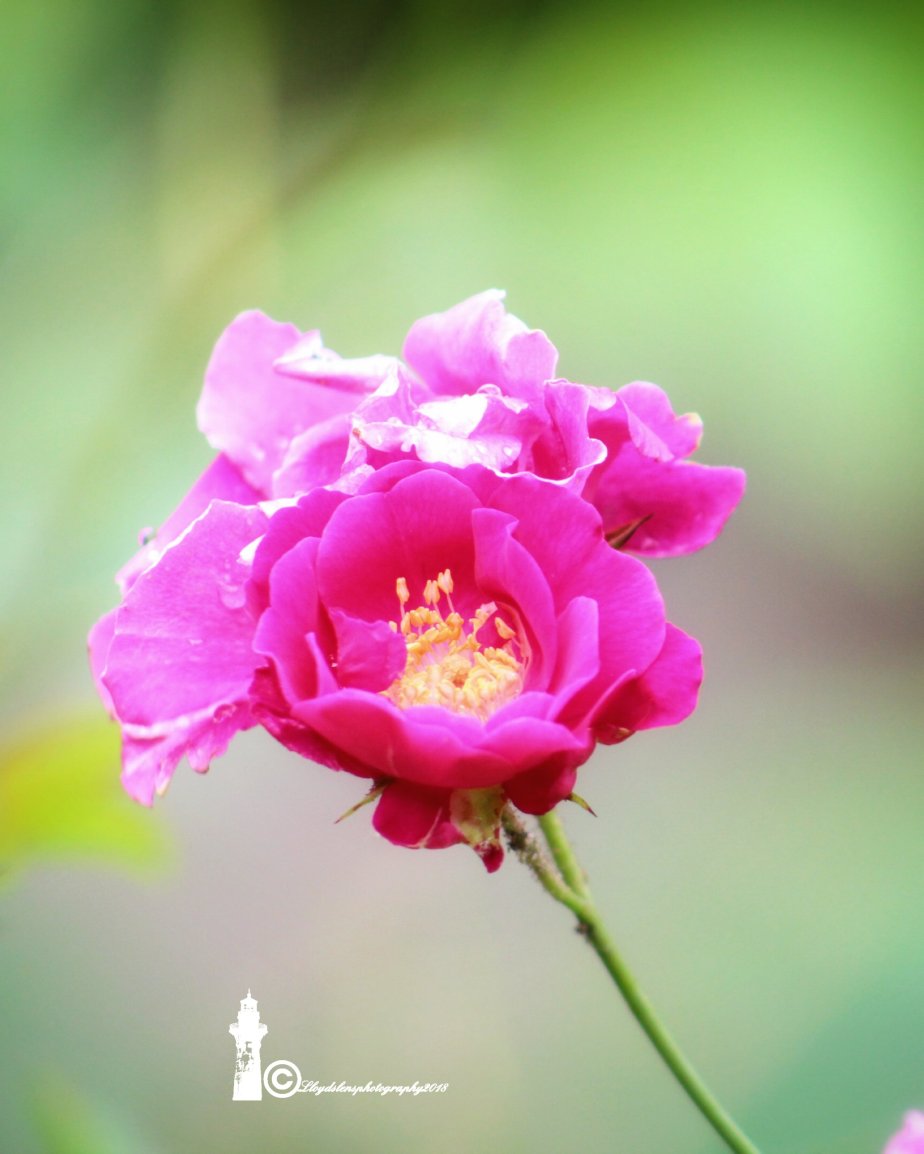
Hello friends! Tonight’s feature image is titled “Pink Roses 52117” and is available for purchase by following the instructions at the bottom of the article.

The grizzled old warrior looked out across the battlefield. The victory was theirs but it was hard won. At the onset of the fighting a hail of arrows fell in waves. His men’s armor was strong but there had been casualties. He felt a pinch in the side of his neck. The head of a broken arrow was caught in the chainmail. The mail had saved his life but the head of the arrow penetrated enough to cut him. A priest came to his side and removed the armor. Imeadiatly the priest produced an amber bottle of rose water to clense the wound. Without the vital liquid, the arrow would still be able to do it’s job many days from now.

One of the most common plants to be found in almost all climates is the rose. We tend to think of the rose as a symbol of love and the saver if absent minded husbands but there’s so much more. The short fiction above highlights one of the oldest uses for roses. A simple unsweetened tea made from rose pedals was once the preferred antiseptics. Rose water doesn’t just smell pretty. It’s rich in vitamin C which not only kills bacteria but also feeds the tissue as it heals. The sweet scent covers the smell of an open wound and therefore may help prevent insects from bothering it. But it gets better. There are more recipes that call for roses than I have room for in a single post.

One of the first herbal manuals that I ever purchased is Reader’s Digest “Herbs” ( ISB 0-89577-355-4) which suggests that the pedals can be used in salads, pies, syrups, flavored vinegar, sorbets and sweets. And the MacMillan Treasury Of Herbs ( ISBN 0-02-513470-1) has a recipe for rose pedal jam. It’s not surprising to me that there would be a lot of culinary uses for the flowers since in most cases the fruit is rather small and packed with seeds. However, the hips are also used in several of the teas.

The hips of Multiflora Rose are small but can be used to make a tea that’s rich in vitamin C.

Domestic Rose in all of it’s wonderful varieties is the most popular but it’s also a needy plant. One that I’ve struggled to keep alive and healthy. But Multiflora Rose is one that was brought in to be a “living fence” in the 1860s and quickly became invasive. It’s just as fragrant but the hips are small. Multiflora Rose is favored by a lot of songbirds and they seem to spread it well. Fortunately, it can be used in most of the same ways that the domestic roses can it just needs less encouragement to grow.

The simple white bloom of Multiflora Rose can be used in the same way domestic roses can.

While Multiflora Rose is considered to be a pest at least it’s a pest that has some virtue.

The best hips are said to come from the Dog Rose. Like Multiflora Rose, Dog Rose has a simple bloom but a much larger hip. I also understand that it’s a much lower maintenance rose than domestic roses.

If you’re curious about using roses the ISBN numbers are posted along with book titles that used as a reference to the article and I’m presuming that the internet has ton of Victorian treats to explore. In full confsession I have not gotten around to trying any more than just a nibble of Multiflora Rose Hips so it’s one of those plants that I’m waiting to try this fall. I’ll post a follow-up article to let you know how it turned out.

Hello Friends and thank you for your support of my page. If you have enjoyed the photos or the writings please let me know by commenting and sharing my work on your social media. I also want to invite you to Follow Lloyds Lens Photography on Facebook

If you would like to Follow me on Facebook the web address is

https://www.facebook.com/aviewfromthelens/

If you’re enjoying my blog and don’t want to miss a post then you can sign up for email alerts on my website.

https://lloydslensphotographyllc.com/

Click here to visithttps://lloydslensphotographyllc.com/

Did you know that I also do portraits by appointment? If you’re interested in a portrait session either message me on Facebook or Use the Contact form. The YouTube link below takes you one of my slideshows.

https://youtu.be/FDcrY6w8oY8

Have you checked out the Zazzle Store?

I’m now using Zazzle to fulfil orders. What this means for you is a secure way to place an order, discount codes & a broader product selection! Simply message me on Facebook oruse the contact form on my websiteand tell me which image you want and I’ll reply with a direct link to where you can place the order.

Clicking on the photo takes you tohttps://www.zazzle.com/lloydslensphotos?rf=238248269630914251

Lastly, all of the photos and writings are my original work unless otherwise specified and are not to be copied or reproduced without expressed written permission from the photographer

Thank you again for your support of my page!❤
Forage Friday #25 Goldenrod

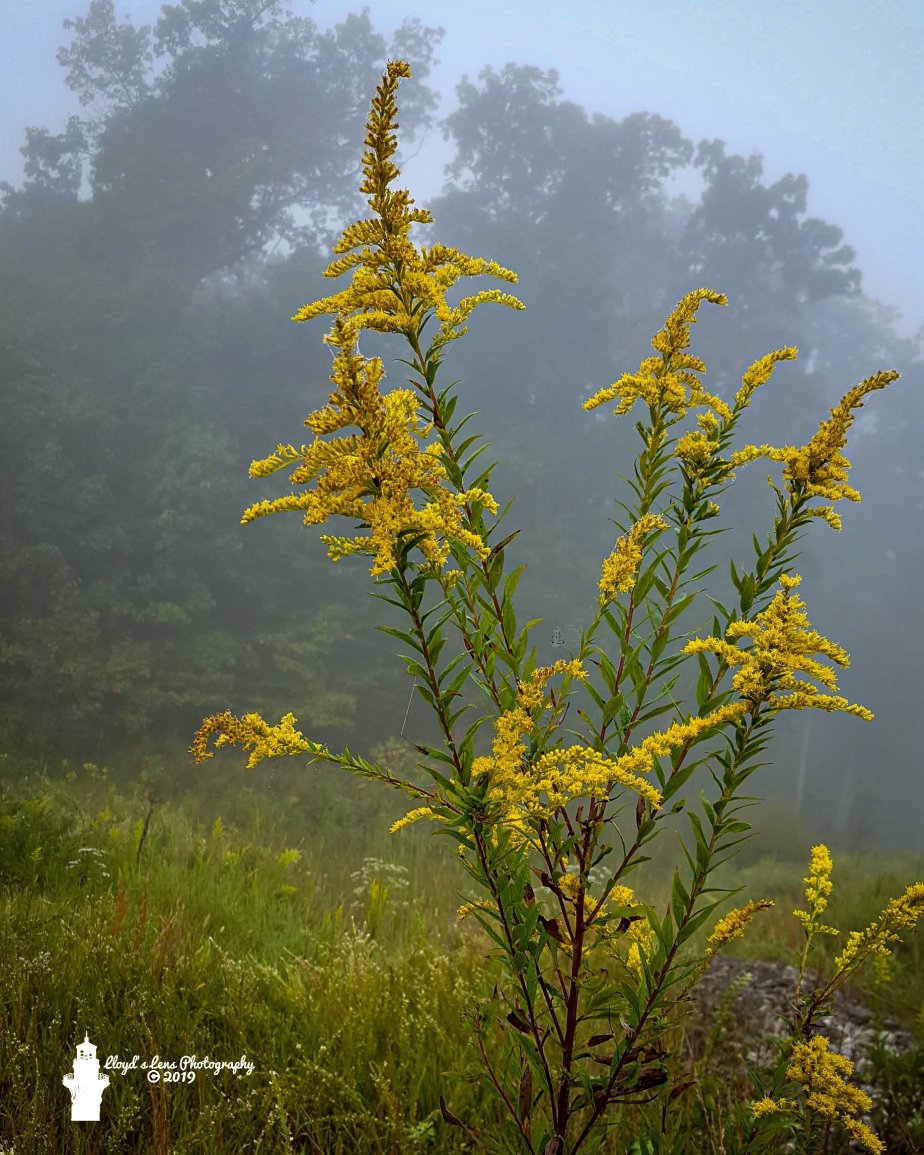
Hello friends! Tonight’s feature image is titled “Golden Morning In The Mists” and is available for purchase by following the instructions at the bottom of the article.

Please remember that Forage Friday is only intended to be a conversation starter. I highly recommend that you do further research before trying any wild edible / medicinal plants for the first time.

As the morning mists roll back and allow the mountains to welcome the morning sun my big blue truck rolls to a stop near the defunct strip mine. The goldenrod stands tall in the the thinning fog. This specimen is large. the base of the main stem is about one quarter of an inch thick.

goldenrod is one of those plants that often catches a bad wrap. While its true that some people have an allergy to Goldenrod it’s reputation for causing hay fever is a bit distorted. The truth is that Peterson’s Field guides recommends it for treating hay fever. A lot of folks in Appalachia and in rural America in general say that honey that is made from goldenrod is the best treatment for allergies. I have wondered if it was just the presence of the pollen & nectar in the honey or if the bees somehow enhance the effect during the process of making honey. It’s also said that crushing the flowers and chewing them so that the juice is slowly swallowed can relieve a sore throat. The most common medicinal use is as a diuretic and is indicated for just about anything that increased urine flow might help. The guides also say that Native Americans would use th roots on burns.

The food uses seem to be as a tea. Both leaves and flowers can be used fresh or dried to provide a tea that has a flavor similar to anise. Here’s where we transition into the utilitarian qualities of goldenrod. Anise is not just a flavoring for old time candy. It’s used as fishing lure to enhance bait. I’d miss my guess if golden rod couldn’t be used the same way. And, if you’re a successful fisherman without a match or Bic lighter that Goldenrod stem is there to come to the rescue. The Stem of goldenrod is an almost perfect friction fire tool. I say almost because it’s a bit easy to break. Friction fire in the Eastern Woodlands is a challenge to say the least. I’ve tried several methods and devices such as bow drills and pump drills and I’ve gotten to the point of creating a thin wisp of smoke but I’ve never got the red hot coal that brings flames. However, I’m convinced that the fault was in my technique and the most successful attempts that I have ever had was using the Goldenrod stem as a drill bit.

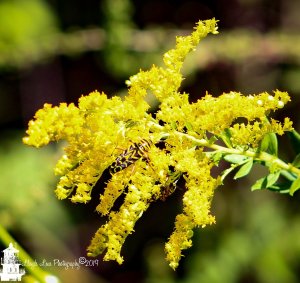
Image Title “Black And Yellow Locust Borer On Goldenrod” available for purchase by following the instructions at the bottom of the article.

On the right side of the page we have a familiar sight. The “W” pattern on the back of the beetle tells me that it’s a Black and Yellow Locust Borer. While they are pretty hard on the locust trees they’re harmless to people. After they emerge from the locust tree they feed of goldenrod. In fact the sweetness of goldenrod is so attractive to insects that you’ll need to make sure that only the leaves & flowers are going into your tea.

Hello Friends and thank you for your support of my page. If you have enjoyed the photos or the writings please let me know by commenting and sharing my work on your social media. I also want to invite you to Follow Lloyds Lens Photography on Facebook

If you would like to Follow me on Facebook the web address is

https://www.facebook.com/aviewfromthelens/

If you’re enjoying my blog and don’t want to miss a post then you can sign up for email alerts on my website.

https://lloydslensphotographyllc.com/

Click here to visithttps://lloydslensphotographyllc.com/

Did you know that I also do portraits by appointment? If you’re interested in a portrait session either message me on Facebook or Use the Contact form. The YouTube link below takes you one of my slideshows.

https://youtu.be/FDcrY6w8oY8

Have you checked out the Zazzle Store?

I’m now using Zazzle to fulfil orders. What this means for you is a secure way to place an order, discount codes & a broader product selection! Simply message me on Facebook oruse the contact form on my websiteand tell me which image you want and I’ll reply with a direct link to where you can place the order.

Clicking on the photo takes you tohttps://www.zazzle.com/lloydslensphotos?rf=238248269630914251

Lastly, all of the photos and writings are my original work unless otherwise specified and are not to be copied or reproduced without expressed written permission from the photographer

Thank you again for your support of my page!❤

Forage Friday #23 Willow

Hello friends! Tonight’s feature image is titled “The Builder” and is available for purchase by following the instructions at the bottom of the article. I have chosen the image of a red-winged blackbird as the feature image because he’s using the twigs as nesting material and willow is a builder’s tree.

I have returned to the marsh on Muddelty Creek off and on throughout the season to look for interesting photos and to check up on the red-winged blackbirds that seem to thrive there. When I noticed the amount of willow trees in the area I knew that I would be doing a Forage Friday post featuring willow. But I also wanted to expand the concept of foraging for my readers a bit.

Typically when we speak about willow trees in the foraging realm we are referring to the traditional uses for aspirin. Aspirin was originally madr from the inner bark of black willow. Small twigs were gathered and stripped out. Once the inner bark was free from wood and cork it is steeped in hot water and sipped slowly. (Please remember that I make no claims of being an expert on herbalism or medicine. Forage Friday is only intended to be a conversation starter. ) Back in the old days you couldn’t just run down to the corner store and grab a bottle of pills. In fact most people who lived in Appalachia just getting out of the “holler” was a major feat. Families needed to be able to fabricate the necessities of life.

Aside from pain killer and fever medicines willow was one of those trees that came with a variety of uses.

The small twigs can be baked in a low oxygen environment and converted into charcoal. Those charcoal sticks are still highly prized by artists today. At the time of this writing the top result on Google was selling a canister of 144 willow sticks for over $50.00. However the next supplier was less than $10.00.

Willow was also popular for construction. The long flexible branches were used in a technique called “Wattle and Daub. In the wattle and daub the willow branches are woven through the framework of the sstructure and a mixture of “cob” is uesed as plaster coating for the wall.

Willow is found worldwide and at one time it was actually farmed by a practice known as coppicing. The branches would be cut back every year or so leaving a bare stump. The new shoots that grew from the stumps were straiter and more flexible. The harvested shoots were used for baskets and fish traps. The Welsh used them to make a shield shaped boat called a Coracle. While a Coracle was a flatwater boat it was capable of supporting a tremendous load. Native Americans in Alaska used willow to make kayaks and bows.

In the Spring willow produces a downy seed that is carried on the wind.

Willow is also both a pioneer species and a stabilizing force on streams. The tree grows on the edge of the water and acts as a buffer to slow down flood waters and it’s roots help hold the soil in place. In 2016 my area was hit by what was said to be the worst flooding in 1000 years. I credit the willows and other trees that grow on my property with preventing my yard from being washed out during the flood.

I’m certain that I’ve left a few tidbits out but if you happen to have access to willow trees then you might want to try making a basket or charcoal stick as a small project.

Hello Friends and thank you for your support of my page. If you have enjoyed the photos or the writings please let me know by commenting and sharing my work on your social media. I also want to invite you to Follow Lloyds Lens Photography on Facebook

If you would like to Follow me on Facebook the web address is

https://www.facebook.com/aviewfromthelens/

If you’re enjoying my blog and don’t want to miss a post then you can sign up for email alerts on my website.

https://lloydslensphotographyllc.com/

Click here to visithttps://lloydslensphotographyllc.com/

Did you know that I also do portraits by appointment? If you’re interested in a portrait session either message me on Facebook or Use the Contact form. The YouTube link below takes you one of my slideshows.

https://youtu.be/FDcrY6w8oY8

Have you checked out the Zazzle Store?

I’m now using Zazzle to fulfil orders. What this means for you is a secure way to place an order, discount codes & a broader product selection! Simply message me on Facebook oruse the contact form on my websiteand tell me which image you want and I’ll reply with a direct link to where you can place the order.

Clicking on the photo takes you tohttps://www.zazzle.com/lloydslensphotos?rf=238248269630914251

Lastly, all of the photos and writings are my original work unless otherwise specified and are not to be copied or reproduced without expressed written permission from the photographer

Thank you again for your support of my page!❤