Forage Friday #12 Japanese Honeysuckle

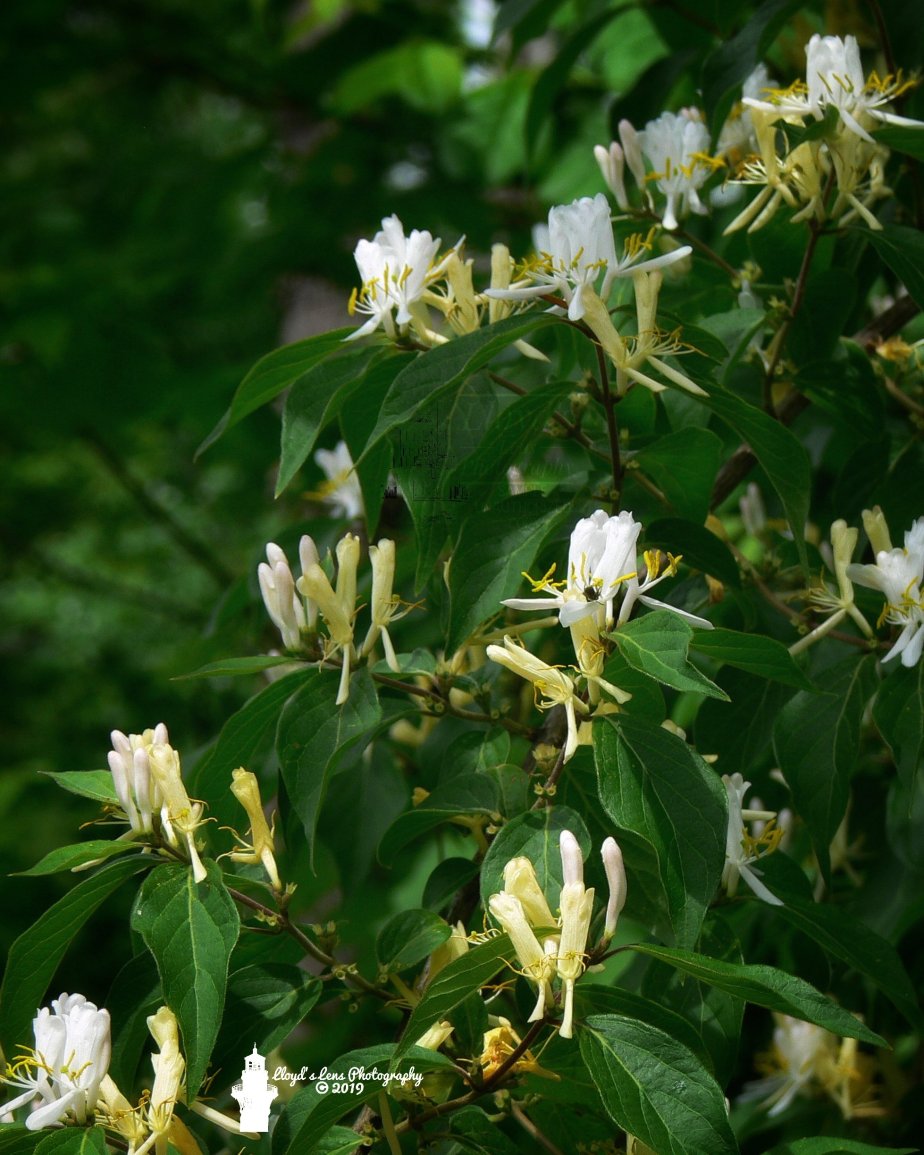
Hello Friends! Tonight’s feature image is titled “Japanese Honeysuckle 5319” and is available for purchase by following the instructions at the bottom of the article.

*Some honeysuckle plants that are found in North America are toxic. Always get a positive ID on the plants and do further research before trying any plant for the first time. Forage Friday is only intended to be an interesting conversation starter and is not a replacement for proper training.

The breeze carries a sweet scent as I approach the edge of the forest. The long vines trail and climb and twist through the underbrush. The vine itself is adorned with slinder tubular flowers. Butterflies dance about from flower to flower following the bees. They know that the flowers sweeten their nectar in the bee’s presence. They also know that their long straw-like mouth parts can reach deep into the flowers to get to the nectar that the bees can’t find. I have a different solution for harvesting a treat. I pinched a flower down at the base and pulled it free from the vine being careful not to lose the sweet liquid in the process. The nectar can simply be sucked out of the other end.

That’s the way I learned to enjoy Japanese Honeysuckle as a child. I’m not really sure when I learned that candy grew on vines or who I learned how to do it from. I only have a vague memory of pulling the flowers and sucking out the nectar.

As I became more interested in how to harvest and use things from the wilderness I learned that in traditional Chinese medicine they make a cough syrup from the plant and that the leaves are used as a potherb. We don’t eat many cooked greens at my house so I never bothered with the leaves myself.

There’s a lot of medicinal uses listed for honeysuckle as well as some potential side effects. As I’ve said before I have no formal training beyond what I picked up in forestry classes which were geared towards harvesting lumber and replanted the forest. With that in mind I’m providing a link to WebMD for their expertise.

I also need to address some feedback that I got from last Friday’s post on Yarrow. I stated on Facebook that Yarrow was NOT an edible plant. Which drew some constructive criticism from a few members of the group.

First, it’s awesome that members of the wild edible community are able to make counterpoints and keep it respectful. That’s the mark of a high quality individual. Kudos to Niki, Niamh and Marquis and thank you for your support and passion for living a more natural lifestyle.

The point was made that these folks have used Yarrow internally and experienced no negative effects. From what I got in their comments they only used it in limited quantities and for various reasons. I still maintain that Yarrow should not be used in large quantities or for extended periods of time but I felt that their experience was worth mentioning and that they all three deserve recognition for the awesome manor in which they addressed their disagreement. Thank you again for your interaction.

Hello Friends and thank you for your support of my page. If you have enjoyed the photos or the writings please let me know by commenting and sharing my work on your social media. I also want to invite you to Follow Lloyds Lens Photography on Facebook

If you would like to Follow me on Facebook the web address is

https://www.facebook.com/aviewfromthelens/

If you’re enjoying my blog and don’t want to miss a post then you can sign up for email alerts on my website.

https://lloydslensphotographyllc.com/

Click here to visithttps://lloydslensphotographyllc.com/

Did you know that I also do portraits by appointment? If you’re interested in a portrait session either message me on Facebook or Use the Contact form. The YouTube link below takes you one of my slideshows.

https://youtu.be/FDcrY6w8oY8

Have you checked out the Zazzle Store?

I’m now using Zazzle to fulfil orders. What this means for you is a secure way to place an order, discount codes & a broader product selection! Simply message me on Facebook oruse the contact form on my websiteand tell me which image you want and I’ll reply with a direct link to where you can place the order.

Clicking on the photo takes you tohttps://www.zazzle.com/lloydslensphotos?rf=238248269630914251

Lastly, all of the photos and writings are my original work unless otherwise specified and are not to be copied or reproduced without expressed written permission from the photographer.

Thank you again for your support of my page!❤
Forage Friday #11 Yarrow

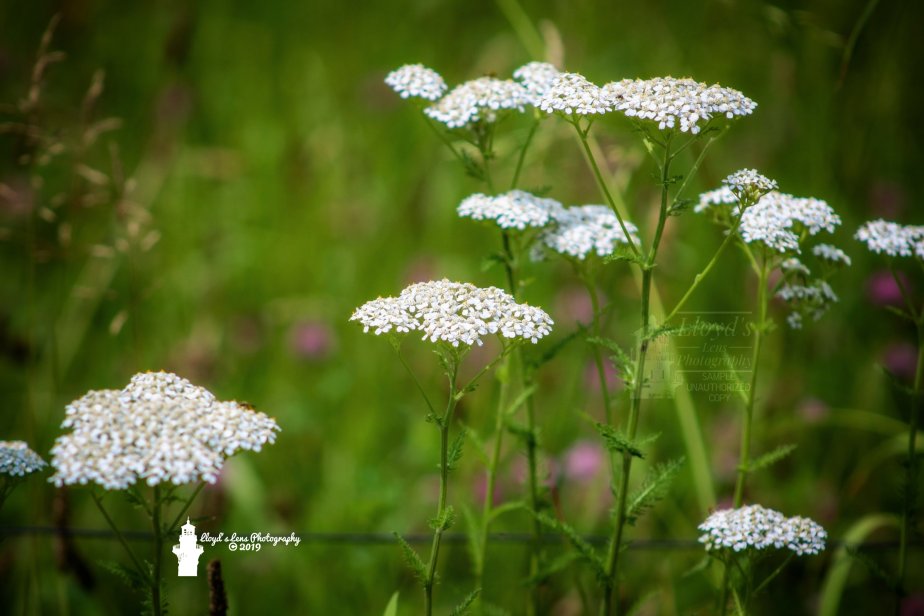
Hello Friends! Tonight’s feature image is titled “Yarrow 6119A” and is available for purchase by following the instructions at the bottom of the article.

Achilles surveyed the battlefield. He was covered in dirt, sweat and blood. He and his men had won the day but this moment of rest wouldn’t last long. Many of the soldiers were wounded and he would most likely need them again before morning. He sheathed his kopis sword and held his hoplon above his head to shade his eyes from the Mediterranean sun. He barely make out the the white blooms growing on the edge of grass. His men looked on as he waded into the grass and plucked a few fern-like leaves from the woody stalk and crushed them between his thumb and forefinger. He held the freshly formed pulp up to his nose just like Chiron taught him. The aromatic oils even smelled like medicine. He called one of the warriors to his side and applied the pulp to the man’s wounded hand. Almost imeadiatly the blood clotted and the bleeding stopped. The plant was powerful medicine indeed. One day soon it would even heal the most famous wound in Greek history, Achilles’ own heel.

I may have taken a little bit of a creative license with Greek history in the story above. But when I saw the yarrow growing in the ditch near the old pasture I knew that I had to include it Forage Friday. Typically when you think about foraging you think about exotic wildcrafted herbs and spices. Or sweet berries and fruits that are gathered in buckets and baked into all manor of goodies. But tonight I wanted to introduce you to some wilderness first aid. Tonight’s plant is yarrow.

Yarrow gets it’s scientific name from it’s association with the Greek hero Achilles. The genus Achillea is found pretty much worldwide and it’s one of those special plants that needs to be treated with respect. I have successfully used it myself but with some caution. ⚠️ As I have stated in previous Forage Friday posts anybody can have an adverse reaction to any plant at any time. ⚠️ In Peterson’s Field Guide James A Duke states that yarrow has over 100 biologically active compounds. And while some traditional uses are internal I’m just not comfortable discussing internal uses. One of the reasons why is that some strains of yarrow contain dangerous alkaloids. Yarrow also has a tendency to retain contamination from the soil it grows in and so the history of the land is an important consideration. Overuse of yarrow is known to cause an allergic reaction to sunlight so it’s recommend that even external use is short term. With that in mind let’s take a look at the uses.

As stated in the story above yarrow is probably best known as a clotting agent. The last time collected it I hung it upside down in a cool dry place out of the direct sun and waited for the fern-like leaves to become dry and brittle. Then simply stripped them from the simi-woody stalk and crushed them into a powder by rubbing them between two spoons over a bowl. The resulting powder can be sprinkled into minor nicks and scrapes to control bleeding. Adding other plants like plantain (plantago spp. Not the banana like fruit ) will have synergistic effect that is said to help prevent an infection.

A closer look at the light green fern-like yarrow leaves.

I’ve not tried to use the stem for starting a friction fire yet but my instincts say that it’s worth a try.

I don’t really remember where but I do remember reading somewhere that a few leaves added to the compost pile helps speed up the composting process.

One last word of caution. Yarrow is one of those plants that really resembles poison hemlock so if you think that you’re interested in exploring it further please do plenty of research on both plants so that you recognize the difference.

Hello Friends and thank you for your support of my page. If you have enjoyed the photos or the writings please let me know by commenting and sharing my work on your social media. I also want to invite you to Follow Lloyds Lens Photography on Facebook

If you would like to Follow me on Facebook the web address is

https://www.facebook.com/aviewfromthelens/

If you’re enjoying my blog and don’t want to miss a post then you can sign up for email alerts on my website.

https://lloydslensphotographyllc.com/

Click here to visithttps://lloydslensphotographyllc.com/

Did you know that I also do portraits by appointment? If you’re interested in a portrait session either message me on Facebook or Use the Contact form. The YouTube link below takes you one of my slideshows.

https://youtu.be/FDcrY6w8oY8

Have you checked out the Zazzle Store?

I’m now using Zazzle to fulfil orders. What this means for you is a secure way to place an order, discount codes & a broader product selection! Simply message me on Facebook oruse the contact form on my websiteand tell me which image you want and I’ll reply with a direct link to where you can place the order.

Clicking on the photo takes you tohttps://www.zazzle.com/lloydslensphotos?rf=238248269630914251

Lastly, all of the photos and writings are my original work unless otherwise specified and are not to be copied or reproduced without expressed written permission from the photographer.

Thank you again for your support of my page!❤

Forage Friday #10 Red Clover

Hello Friends! Tonight’s feature image is titled “Red Clover 91217″and is available for purchase by following the instructions at the bottom of the article.

The warmth of summer sun blankets the ground in the Appalachian Mountains. As I stepped out the robin gives and alert call and swiftly zips across the yard and disappears into a thicket. In the direction that she flew I see the reddish pink dots that stand a little taller than the surrounding grass. I eased over to the edge of the yard and bent down to pluck a single head from the plant. Red clover was one best parts of summer as young boy on the farm. During one of my long walks with my grandfather he stopped and pulled up a couple of red clover flowerheads. He would grip a few of the individual florets in his teeth and gently pull them from the base. They were full of sweet nectar and by freeing them from the base one could enjoy that sweetness unencumbered by grassy part. That’s how I was introduced to red clover. My brother and I would often pick a few as we played the countryside. Occasionally we’d get a dry one that wasn’t quite so awesome but for the most part they were like natural candy. No wonder the cattle would sometimes push through the electric fence to get to the clover.

As I got older I learned that all clovers are rich in protein. Peterson’s Field Guide says that the raw leaves and flowerhead is hard to digest raw but that soaking them in salt water for a while and boiling for fifteen minutes makes it so they can be eaten in quantity.

The dried flowers are a an awesome herbal tea that has some health benefits.

These days we know that smoking anything is not a good idea but Native Americans included different types of clover in “Kinnikinnick”. Contrary to popular belief Native Americans rarely smoked pure tobacco. Kinnikinnick loosely translates as “things mixed together” and it seems that everyone had their own recipes based on the purpose of the smoke. I can remember some of the old timers talking about generations of Mountaineers prior that kept a jar of red clover for their pipes. At one point there was a marketed tobacco substitute for people who were trying to quit smoking that used red clover as a base. I’m not sure why but seems to have been taken off of the market for some reason.

The last use listed by Peterson’s Field Guide is as a four. I do have to wonder what a non grain based flour made from clover might mean to someone who has a grain sensitivity. (⚠️ please remember that I claim no expertise in anything medical. ⚠️) The technique I found by searching the internet seems pretty straightforward. Dry the flowerheads at low temperatures and grind them in a blender until you have a fine powder.

Clover is usually easy to find in large quantities but it can also be purchased at agricultural supply stores as a soil amendment and livestock fodder.

For me red clover is a harbinger of sweet memories. But then again, I just might find a way to keep a patch handy to occasionally enjoy.

⚠️Please remember that my blog is a photography blog and that Forage Friday is only intended to be a conversation starter and not a substitute for proper training in survival or foraging.

Hello Friends and thank you for your support of my page. If you have enjoyed the photos or the writings please let me know by commenting and sharing my work on your social media. I also want to invite you to Follow Lloyds Lens Photography on Facebook

If you would like to Follow me on Facebook the web address is

https://www.facebook.com/aviewfromthelens/

If you’re enjoying my blog and don’t want to miss a post then you can sign up for email alerts on my website.

https://lloydslensphotographyllc.com/

Click here to visithttps://lloydslensphotographyllc.com/

Did you know that I also do portraits by appointment? If you’re interested in a portrait session either message me on Facebook or Use the Contact form. The YouTube link below takes you one of my slideshows.

https://youtu.be/FDcrY6w8oY8

Have you checked out the Zazzle Store?

I’m now using Zazzle to fulfil orders. What this means for you is a secure way to place an order, discount codes & a broader product selection! Simply message me on Facebook oruse the contact form on my websiteand tell me which image you want and I’ll reply with a direct link to where you can place the order.

Clicking on the photo takes you tohttps://www.zazzle.com/lloydslensphotos?rf=238248269630914251

Lastly, all of the photos and writings are my original work unless otherwise specified and are not to be copied or reproduced without expressed written permission from the photographer.

Thank you again for your support of my page!❤

Forage Friday #9 Wild Grapes ( just the vine for now )

Last weekend we missed Forage Friday due to a weather event so this Friday we’re going to pick up where we left off.

Hello Friends! Tonight’s feature image is titled “Wild Grapes and Snake Tongue “. The image was taken specifically for tonight’s post. All of the photos on my blog are available for purchase by following the instructions at the bottom of the article.

We’re all familiar with Grapes. The fruit of the vine permeates our culture world wide. Everything from fine wine to to a peanut butter and jelly sandwich uses the grape berries. I have recently learned that the leaf is a huge Mediterranean delicacy. A quick internet search revealed that other parts of the world use the leaves in a lot dishes. However, the leaf is not the focus of tonight’s post. It’s the tendrils that I’m interested in on this foraging excursion.

As a kid we called them snake tongues. And it was probably while doing a silly snake impersonation and using the forked tendrils for a prop that I discovered the flavor.

The tendrils of wild grape resembling the forked tongue of a snake.

The taste of local wild grape tendrils reminds me a little of sweet tarts candy. I normally only grab a few while walking around the mountains. The candy like flavor helps me with dry mouth and it’s a little pick-me-up. Although that later trait is probably due my association with childhood.

I have been curious to chop a few up and toss them into a salad but so far I’ve just used it as a trail nibble like most of the wild edible plants that I’m familiar with.

I believe that the particular variety of grape in the feature image are Porcelain Berry. The reason why I think that is because the property where I took the photos is thick with Porcelain Berry.

Porcelain Berry looks nothing like the grapes in the grocery store.

The Porcelain Berry is a really interesting grape visually. The cluster often contains a variety of blues and reds in multiple tones. They are edible raw or cooked but I’m told that the flavor of the fruit is somewhat disappointing so I have never bothered to try it.

One last thing about the actual leaf. Specifically on Porcelain Berry. Because I have just discovered that grape leaves are edible I did a little digging around the internet and Porcelain Berry leaves are said to only be edible when cooked. Porcelain Berry is not a true grape even though we commonly call them wild grapes. True grapes are in the genre vitis. True grapes leaves can be eaten raw while Porcelain Berry (genus Ampelopsis ) leaves cannot be. I also need to warn you of a toxic look-alike to any kind of wild grape is Canadian Moonseed which contains a substance similar to curare. For more information about Moonseed here’s an old video from my YouTube days.

As always please do independent research and keep in mind that Forage Friday is only intended to be used as a starting point and a conversation starter.

Hello Friends and thank you for your support of my page. If you have enjoyed the photos or the writings please let me know by commenting and sharing my work on your social media. I also want to invite you to Follow Lloyds Lens Photography on Facebook

If you would like to Follow me on Facebook the web address is

https://www.facebook.com/aviewfromthelens/

If you’re enjoying my blog and don’t want to miss a post then you can sign up for email alerts on my website.

https://lloydslensphotographyllc.com/

Click here to visithttps://lloydslensphotographyllc.com/

Did you know that I also do portraits by appointment? If you’re interested in a portrait session either message me on Facebook or Use the Contact form. The YouTube link below takes you one of my slideshows.

https://youtu.be/FDcrY6w8oY8

Have you checked out the Zazzle Store?

I’m now using Zazzle to fulfil orders. What this means for you is a secure way to place an order, discount codes & a broader product selection! Simply message me on Facebook oruse the contact form on my websiteand tell me which image you want and I’ll reply with a direct link to where you can place the order.

Clicking on the photo takes you tohttps://www.zazzle.com/lloydslensphotos?rf=238248269630914251

Lastly, all of the photos and writings are my original work unless otherwise specified and are not to be copied or reproduced without expressed written permission from the photographer.

Thank you again for your support of my page!❤

Forage Friday #8 – Black Locust Flowers

Hello Friends! Tonight’s feature image is titled “Black Locus Flowers 42819” and is available for purchase by following the instructions at the bottom of the article.

The afternoon sun filters down through a canopy of new leaves as the mockingbird chirps his happy song from some hidden perch. As I round the curve in the trail near the hilltop I can see the clusters of white pea-like flowers hanging down from twisted gnarly branches. The flowers are guarded by formidable thorns that are capable of piercing even my thick leather boots. I have reached the stand of black locus at long last.

The only part of tree that’s generally considered safe for human consumption is the flowers. They’re used to make fritters. The cluster is dipped in batter and deep fried. Like most country kitchens everyone seems to put their own twist on the recipe. Most of them incorporate a generous amount sugar. The flowers themselves are mildly sweet with a vanilla undertone.

The season is short but a productive stand can produce a surprisingly large amount of bloom.

The leaves, bark and fruit are listed as toxic in all of my reference books.

Black Locus seed pods might look peas but they are poison.

Outside of the flowers no other parts of the tree are edible. However, foraging for food doesn’t always mean plants and that’s where the black locus can really help.

The Eastern Woodlands tribes of Native Americans valued the wood for making hunting bows. Black Locus wood is dense and challenging to work but it’s very springy. I have seen chainsaws struggle with the wood so I can imagine how time consuming it was to tiller out a bow with a chip of flint. But the results are a bow that shoots fast and is very resistant to rotting.

The rot resistance of black locus makes it prized for fence posts. When I was a kid almost every farm was surrounded by two strands of barbed wire held up by weathered locus posts. The posts eventually rotted at ground level but above and below ground the post was solid. Often times fixing the fence was as simple as loosening the wire and sharpening the post where it was solid again and driving it back into the ground. Locus posts were always cut a little longer than needed so this could be done.

The flowers are probably gone by the time I publish this post and I was just a little kid when I tried the fritters but from what I remember they were definitely worth trying.

Hello Friends and thank you for your support of my page. If you have enjoyed the photos or the writings please let me know by commenting and sharing my work on your social media. I also want to invite you to Follow Lloyds Lens Photography on Facebook

If you would like to Follow me on Facebook the web address is

https://www.facebook.com/aviewfromthelens/

If you’re enjoying my blog and don’t want to miss a post then you can sign up for email alerts on my website.

https://lloydslensphotographyllc.com/

Click the web to go tohttps://lloydslensphotographyllc.com/

Did you know that I also do portraits by appointment? If you’re interested in a portrait session either message me on Facebook or Use the Contact form. The YouTube link below takes you one of my slideshows.

https://youtu.be/FDcrY6w8oY8

Have you checked out the Zazzle Store?

I’m now using Zazzle to fulfil orders. What this means for you is a secure way to place an order, discount codes & a broader product selection! Simply message me on Facebook oruse the contact form on my websiteand tell me which image you want and I’ll reply with a direct link to where you can place the order.

Clicking on the photo takes you tohttps://www.zazzle.com/lloydslensphotos?rf=238248269630914251

Lastly, all of the photos and writings are my original work unless otherwise specified and are not to be copied or reproduced without expressed written permission from the photographer.

Thank you again for your support of my page! ❤