
Forage Friday #103 Apple Blossom

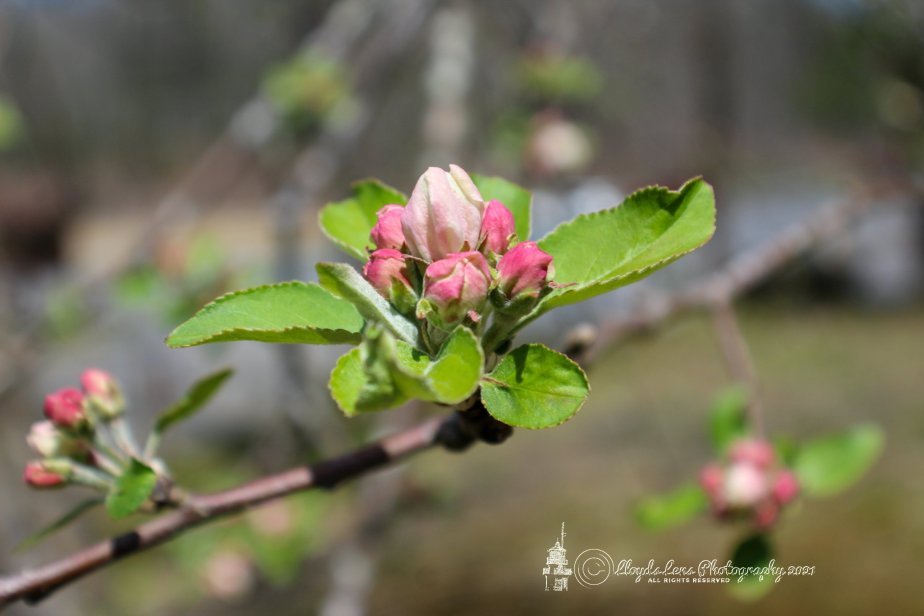
Hello Friends! Tonight’s Feature Image is titled “Apple Blossoms On Salmon Run Road 41321” and is available for purchase by clicking on the thumbnail and reaching out to me on the contact page.

Please remember that Forage Friday is presented as trivia and not to be mistaken for medical advice.

As the Spring sun breathes life into the landscape an ancient symbol of the changing season is found on the shore of the lake bed. The only Apples native to North America is the crab apple. The first European Apple orchard in the United States was planted by Reverend William Blaxton in Boston in 1625. And not to far from my home the Golden Delicious Apple was developed in Clay County West Virginia in 1914. According to Italian scientists who study plant genetics our Golden Delicious Apple gas the largest number of genomes they have studied so far. As the trees have been prolifically spread by humans and animals some form of apples can often be found along old pastures and homesteads or as the case with the one in our Feature Image, they are planted as edible landscaping. And while we typically think of apples as a Fall food source the blossom is also a food source that’s available in spring.

During the Victorian Age including flowers in the meal as more than a table setting or garnish for the plate was pretty common and is still pretty common in some countries today.

Image Titled “Apple Blossoms On Salmon Run Road 41321b” and is available for purchase by clicking the thumbnail and reaching out to me on the contact page.

Now there’s a word of caution, according to the internet Apple Blossoms may carry the precursors of cyanide and apple seeds are considered to be poison. However, I’m one of those weird people who routinely consumes an entire apple seeds and all. To date I have not died or suffered any ill effects from the seeds. But I also don’t consume a large quantity of seeds. Just a few that are in the apple. So with that in mind I’ll suggest that it’s probably not a great idea to sit down and eat Apple Blossoms is if they were a bag of chips. Or as Green Dean put it, “A Few is tasty. Too many is a tumy ache. And a lot is a trip to the hospital. ”

Image Titled “Apple Blossoms & Crab Spider 41321” and is available for purchase by clicking the thumbnail and reaching out to me on the contact page.

Generally speaking apple blossoms are rich in antioxidants. When included in a tea blend apple blossoms are said to promote good digestion and clear the complexion as well as help with easing stress. The flavor goes well with roses, elderflower and jasmine. And of course they can also be used to make a tincture.

Spring is also a great time to harvest a few apple leaves while they’re still young and tender. They also can be dried or cured to produce a tea. The leaves are astringent and antimicrobial.

One online blend recommends combining apple leaves with bramble leaves, strawberry leaves and a half of a cinnamon stick.

That’s it for tonight friends, good night and be blessed throughout your days!

Announcement 2.0

For those who have been following me on Facebook and know of the struggle content providers have to get circulation from big tech I’ve been recommending for people to adopt MeWe as a social media platform. One of the problems I’ve run into on MeWe is that people don’t know how to navigate the platform. So to help with that I’ve created a permanent page on my website as a basic Basic Beginner’s Guide To MeWe I’ve tried to anticipate all basic questions there and You can bookmark the page to have as a reference and if you have any questions or suggestions don’t hesitate to contact me. I do still have a day job and I help admin several pages on both platforms so replies might be a little slow but I will answer you.

We also have the Lloyd’s Lens Photography Discussion Group on MeWe that is set up as a fully functional community. There you’ll not only be able to see and connect with me but you can also make your own posts and interact with each other.

I want you to join my group on MeWe: https://mewe.com/join/lloydslensphotographydiscussiongroup

Click the link below to jump to the Basic Beginner’s Guide To MeWe.

https://lloydslensphotographyllc.com/guide-to-mewe/

Hey Friends! Just a quick reminder that Lloyds Lens Photography is available for portraits!

To book me simply reach out using the Contact Page and we’ll set a date. If you’re within a 50 mile radius of Summersville West Virginia all travel fees are waived.

If you’re enjoying my blog and don’t want to miss a post then you can sign up for email alerts on my website.

https://lloydslensphotographyllc.com/

Have you checked out the Zazzle Store?

I’m now using Zazzle to fulfil orders. What this means for you is a secure way to place an order, discount codes & a broader product selection! Simply use the contact form on my websiteand tell me which image you want and I’ll reply with a direct link to where you can place the order.

Clicking on the photo takes you tohttps://www.zazzle.com/lloydslensphotos?rf=238248269630914251

Lastly, all of the photos and writings are my original work unless otherwise specified and are not to be copied or reproduced without expressed written permission from the photographer

Thank you again for your support of my page!

Forage Friday #102 Serviceberry

Hello Friends! Tonight’s Feature Image is titled “Serviceberry In Bloom 40621a” and is available for purchase by clicking the thumbnail and reaching out to me on the contact page.

Please remember that Forage Friday is presented as trivia and not to be mistaken for medical advice.

One of the true blessings of the Appalachian Spring is of course the opening of the serviceberry bloom. The little frilly looking flowers with a set of tell-tale brown scales at the base just seem to suddenly erupt from the forest edges. They’re usually a few weeks ahead of the dogwoods but are often mistaken for some exotic form of dogwoods by the casual observer.

My grandfather would sometimes recall one of his favorite treats from his childhood during the Great Depression as being serviceberry pie. I can’t seem to recall the exact description He gave but I could tell from the look in his eyes that he was watching himself as child climbing into the trees to gather the berries. And I’ve heard similar stories from others of that generation. So much so that I don’t really understand why a cottage industry of authentic Appalachian serviceberry baked goods wasn’t a thing.

Serviceberry was apparently a favorite among Native Americans as well. It was often included in pemmican which, for those who may not know, is a mixture of meat, fat and fruit that lasted a very long time under primitive conditions.

Aside from pies the fruits can be used to make jam, pastries and as a general snack. The flavor is semisweet and often described as having a mild apple taste. The modern American diet has become so sugary that a lot of old time fruits and sweets don’t seem to trigger the brain’s pleasure centers like they used to. However I can assure you from personal experience that after you cut out heavy sweets for a couple of months those modern candies are almost intolerable and something like serviceberry becomes just right. It’s also a different experience because at that point you’re able to detect subtle nuances in the flavor that was overridden by the sugar before. I see it as being like noticing a masterpiece of art that you couldn’t appreciate before.

The nutritional facts are as follows:

Potassium – 133.3 grams

Vitamin A – 1.3% RDI

Vitamin C – 26.7% RDI

Calcium- 1.3% RDI

Folate – 2.7 RDI

Iron – 2.7 RDI

Magnesium-2.7 RDI

Phosphorus – 2.7 RDI

In reviewing a government study on the nutritional value of serviceberry I noticed that it seems to high in polyphenols which is the same classification of substances that is credited with giving chaga and turkey tail mushrooms some of their medicinal values. While the study didn’t cite any particulars on that they did list some traditional Native American medical uses.

It’s not surprising that Native Americans used the fruit juice as a laxative but what struck me was that it was used as eye and ear drops. The boiled bark of serviceberry was a handy disinfectant for the natives and boiling the roots made a treatment to prevent miscarriages after injuries. A tea made from the twigs was given to women after childbirth and a tonic from the bark was believed to help expel the placenta.

Native Americans also found the wood itself to be useful. The smaller branches and twigs were good for weaving. While thicker pieces made good arrows, canes, canoe frames and digging sticks. To be used as a digging stick in particular the wood had to be tough and hard. They even used it to make pipe bowls.

That’s it for tonight’s Forage Friday.

Good night friends and be blessed throughout your days.

Announcement 2.0

For those who have been following me on Facebook and know of the struggle content providers have to get circulation from big tech I’ve been recommending for people to adopt MeWe as a social media platform. One of the problems I’ve run into on MeWe is that people don’t know how to navigate the platform. So to help with that I’ve created a permanent page on my website as a basic Basic Beginner’s Guide To MeWe I’ve tried to anticipate all basic questions there and You can bookmark the page to have as a reference and if you have any questions or suggestions don’t hesitate to contact me. I do still have a day job and I help admin several pages on both platforms so replies might be a little slow but I will answer you.

We also have the Lloyd’s Lens Photography Discussion Group on MeWe that is set up as a fully functional community. There you’ll not only be able to see and connect with me but you can also make your own posts and interact with each other.

I want you to join my group on MeWe: https://mewe.com/join/lloydslensphotographydiscussiongroup

Click the link below to jump to the Basic Beginner’s Guide To MeWe.

https://lloydslensphotographyllc.com/guide-to-mewe/

Hey Friends! Just a quick reminder that Lloyds Lens Photography is available for portraits!

To book me simply reach out using the Contact Page and we’ll set a date. If you’re within a 50 mile radius of Summersville West Virginia all travel fees are waived.

If you’re enjoying my blog and don’t want to miss a post then you can sign up for email alerts on my website.

https://lloydslensphotographyllc.com/

Have you checked out the Zazzle Store?

I’m now using Zazzle to fulfil orders. What this means for you is a secure way to place an order, discount codes & a broader product selection! Simply use the contact form on my websiteand tell me which image you want and I’ll reply with a direct link to where you can place the order.

Clicking on the photo takes you tohttps://www.zazzle.com/lloydslensphotos?rf=238248269630914251

Lastly, all of the photos and writings are my original work unless otherwise specified and are not to be copied or reproduced without expressed written permission from the photographer

Thank you again for your support of my page!

Forage Friday #101 Hazelnut

Hello Friends! Tonight’s Feature Image is titled “Hazelnut Catkins 32321a”

Please remember that Forage Friday is presented as trivia and not to be mistaken for medical advice.

The idea of Forage Friday for me was part of a challenge to at least 100 useful plants growing near my home and learn as much as I can about them. Now this is Forage Friday post number 101 but since over the past couple of years I’ve missed a post here and there we haven’t quite reached 100 plants. With that said, I plan to continue the series past 100. Forage Friday may take different forms here and there when something isn’t in season or just can’t be located but my goal is to learn how to identify and use as much from nature as possible. We’ll probably even look at meat sometime in the future. But for now, let’s get onto #ForageFriday number 101, Hazelnut.

If you’re like me, when you think of Hazelnut your first thoughts are about the delicious, thin shelled nuts that turn up in the produce aisle at Christmas. But, Hazelnut has something to offer in early Spring too. Hazelnut Catkins. If you’ve never eaten catkins before you might have to adjust your expectations a little. I think that the best description I’ve seen is “mildly bitter with the texture of sawdust”. It makes you wonder why people would eat them but going by the time of year when they’re available I’d say they were a bit of an emergency food used to stretch out thinning supplies. And since they are a pollen producing structure it’s a safe bet that they’re protein rich. The only catkins I’ve personally sampled were birch and the experience wasn’t really all that great. However, that was raw and fresh from the twigs. One online source staid that dropping them into boiling water makes them release all their pollen at once and when mixed with honey it improves the flavor quite a bit. Several trees in Appalachia have catkins and are out this time of year. The hazelnut is kind enough to give us an easy to spot clue as to its identity. If you look closely at the Featured image you’ll see tiny little pinkish red flowers that are just out of focus. ( there’s a wild rose with red buds and leaves as well). The female flowers on hazelnut are born on little cones that are tipped with these flowers. They are entirely pollinated by the wind so they don’t need large flowers to attract insects. They also need different varieties present to ensure pollination. Even though a single tree has both male and female flowers they cannot self pollinate.

The catkins are said to have some medicinal values. They are astringent so a strong tea would most likely be good for the skin as a wash. They promote healthy sweating and thus help flush out toxins. They are said to reduce fever as well as having been used to sooth toothache.

Of course the nut is still what they’re famous for. Like all nuts hazelnut is rich in protein and oil. Here’s the breakdown for 1 ounce of hazelnuts.

176 calories

17 grams of fat

4.2 grams of protein

4.7 carbohydrates

2.7 grams of fiber

21% of a days worth of vitamin E

12% of your Thiamine and Magnesium

24% of your daily copper intake

And 81% of the Manganese you need in a day.

Hazelnuts are known to have phytic acid which is believed to inhibit the absorption of Zinc and iron so like with everything else moderation is important.

The hazelnut is also rich in polyphenols. According to Government Statistics they are the richest of the tree nuts in these compounds that may help prevent things like heart disease and cancer.

Hazelnut milk sounds like an awesome idea for those who like cream in their coffee. There’s plenty of online recipes but the basics are the same for any nut milk.

Place a small amount of nuts in a bowl with water ( filtered or distilled ). Allow to soak overnight and blend. Then strain and add a little vanilla.

While doing my online research I stumbled across this lady who was making a German Hazelnut Cake! The hazelnuts provide the flour.

Recently, almonds have come under a little fire because they’re farmed in areas where water is a bit more of a premium resource. I’ve stated privately that in my area you can almost poke a hole in the ground anywhere and hit water and we have strip mines that once they’re rehabilitated are begging for a purpose. Wouldn’t it be a great idea to transform a piece of barren land into a renewable resource and source of food as well as economic growth? Assuming that the land is ready for planting hazelnuts on the average produce the first marketable crop within 5 years as opposed to 20 or 30 years for timber. If you can inoculate the grounds with the right symbiotic fungus that produce edible mushrooms your harvest could be sooner and self-sustaining.

Image Titled “Hazelnut Catkins 32321b”.

Lastly, I’d be doing the topic of hazelnut an injustice if I didn’t at least touch on coppicing. Hazelnut is one of those trees that loves to be cut. The practice of coppicing hazelnut has been around since ancient times. When done right it actually extends the life of the tree and increases it’s productivity. The parts that regrow are generally referred to as “rods”. The grow back straighter and stronger. The rods were used for everything from walking sticks to woven wall panels. Walls were made by weaving a kind of oversized wicker panel and coated with cob ( a mixture of straw and clay ) similar to some of the early homes in Appalachia. The hazelnut rods also provided flat bows and arrows as well firewood.

Coppicing was also used to create living fences in western Europe. As I understand it each village even had its own style and patterns to the fence. The basic technique was to only partially cut the hazelnut tree and the weave the living stock into the hedge row. Because the tree was still alive it would continue to grow and send out branches that strengthened the wall.

That’s about it for tonight friends. Good night and be blessed throughout your days.

Announcement 2.0

For those who have been following me on Facebook and know of the struggle content providers have to get circulation from big tech I’ve been recommending for people to adopt MeWe as a social media platform. One of the problems I’ve run into on MeWe is that people don’t know how to navigate the platform. So to help with that I’ve created a permanent page on my website as a basic Basic Beginner’s Guide To MeWe I’ve tried to anticipate all basic questions there and You can bookmark the page to have as a reference and if you have any questions or suggestions don’t hesitate to contact me. I do still have a day job and I help admin several pages on both platforms so replies might be a little slow but I will answer you.

We also have the Lloyd’s Lens Photography Discussion Group on MeWe that is set up as a fully functional community. There you’ll not only be able to see and connect with me but you can also make your own posts and interact with each other.

I want you to join my group on MeWe: https://mewe.com/join/lloydslensphotographydiscussiongroup

Click the link below to jump to the Basic Beginner’s Guide To MeWe.

https://lloydslensphotographyllc.com/guide-to-mewe/

Hey Friends! Just a quick reminder that Lloyds Lens Photography is available for portraits!

To book me simply reach out using the Contact Page and we’ll set a date. If you’re within a 50 mile radius of Summersville West Virginia all travel fees are waived.

If you’re enjoying my blog and don’t want to miss a post then you can sign up for email alerts on my website.

https://lloydslensphotographyllc.com/

Have you checked out the Zazzle Store?

I’m now using Zazzle to fulfil orders. What this means for you is a secure way to place an order, discount codes & a broader product selection! Simply use the contact form on my websiteand tell me which image you want and I’ll reply with a direct link to where you can place the order.

Clicking on the photo takes you tohttps://www.zazzle.com/lloydslensphotos?rf=238248269630914251

Lastly, all of the photos and writings are my original work unless otherwise specified and are not to be copied or reproduced without expressed written permission from the photographer

Thank you again for your support of my page!

Forage Friday #100 Chaga, the black gold of the forest.

Hello Friends! Tonight’s Feature Image was taken specifically for Forage Friday and is titled “Black Gold Of The Forest 32621”. All photos found on my website are my original work unless otherwise specified and are available for purchase by clicking the thumbnail and reaching out to me on the contact page.

Please remember that Forage Friday is presented as trivia and not to be mistaken for medical advice.

I suppose that my first knowledge of Chaga came from reading about Otzi the Ice Man. Otzi lived around 3300 BC and was found in 1991 as the oldest and most well preserved natural mummy. What was even more amazing was that he was found with most of his kit which included a chunk of chaga mushroom.

Chaga is an extremely versatile fungus for humans and the many things that it gives us would have made it indispensable for a Bronze Age nomad living in the Alps. It is food, tool and medicine. I’ve heard it said that without chaga and a few others like it that the seeds of civilization could have never been sown.

Now if you search the internet you’ll find a lot of mythos concerning chaga. Some of it I deem to be true and some of it is complete bunk. Let’s start with the myth that it’s only found in the Artic Circle. I live in Sout Central West Virginia well away from the tundra and the photos taken for this article were taken a very short drive from my home. In fact I could have walked there if I’d been determined enough. The second myth is that chaga is only found on Birch. While I’ve never actually found it on Hornbeam myself I have seen photos and videos of chaga growing on Hornbeam and its said to have been found on oak and cherry. The value of any of this type of fungus comes from the host. One of the videos I reviewed warns that chaga found on cherry is toxic because it concentrates the cyanide naturally found in cherry bark. So I do recommend that you make sure that you have chaga that is on a birch tree and not a cherry tree. One good way to do that is with the faces method that I laid out in Forage Friday #99 last week. As for the chaga found on Hornbeam and Oak I’m unsure. Almost everything I have reviewed says that part of Chaga’s amazing superfood status comes from polyphenol and complex polysaccharides that it builds from the birch bark and ultimately from the soil quality that the birch is growing in. When I took my forestry training we classified it as a disease that ruined the lumber value of birch. A lot of the youtubers claimed it was a symbiotic fungus. I have to go with the parasite/disease theory because the fungus enters the tree through a wound and ultimately causes deformed growth. But with the caveat that it’s to the benefit of the fungus to prolong the death of the trees and therefore it’s probably doing something that helps keep the trees alive.

Okay, that’s enough of the technical stuff. Let’s get to foraging this fungus.

Image Titled “Chaga On Yellow Birch 32321a”.

Chaga is always found near water. Even if you don’t see a stream it’s a safe bet that there is an underlying water source beneath the ground. So forage Chaga in the low areas and along streams. It’s also a safe bet that if you find one that there’s more close by. It’s pretty easy to spot because it looks like charcoal erupting from the trunk of the trees. As it grows pressure builds up inside the wood and the trees split vertically. You can see that just above the black mushroom that this tree is beginning to split. There’s also a lot of dead wood at the top. We call this kind of tree a widow maker for a reason so take care when working around the bottom.

A well aged birch tree can have bark that resembles Oak at the base.

Let’s pause for a moment and revisit chaga growing on Oak. This is the base of the same tree that’s in the previous photo. When we think of yellow birch we tend to imagine a tight bark with loose papery curls. Well, very old birch and especially diseased birch can develop the same block pattern bark that Oak has. This is one of the reasons for last week’s tree identification post. We’re told that chaga also grows on Oak and maybe it does. But I also know that some people look only at the bark for identification and therefore may get fooled by malformed bark. So look up and if possible look at leaf scar to recognize the “faces”.

The bark pattern of the upper limb of the chaga tree.

This limb is the same tree as the oak-like bark on the base. This looks like a yellow birch pattern but the pinkish color means it could be a river birch. However, that could be a result of the infection of the chaga.

The chaga is mature and ready for harvest.

So once you determine that what you have found is chaga its time to harvest. Harvest can be really easy or really tricky depending on where you find it. Some chaga will come off with just a few bumps from your hand. Others require an axe or large knife to score around the edges first and a few might even need a saw. Typically chaga is harvested in the dead of winter in below freezing conditions. It’s believed that when the sap starts to run that all the benefits of chaga go back into the tree. I have to question that though. The medicinal values of chaga comes from the compounds it makes to benefit itself. If it gives those benefits back to the tree then it loses what it’s gained for itself. This would seem to be counterproductive to the Survival of the fungus. So I think that’s more lore than science.

Image Titled Black Gold Of The Forest 32621b”

Almost immediately you’ll smell the earthy aroma of the chaga. It’s a scent that’s hard to describe. It’s got a mushroom quality but with a hint of vanilla. The next thing is the color of the interior of the mushroom. This one is more dark amber toned but others are lighter and you’ll see vanes of yellow inside. This is actually the mycelium. In fact, even though we commonly call it a mushroom it’s technically not a mushroom at all. It’s a reproductive structure called a sclerotium. It’s not spores per se. It’s a collection of fungal mass that will become spores at the end of the life cycle. While we’re looking at harvesting let me also make a point about sustainability and bust another myth in the process. It’s common to hear that if you harvest a chaga it kills the tree and the fungus. Well, the chaga appears near the end of the tree’s life. So if you harvest it and the tree dies it was probably about to die anyway and the timing is just coincidence. But, if you leave at least 20% of the fungus in the tree and the tree was going to survive anyway then its only a matter of time before the fungus fruits again. This takes about 5 years. It’s also said that the benefits of chaga go away after the tree dies. But that’s not precisely true either. The fungus has a mission to provide offspring with as much advantage as possible and will continue to mine what it needs from the dead wood.

A second chaga growing near the first one.

The top of the second tree turned out to be a birch too.

You could take out your kit and build a fire and enjoy some chaga tea right there in the woods if you wanted. It’s a common practice among bushcrafters and it does add something to the experience. But most people haul a basket of chaga home to process. Keep the black crust. That’s where all of the melanin is. You’ll hear some controversy over the value of the black rind and its components. The claims of curing cancer, treating insulin resistance and restoration of skin elasticity are not really something that I can speak to. However, there are animal studies and tests on lab grown human tissue that indicate that these claims are valid. But, because human trials are expensive and this natural product cannot be given a patent we cannot know for sure. We do know that chaga provides a truckload of nutrients.

Here’s a short list.

B complex vitamins

Vitamin D

Vitamin K

Rubidium

Cesium

Amino acids

Fiber

Copper

Selenium

Zinc

Iron

Manganese

Magnesium

And calcium

According to some researchers chaga has extremely high antioxidants and possibly the highest level in nature.

For those specifics I’m going to refer back to Paul Stamets. This is the same video from the Turkey Tail Fungus post a couple of weeks ago but since some may not have seen it I’ll reference it again.

It’s recommended that you break the chaga into ice cube sized pieces for drying. It can host mold so it’s a good idea to go through the process.

The best option is to use a hammer or a hatchet to do the breaking and you should do this in a box to prevent pieces from flying all over and becoming lost. It’s not really complicated. Just bust it into nuggets.

The drying out should only take a few days and you’ll want to move the nuggets around to get good air flow around them. You can use a dehydrator but you don’t want it any hotter than 140 degrees Fahrenheit. That heat will destroy the polyphenol and complex polysaccharides along with some important enzymes.

Making the tea isn’t to hard. You don’t want it too hot for the same reason why you can’t use the higher settings on a dehydrator. The minimum simmer is around 30 minutes but the longer you cook it then the stronger it gets. I just soaked my first cup in near boiling water for about 15 minutes and got a really mild flavor. But after a little more research here’s the recipe I came up with.

Use spring water or distilled water. Chlorine in tap water is counterproductive to the purpose of chaga tea. Place a handful of nuggets in a crockpot or slow cooker and keep the setting on warm for about 6 hours. The tea will be as dark as coffee but much milder. It also doesn’t get bitter like coffee. If you really want to bring out the flavor add a few drops of natural vanilla to your tea. Traditionally chaga is sweetened with maple or birch syrup. Because the flavor of chaga is already kinda sweet and mild a little goes a long way! It’s easy to overdo it. I like to use locally produced raw and unfiltered honey. The honey is just sweet enough in small portions and has some health benefits of its own to add to the compound. It’s recommended that you only enjoy a cup or so per day but it stores well in the fridge and one Making lasts about a week or so.

One last look at the wonderful chaga!

Now I have to give one last warning ⚠️.

Chaga is known to lower glucose levels and if you’re a type 1 diabetic or on glucose lowering medications you should probably abstain from Chaga.

Chaga is known to thin the blood so if you’re using blood thinners you should probably abstain from Chaga

It’s recommended that if you’re planning surgery that you should inform your doctor that you’ve been consuming Chaga and abstain from it for 2 weeks prior to surgery.

Otherwise Chaga is an awesome forage and it’s more available than popular media has told us. I strongly urge you to look deeper into this one and do plenty of research before thinking about it medicinally. There is a lot to learn and a lot of it good to know.

Announcement 2.0

For those who have been following me on Facebook and know of the struggle content providers have to get circulation from big tech I’ve been recommending for people to adopt MeWe as a social media platform. One of the problems I’ve run into on MeWe is that people don’t know how to navigate the platform. So to help with that I’ve created a permanent page on my website as a basic Basic Beginner’s Guide To MeWe I’ve tried to anticipate all basic questions there and You can bookmark the page to have as a reference and if you have any questions or suggestions don’t hesitate to contact me. I do still have a day job and I help admin several pages on both platforms so replies might be a little slow but I will answer you.

We also have the Lloyd’s Lens Photography Discussion Group on MeWe that is set up as a fully functional community. There you’ll not only be able to see and connect with me but you can also make your own posts and interact with each other.

I want you to join my group on MeWe: https://mewe.com/join/lloydslensphotographydiscussiongroup

Click the link below to jump to the Basic Beginner’s Guide To MeWe.

https://lloydslensphotographyllc.com/guide-to-mewe/

Hey Friends! Just a quick reminder that Lloyds Lens Photography is available for portraits!

To book me simply reach out using the Contact Page and we’ll set a date. If you’re within a 50 mile radius of Summersville West Virginia all travel fees are waived.

If you’re enjoying my blog and don’t want to miss a post then you can sign up for email alerts on my website.

https://lloydslensphotographyllc.com/

Have you checked out the Zazzle Store?

I’m now using Zazzle to fulfil orders. What this means for you is a secure way to place an order, discount codes & a broader product selection! Simply use the contact form on my websiteand tell me which image you want and I’ll reply with a direct link to where you can place the order.

Clicking on the photo takes you tohttps://www.zazzle.com/lloydslensphotos?rf=238248269630914251

Lastly, all of the photos and writings are my original work unless otherwise specified and are not to be copied or reproduced without expressed written permission from the photographer

Thank you again for your support of my page!

Forage Friday #99 My Best Hardwood ID Tip.

Just a few decades ago I was given some good advice on identifying plants and animals and it came in the form of a question. “Do you need a reference manual to remember your friends faces?” The question was intended to provoke a new attitude in learning all the wildlife in my area.  It’s important to learn the name of a plant and to be able to connect the common names with the scientific name in order to learn the plant’s attributes and how it can be used etc but that’s just data retrieval. If you’re going to know the plant when you see it you’re going to want to know it’s face. 
Social media is an awesome opportunity to network with other enthusiasts and share information about almost everything. And one of the greatest benefits is the ability to post a photo of a plant and crowd source the identity. But there’s something that I’ve noticed around the general public that’s different from the scientific community and that’s that almost nobody looks at the leaf scars when trying to get an ID on a tree or bush. So tonight I’m going to try and introduce you to a couple of easy ones. We’re going to try and keep it simple. No long and complicated scientific names or complex methods of breaking down the more “geeky stuff”. I just want to share a few basic patterns to give you a start in the right direction.

So just like when we first meet our friends we’re going to try and memorize their faces. And when I was first learning how to identity trees by the leaf scar I subconsciously made the scars into a face in my mind. No two species of woody plants have the same “face” but we will see a family resemblance within the same families.

From left to right. Flame Azalea, Mountain Magnolia and Buckeye.

To the right of the page we see three different twigs from my yard. I’ve zoomed in and cropped down the images to isolate the scars from last year’s leaves. What I want you notice is the overall shape of the “face” made by the scars and the pattern of “freckles” on the face.  The freckles are actually what’s left behind by the vascular vessels when the leaves drop off in the Fall. It’s these 2 patterns that are unique to each species of woody plant.

Most people recognize the leaves themselves and that’s a great start but because most of the trees in Appalachia lose their leaves once a year we may not have the leaves to work with when we’re trying to make maple syrup for the first time or collecting the inner bark of a specific bush to treat an infection in a survival situation. But the leaf scar is there all year and is a very reliable marker.

The pattern of distribution is also a great clue in learning the identity of a tree. Mountain Magnolia Twigs in Early Spring

Here is a Mountain Magnolia from my special spot where I like to be still. Notice how the leaf scar seem to spiral around the tree in whorls? Even with leaves gone its easy to envision what the twigs will look like in a few weeks when they’re green again.  The size of the leaf scar also gives a little clue that this tree has some very big leaves. ( Over 12 inches! ) And of course the size of the buds are another clue as seen in the next photo. The Mountain Magnolia Leaf Buds.

I haven’t actually measured the length of the buds but the terminal buds (The ones on the end of a twig.) are about length of my ring finger give or take a knuckle. But the buds just above the leaf scar are absolutely tiny.

Another tree with a huge bud is the Buckeye growing just a few feet away.
You’ll notice from the collage above that the Buckeye has a longer “face” than the  Magnolia. Like the azaleas it’s almost heart shaped the “freckles” tend to follow the margins. In the azaleas the freckles are in the center of the leaf scar and the azaleas have much smaller scars.

The terminal buds of a young Buckeye.

The end buds of the Buckeye are fatter than the Magnolia and almost as long. They’re also pink this time of year but throughout the winter they are brown.

Now let’s compare these two with something much smaller. 

Sugar Maple Buds and scars.

Here’s a sugar maple that popped up a few years ago. The faces are small and kinda hard to see in this photo but they are Crescent shaped and there are 3 freckles. One in the center and one on each end.  We can also see the distribution pattern here is “opposite”. The leaves and twigs occur in pairs on opposite sides and the twigs terminate the three buds.  Now the sugar maples have a cousin on my place and that’s the Box Elder.A young Box Elder showing it’s family resemblance to the Maples.

Now the faces on this twig are difficult to see because of the age of the twigs but they are also Crescent shaped. The buds are also in the opposite pattern and would have three buds on the end of the twigs however the local deer population has decided to sample them.

Willow Leaf Scar


The last example I have for you tonight is a willow twig.  The scar doesn’t really resemble a whole face as much as it does a single large eye. However it is an example of how individual species can have a unique face so that when the leaves are off we can still have a way to identify the tree.

So in closing tonight’s Forage Friday let me plant the idea of taking advantage of the summer by creating a journal and writing your own guide book. Either take a decent photo of both the leaf and last year’s leaf scar or if you’re artistically inclined sketch them. Another good way to preserve the image is a charcoal rubbing of the features. Once you have them you put them in a binder along with details about how to use the different plants.

I’ve only shared the method for learning the identity because once you have that the internet is full of guides that will give you the names of each plant.  You’ll want to take note of where it was growing and in what kind of environment to aid in the ID. Once you know the name and face you can fill in everything else and using a good binder lets you add pages as you learn more. 

Good night friends and be blessed throughout your days.