Where Are The Mountains Moving To?

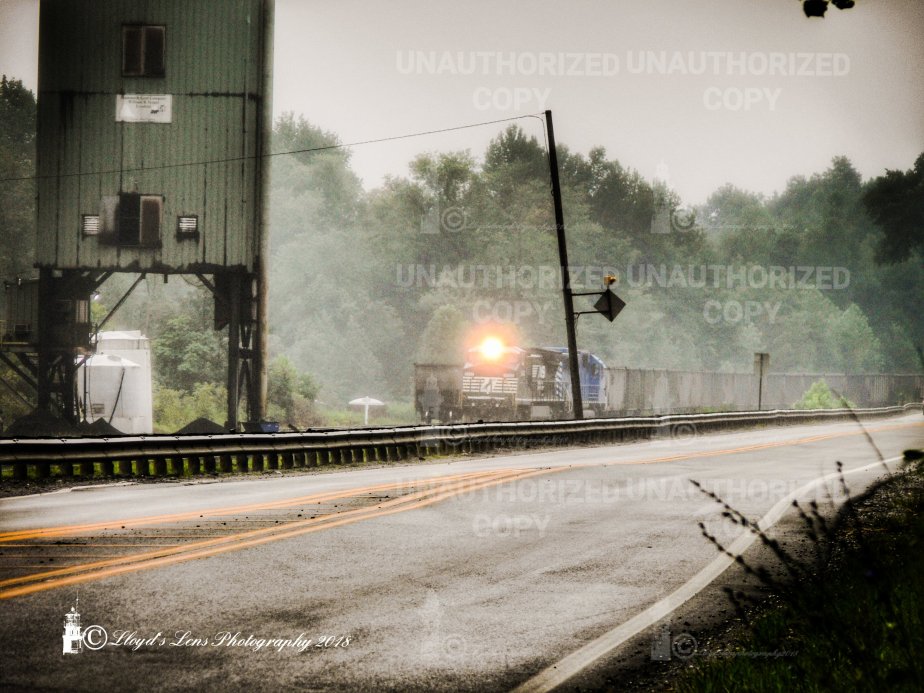
A light breaks through the morning mists as if it is plowing a pathway for travel. The long mournful sound of horn in combination with the thunder of wheels proceeds the screeching of the brakes as the train pulls into the tipple. I ease my big blue truck into the wide spot near the berm. A mountain is waiting to be loaded onto the train and moved to the power plants and steel mills. If the miners are the men who pull light out of the darkness then the railroad workers are the men who move mountains.

One of local engines CSX 7979 was recently spotted in California by my fellow blogger Russel Ray. Russel is real train buff who was able to track CSX 7979 back to Huntington West Virginia. I never really expected that any of our trains would be found that far West!

I suppose that it shouldn’t surprise me. Our coal goes into the grid as electricity and into the iron that becomes steel. It’s almost as if there is a little piece of our mountains in almost everything that is either made from steel or uses electricity. Look around. You probably have a piece of Appalachia in your home too.

Remembering The Country Store

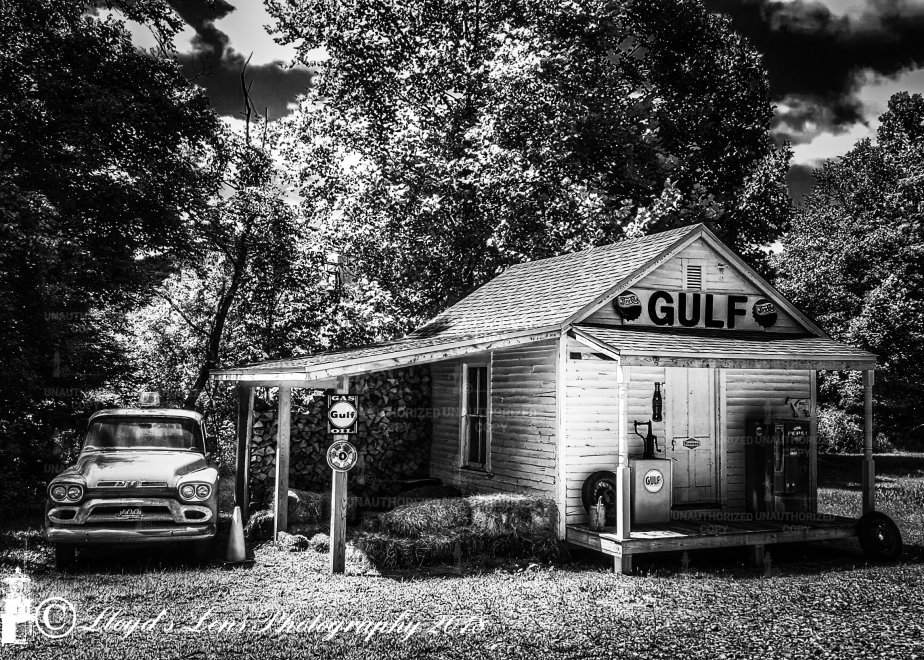
I remember the country store. We still have a few country stores in the world but not many. There was one gas pump (Petrol for my international friends), a variety of canned goods, perishables such as fresh vegetables and hardware. There was no vending machine. Instead a large chest near the counter kept eight ounce glass bottles of soft drinks on one side and beer on the other side. In the back of the store you could find a small selection of sporting goods. All of fishing tackle, shotgun shells and 22 caliber rifle rounds were common as was traps for fur trappers. But the most sought after resource to be found in the country store was the counter itself. Not a counter that’s crammed to brim with cheap impulse buys but a spacious wooden counter that worn down from being well used. It’s stained with coffee and soft drinks and scratched from hardware or change being tossed down at checkout. A properly equipped counter in a country store comes with a smiling face and plenty of conversation. In the days before Facebook we made a public post by mentioning something to clerk ( Who was usually the owner/operator). The clerk would then leak the news to the next customer during his checkout. ( yup, back then gossip was done without any social media). There was a bit of an art to being a clerk in the country store. Just the right amount of conversation and gossip would keep the customer in the building long enough to encourage a subsequent purchase but not so much that they felt trapped. The clerk knew everyone in the community and what gossip to keep to himself. ( A built-in spam filter!) Well, most of the time anyway.

Today mostly what you find is the convenience store. The best way to tell the difference between a country store and a convenience store is the atmosphere. A country store is welcoming and inviting where a convenience store is focused on bulk processing of sales. The later type is usually clean and neat with no coffee stained counters and very little in the way of a relationship with the customers. Just pay and get out. With the onset of automation the friendly clerk will be replaced by computer and a scanner.

My friend Sophia and I was commenting about how something made by human hands was more valuable than something stamped out by a machine. As we move forward into the brave new world of robots and app purchases consider the value of the people who are out there building their business based on a relationship with the community rather than just bulk processing of sales. ( And do stop by Sophia’s blog. She covers a broad range of things from an intelligent and interesting angle in the UK. )

Forging Yesterday

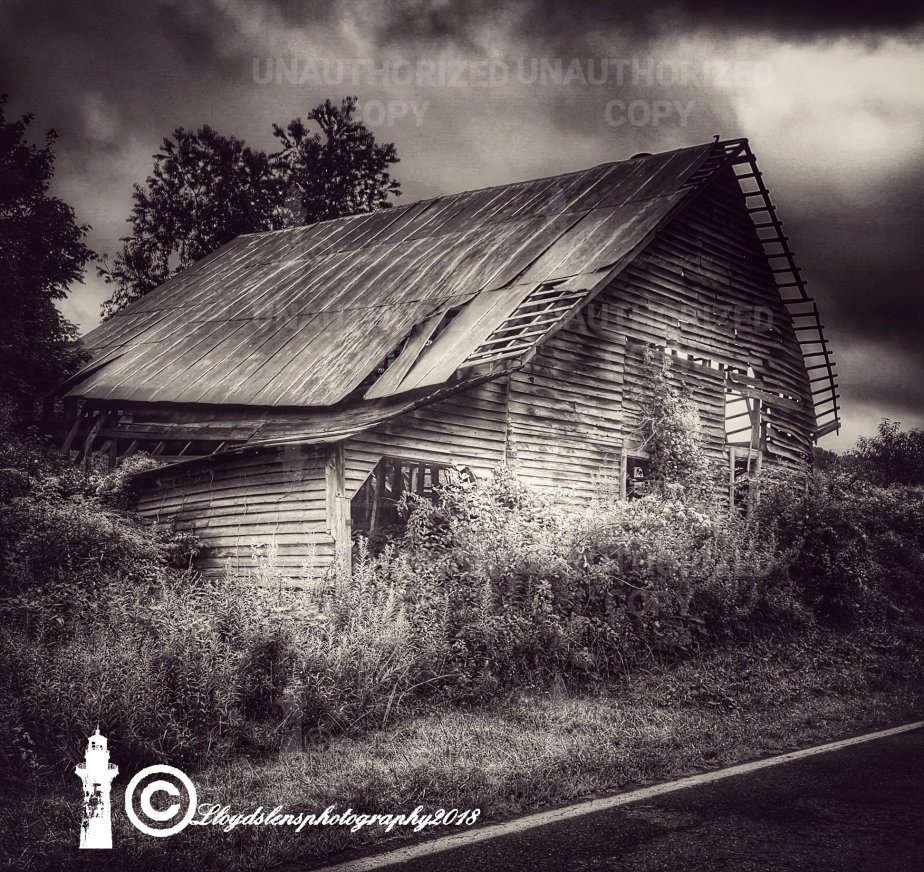
It’s said that photographers work with two main elements. Light and Time. I suppose that’s why so many of my writings emphasizes the observation of time. Tonight I’m looking at another version of my favorite old barn and I began to think about how quickly all of our tomorrows become yesterdays. It seems that I was just blogging about how much I was looking forward to Springtime and this morning I saw the leaves falling on my lawn. When I was a kid summer seemed to last a lifetime and today I blink my eyes and it’s almost gone. Sure we’ve had some unseasonably warm weather but the light is fading fast. A few years ago I was in a gym and one of the other men in the locker room made the same observation about how fast the summer went by. His friend answered that when they were only six years old summer was 1/6 of their lives. Now they’re sixty years old and summer was only 1/60 of their lives. The passage of time was relative to the age of the observer.

We live in the moment but moments pass so quickly and we are left with a collection of yesterdays. We can plan what we want tomorrow to become but we only have now to bend time and forge the now into a yesterday worth collecting. Mistakes will be made. It’s inevitable. Many of us are trying so hard to go back and fix the errors that we are losing the now and the opportunity for a new and better yesterday. You see, the old cliche about building a better tomorrow is just that. A cliche. All we can really do is use our now in the best way possible and hope that when we are finished with it that it matures into a better yesterday. A yesterday that is captured by the lens of memory and added to a fine collection which can be shared with those we love.

A Small Adventure And A Forbidden Gateway

I exited the highway and slowly drifted down the muddy road. A few days prior I’d spotted the tunnel. The entrance is dark and foreboding. The Virginia Creeper vines hang across the opening as if they’re daring me to step within reach. Just on the other side the light falls gently on a peaceful looking forest. This is a mystery. My mind harkens back to my childhood and games of dungeons and dragons. What will happen if I cross the threshold? Will the vines try to grab me and pull me up into some primeval jungle? Will I find out the peaceful scene on the other side is just an illusion as I’m transported to an alternate reality by some mystical gateway? Will I find an angry axe wielding ogre waiting to squish me into jelly? My sense of fantasy and adventure begins to run wild. I began to recall hours of solving puzzles and riddles with my college friends in a world where one’s fate was controlled by the roll of a 20 sided die. It was pure escapism. Magical swords, cursed rings and legendary beasts all awaited us on Thursday nights in the student lounge.

The best games were the ones where we bent the rules just a little to keep the story going. I was tempted to temp fate and enter the tunnel for a few minutes. I quickly checked my pocket and found my trusty Victorinox Swiss Army Knife to fend away the vines. However, I remembered that the 20 sided die was lost to a wild roll and an open floor vent in 1988. Unwilling to face any axe wielding ogres without my lucky die, I opted to stay in the real world…for now. I turned my big blue truck back towards the open road and my day job where the vines don’t try to eat you. However, I am a little suspicious of the ficus in the corner of the office. 😉

Men, Machines And The Changes To Come

Today we have machinery that does most of the work. But there was a time when each spike was driven by hands of a worker. Each beam was placed on a platform that was also laid down by human hands. The heavy iron rails had to be moved into place and precisely positioned. The land wasn’t joined by steel as much as it was the blood, sweat and tears of men who placed it there. Today, I was reminded of one such person who’s very name brings to mind myth and legend. The real John Henry. I understand that some of my international friends may not be familiar with the story of John Henry, so here are the basics. John Henry was a railroad worker and possibly a former slave who was working on the Big Bend Tunnel in West Virginia. At the time when the industrial revolution was bringing about new technologies. Namely, the steam hammer. A machine that drives steel without rest. A machine that threatened the livelihood of every worker building the rail system. In an effort to save the jobs of himself and his coworkers John Henry challenged the steam hammer to a race and he won! The power and strength of a man who could out work a machine must have been an awesome sight. However, the story ends in tragedy. John Henry dies of exhaustion that very night. The steam hammer gets the contract to complete the railroad. Why would I write about such a sad story on my normally upbeat blog? Because, it’s happening again. Our world is changing. More and more I see and hear about automation. Robot cars are replacing Uber drivers, self checkout is replacing cashiers and software applications are set to take over other jobs. This not a race people can win by brute force. This is a thinking game. ( using the word game metaphorically). At the time of the steam hammer a man of John Henry’s strength and power could have done very well by shoveling coal that powered the machine instead of trying to out work it. He could have adapted to work with the technology and become an invaluable part of that team. As we move into the future of automaton I want to encourage you to think differently about how to adapt to the new work environments. The robot car can never be as romantic as a horse and buggy ride in the country. There will be those older folks who would rather pay someone to do their shopping for them rather than face the self check out. Jobs won’t go away completely. Instead, new niches will form and with them will be new opportunities.

I see the railway in the feature image and I see a man, a machine and the new opportunities that lay unseen just beyond the next bend in the tracks.