

The late summer sun beams down into an abandoned pasture. The Ironweed is tall and tipped with bright purple flowers that seem to resemble a fireworks display frozen in mid burst. The plants sway back and forth as if the breeze is shaking them but there’s no wind today. As I step closer I can hear the constant hum of thousands of tiny winged workers. The bees are too busy collecting the pollen to bother with chasing the photographer. However, I don’t to encroach to far into their workspace. I walked up to the closest flower and the huge carpenter bee doesn’t really react to lens hovering just above her head. She checks each bloom one at a time mentally keeping notes about which ones will be ready tomorrow. Unlike the honeybees she is a solitary bee. She loves her neighbors but avoids the hustle and bustle of a hive. She has only her own brood to care for and she likes it that way. As she gave the flowers one last double check she moved into the right position for me to snap the shutter. I take a few more shots so that I can choose the best ones to keep. Then it’s time to let this working girl get back to business and I take my big blue truck to the next destination.
Category: Color Photography
Over Yonder
Appalachian Americans have a language that’s all our own. In the late 90s I left my home in the Appalachian Mountains to find work. I went to Maryland and took a job as a framer in a prefab housing plant along with a group of people from my home area. Most of the people who were with me were people whom I had known for years and worked with before. We had pretty efficient crew and nearly tripled the production of the opposite shift. But the good folks in Maryland didn’t quite pick up on some of the Appalachian Dialect that we spoke among ourselves. It’s English language but we have a tendency to use archaic phrases that people outside of our Mountains “ain’t really able to get a handle on”. One such phrase is the word “Yonder”. When used in context it generally means “over there” and is normally accompanied by a subtle nod of the head towards the direction of the subject being spoken of. While working at the job site we had a supervisor who was raised near the coast and had never heard of the word yonder before. Bob was actually one of nicest people who I’ve ever met. He had lent his hammer out to one of the “hillbillies” who had left his at home and the worker misplaced it. Bob inquired as to the whereabouts of his favorite hammer and the reply came back that it was “yonder”. Puzzled by the answer but not wanting to look bad in the eyes of the Appalachian crew Bob began to search on his own. This quickly became a game with my coworkers. Each person asked about the hammer replied with “yonder”. After about an hour of searching Bob came to me and asked if I would please let him know which direction was “yonder”. I simply smiled and replied “Bob, everybody knows that yonder is the opposite of “nigh””. (meaning near by) I quickly went back to work hammering away at wall I was building. Poor Bob just stood there blinking. Eventually we let him off the hook by returning his beloved hammer along with buying his lunch.

Shift Change
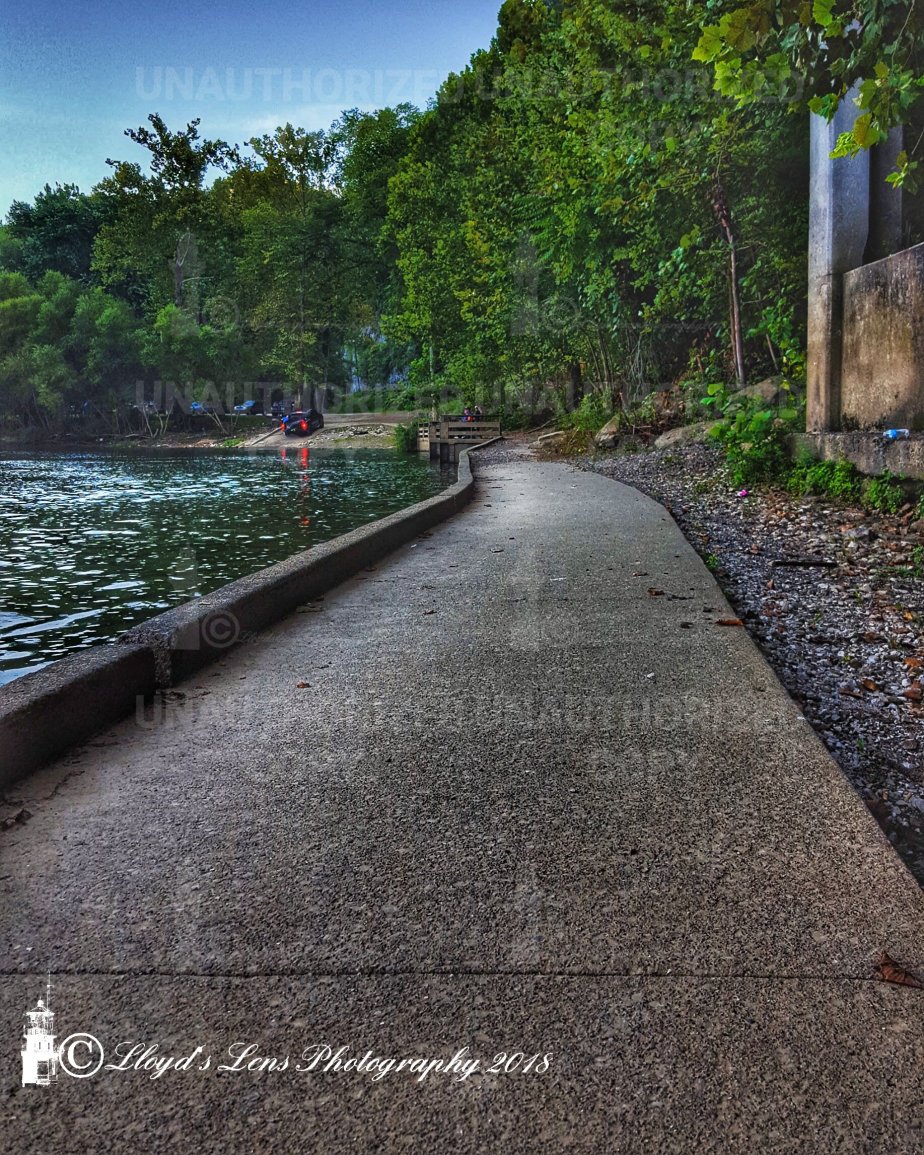
I stood there by the water’s edge as the morning sun smiled down on the Kanawha River. The fog rose sleepily from its bed just below the falls and continued upwards to become clouds. The cool mists are something to be enjoyed before the heat of the day becomes unbearable.
As I sip my morning coffee and watch the awakening of nature the last echo of a night bird calling from it’s roost falls on my ears. I don’t really know if it was bidding me good morning or if it was finally saying good night after being on the third shift. I listened for a few minutes. There was no second call. My friend was bedded down for the day. I took another drink of coffee and whispered “sleep well my friend. Day shift has you covered”.
By now the fog was cleared from the river and from my head. It was time to make good on my promise to the night bird and climb back up into the big blue truck and head to my day job.

Men, Machines And The Changes To Come
Today we have machinery that does most of the work. But there was a time when each spike was driven by hands of a worker. Each beam was placed on a platform that was also laid down by human hands. The heavy iron rails had to be moved into place and precisely positioned. The land wasn’t joined by steel as much as it was the blood, sweat and tears of men who placed it there. Today, I was reminded of one such person who’s very name brings to mind myth and legend. The real John Henry. I understand that some of my international friends may not be familiar with the story of John Henry, so here are the basics. John Henry was a railroad worker and possibly a former slave who was working on the Big Bend Tunnel in West Virginia. At the time when the industrial revolution was bringing about new technologies. Namely, the steam hammer. A machine that drives steel without rest. A machine that threatened the livelihood of every worker building the rail system. In an effort to save the jobs of himself and his coworkers John Henry challenged the steam hammer to a race and he won! The power and strength of a man who could out work a machine must have been an awesome sight. However, the story ends in tragedy. John Henry dies of exhaustion that very night. The steam hammer gets the contract to complete the railroad. Why would I write about such a sad story on my normally upbeat blog? Because, it’s happening again. Our world is changing. More and more I see and hear about automation. Robot cars are replacing Uber drivers, self checkout is replacing cashiers and software applications are set to take over other jobs. This not a race people can win by brute force. This is a thinking game. ( using the word game metaphorically). At the time of the steam hammer a man of John Henry’s strength and power could have done very well by shoveling coal that powered the machine instead of trying to out work it. He could have adapted to work with the technology and become an invaluable part of that team. As we move into the future of automaton I want to encourage you to think differently about how to adapt to the new work environments. The robot car can never be as romantic as a horse and buggy ride in the country. There will be those older folks who would rather pay someone to do their shopping for them rather than face the self check out. Jobs won’t go away completely. Instead, new niches will form and with them will be new opportunities.
I see the railway in the feature image and I see a man, a machine and the new opportunities that lay unseen just beyond the next bend in the tracks.

It Wasn’t Me
Don’t you just hate to be blamed for something that you didn’t do? I’m not even talking about having an an accident and feeling that it was unpreventable. I’m talking about being in the wrong place at the wrong time and having nothing to do with what happened but still taking the blame. Such is the life of goldenrod. It beautiful yellow spikes are easy to spot and in late summer when eyes are itchy and nobody can seem to shake the light coughing that lasts for weeks goldenrod takes the heat for it. The real culprit is the ragweed but we don’t really have to talk about that riff-raff. Goldenrod on the other hand continues to be a giver. The plant is not only beautiful but has an array of medicinal qualities. (Always check out multiple sources when researching medical plants). The dried stems are used to start friction fire and make string by survivalists. I’m sure that if I sat and thought about it I could enumerate more gifts that goldenrod provides freely in spite of the reputation that it didn’t earn.

