

The late summer sun beams down into an abandoned pasture. The Ironweed is tall and tipped with bright purple flowers that seem to resemble a fireworks display frozen in mid burst. The plants sway back and forth as if the breeze is shaking them but there’s no wind today. As I step closer I can hear the constant hum of thousands of tiny winged workers. The bees are too busy collecting the pollen to bother with chasing the photographer. However, I don’t to encroach to far into their workspace. I walked up to the closest flower and the huge carpenter bee doesn’t really react to lens hovering just above her head. She checks each bloom one at a time mentally keeping notes about which ones will be ready tomorrow. Unlike the honeybees she is a solitary bee. She loves her neighbors but avoids the hustle and bustle of a hive. She has only her own brood to care for and she likes it that way. As she gave the flowers one last double check she moved into the right position for me to snap the shutter. I take a few more shots so that I can choose the best ones to keep. Then it’s time to let this working girl get back to business and I take my big blue truck to the next destination.
Tag: art
Over Yonder
Appalachian Americans have a language that’s all our own. In the late 90s I left my home in the Appalachian Mountains to find work. I went to Maryland and took a job as a framer in a prefab housing plant along with a group of people from my home area. Most of the people who were with me were people whom I had known for years and worked with before. We had pretty efficient crew and nearly tripled the production of the opposite shift. But the good folks in Maryland didn’t quite pick up on some of the Appalachian Dialect that we spoke among ourselves. It’s English language but we have a tendency to use archaic phrases that people outside of our Mountains “ain’t really able to get a handle on”. One such phrase is the word “Yonder”. When used in context it generally means “over there” and is normally accompanied by a subtle nod of the head towards the direction of the subject being spoken of. While working at the job site we had a supervisor who was raised near the coast and had never heard of the word yonder before. Bob was actually one of nicest people who I’ve ever met. He had lent his hammer out to one of the “hillbillies” who had left his at home and the worker misplaced it. Bob inquired as to the whereabouts of his favorite hammer and the reply came back that it was “yonder”. Puzzled by the answer but not wanting to look bad in the eyes of the Appalachian crew Bob began to search on his own. This quickly became a game with my coworkers. Each person asked about the hammer replied with “yonder”. After about an hour of searching Bob came to me and asked if I would please let him know which direction was “yonder”. I simply smiled and replied “Bob, everybody knows that yonder is the opposite of “nigh””. (meaning near by) I quickly went back to work hammering away at wall I was building. Poor Bob just stood there blinking. Eventually we let him off the hook by returning his beloved hammer along with buying his lunch.

Shift Change
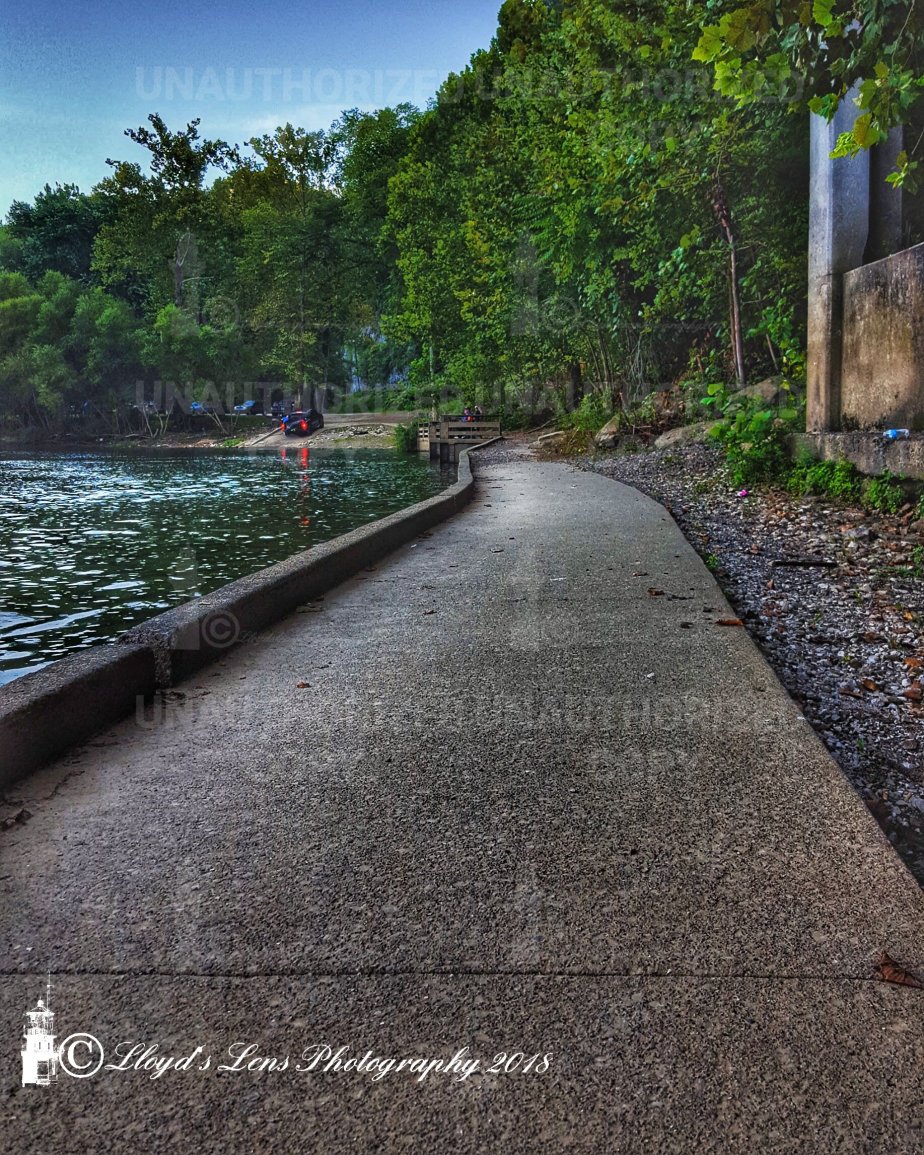
I stood there by the water’s edge as the morning sun smiled down on the Kanawha River. The fog rose sleepily from its bed just below the falls and continued upwards to become clouds. The cool mists are something to be enjoyed before the heat of the day becomes unbearable.
As I sip my morning coffee and watch the awakening of nature the last echo of a night bird calling from it’s roost falls on my ears. I don’t really know if it was bidding me good morning or if it was finally saying good night after being on the third shift. I listened for a few minutes. There was no second call. My friend was bedded down for the day. I took another drink of coffee and whispered “sleep well my friend. Day shift has you covered”.
By now the fog was cleared from the river and from my head. It was time to make good on my promise to the night bird and climb back up into the big blue truck and head to my day job.
Forging Yesterday
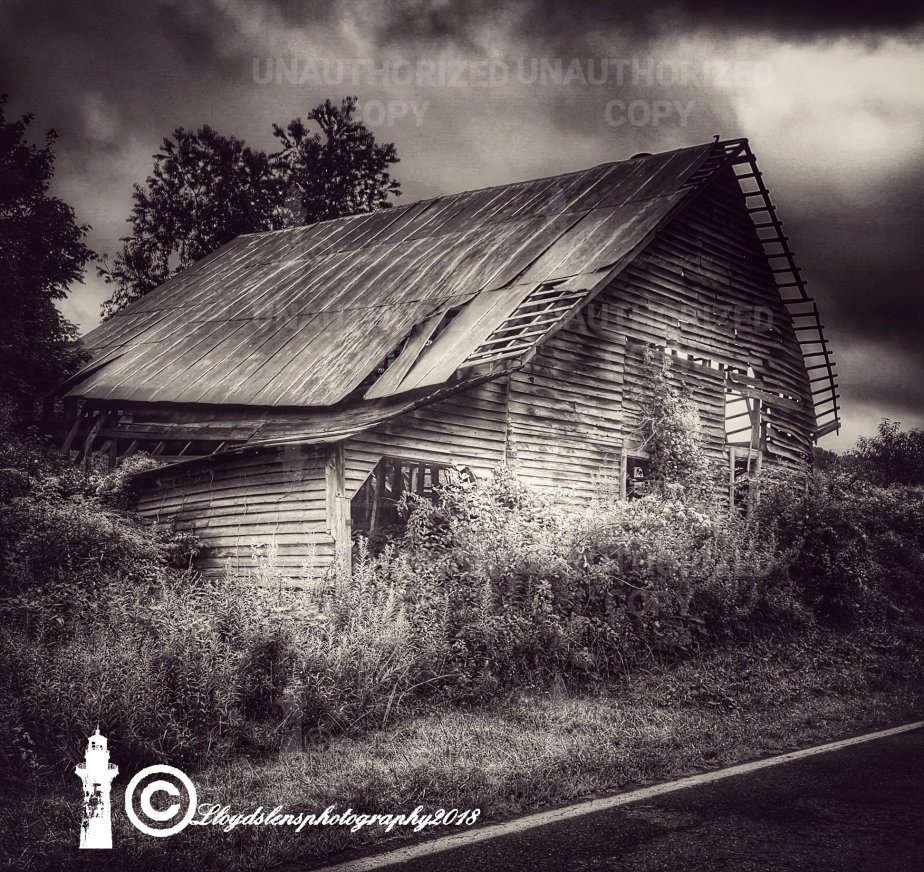
It’s said that photographers work with two main elements. Light and Time. I suppose that’s why so many of my writings emphasizes the observation of time. Tonight I’m looking at another version of my favorite old barn and I began to think about how quickly all of our tomorrows become yesterdays. It seems that I was just blogging about how much I was looking forward to Springtime and this morning I saw the leaves falling on my lawn. When I was a kid summer seemed to last a lifetime and today I blink my eyes and it’s almost gone. Sure we’ve had some unseasonably warm weather but the light is fading fast. A few years ago I was in a gym and one of the other men in the locker room made the same observation about how fast the summer went by. His friend answered that when they were only six years old summer was 1/6 of their lives. Now they’re sixty years old and summer was only 1/60 of their lives. The passage of time was relative to the age of the observer.
We live in the moment but moments pass so quickly and we are left with a collection of yesterdays. We can plan what we want tomorrow to become but we only have now to bend time and forge the now into a yesterday worth collecting. Mistakes will be made. It’s inevitable. Many of us are trying so hard to go back and fix the errors that we are losing the now and the opportunity for a new and better yesterday. You see, the old cliche about building a better tomorrow is just that. A cliche. All we can really do is use our now in the best way possible and hope that when we are finished with it that it matures into a better yesterday. A yesterday that is captured by the lens of memory and added to a fine collection which can be shared with those we love.

The Primeval Adventures Of My Youth.
The deep forests are an easy place to get lost. You start out on a dirt road and you just keep walking when you run out of gravel. Eventually the mud transitions into leaf litter. The moss grows thick and the gnarled undergrowth fills every available space. Just beyond these trees are the cliffs I used to play on as a kid. There’s a rocky ledge with a large overhang that one can sit on and observe the forest floor below. I’m guessing that it’s only about twenty or maybe thirty feet in hight but to a young man in his early teens it may as well had been the edge of the world. I would get all garbed up to the point where it looked like I was going on a major expedition down the Amazon. I carried a large Bowie Knife on my belt for survival. The only thing I ever used it for was to mark trees by cutting out a patch of the outer bark and being careful not to damage the live bark underneath. (If done right it in no way harms the tree). I would sometimes take a slingshot along. ( called a catapult by many of my international friends). I would try to pick off individual leaves with a small stone. The stones are not nice and consistent like the fancy ammo in the stores today. That made hitting anything consistently quite a challenge. Sometimes I would pick up acorns or hickory nuts for slingshot ammo which was better for accuracy but didn’t really impart much impact to the target. I’d bet that if I made my way to the ledge today I’d find a pile of small stones in the back of ledge waiting to be used during the zombie apocalypse. Other days I would trek down into the valley below. I would pick out a sapling to craft into spear. There was a particular rotten stump below the cliff that was just the right consistency to allow the spear to stick. I was actually better at throwing the spear than I was with the slingshot.
The road in the feature image was one of my favorite childhood memories and a way of escape from the mundane world and a gateway to a primeval adventure.
 LLOYD'S LENS PHOTOGRAPHY LLC