Where Are The Mountains Moving To?

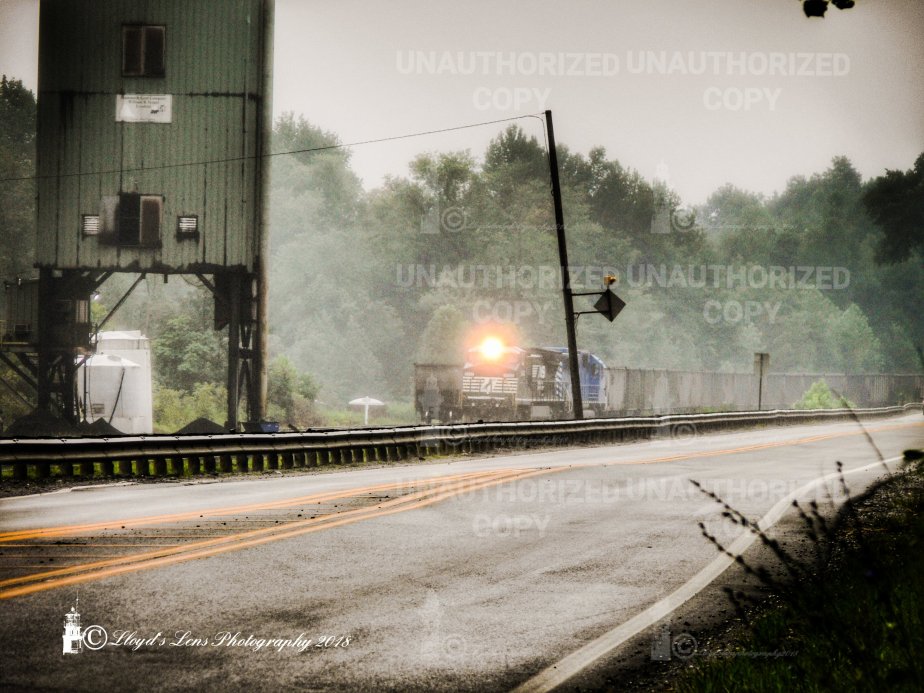
A light breaks through the morning mists as if it is plowing a pathway for travel. The long mournful sound of horn in combination with the thunder of wheels proceeds the screeching of the brakes as the train pulls into the tipple. I ease my big blue truck into the wide spot near the berm. A mountain is waiting to be loaded onto the train and moved to the power plants and steel mills. If the miners are the men who pull light out of the darkness then the railroad workers are the men who move mountains.

One of local engines CSX 7979 was recently spotted in California by my fellow blogger Russel Ray. Russel is real train buff who was able to track CSX 7979 back to Huntington West Virginia. I never really expected that any of our trains would be found that far West!

I suppose that it shouldn’t surprise me. Our coal goes into the grid as electricity and into the iron that becomes steel. It’s almost as if there is a little piece of our mountains in almost everything that is either made from steel or uses electricity. Look around. You probably have a piece of Appalachia in your home too.

Remembering The Country Store

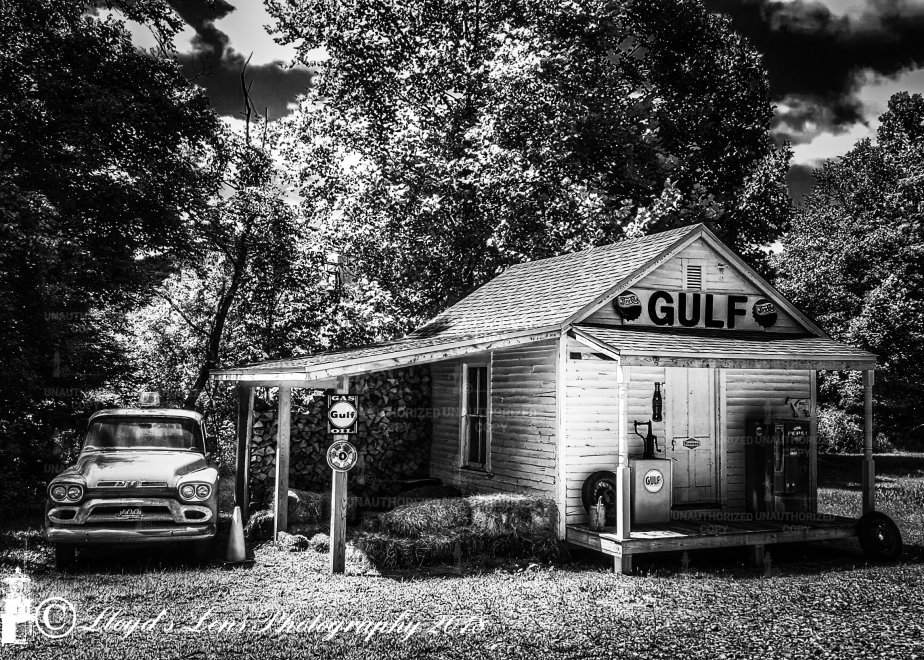
I remember the country store. We still have a few country stores in the world but not many. There was one gas pump (Petrol for my international friends), a variety of canned goods, perishables such as fresh vegetables and hardware. There was no vending machine. Instead a large chest near the counter kept eight ounce glass bottles of soft drinks on one side and beer on the other side. In the back of the store you could find a small selection of sporting goods. All of fishing tackle, shotgun shells and 22 caliber rifle rounds were common as was traps for fur trappers. But the most sought after resource to be found in the country store was the counter itself. Not a counter that’s crammed to brim with cheap impulse buys but a spacious wooden counter that worn down from being well used. It’s stained with coffee and soft drinks and scratched from hardware or change being tossed down at checkout. A properly equipped counter in a country store comes with a smiling face and plenty of conversation. In the days before Facebook we made a public post by mentioning something to clerk ( Who was usually the owner/operator). The clerk would then leak the news to the next customer during his checkout. ( yup, back then gossip was done without any social media). There was a bit of an art to being a clerk in the country store. Just the right amount of conversation and gossip would keep the customer in the building long enough to encourage a subsequent purchase but not so much that they felt trapped. The clerk knew everyone in the community and what gossip to keep to himself. ( A built-in spam filter!) Well, most of the time anyway.

Today mostly what you find is the convenience store. The best way to tell the difference between a country store and a convenience store is the atmosphere. A country store is welcoming and inviting where a convenience store is focused on bulk processing of sales. The later type is usually clean and neat with no coffee stained counters and very little in the way of a relationship with the customers. Just pay and get out. With the onset of automation the friendly clerk will be replaced by computer and a scanner.

My friend Sophia and I was commenting about how something made by human hands was more valuable than something stamped out by a machine. As we move forward into the brave new world of robots and app purchases consider the value of the people who are out there building their business based on a relationship with the community rather than just bulk processing of sales. ( And do stop by Sophia’s blog. She covers a broad range of things from an intelligent and interesting angle in the UK. )

Over Yonder

Appalachian Americans have a language that’s all our own. In the late 90s I left my home in the Appalachian Mountains to find work. I went to Maryland and took a job as a framer in a prefab housing plant along with a group of people from my home area. Most of the people who were with me were people whom I had known for years and worked with before. We had pretty efficient crew and nearly tripled the production of the opposite shift. But the good folks in Maryland didn’t quite pick up on some of the Appalachian Dialect that we spoke among ourselves. It’s English language but we have a tendency to use archaic phrases that people outside of our Mountains “ain’t really able to get a handle on”. One such phrase is the word “Yonder”. When used in context it generally means “over there” and is normally accompanied by a subtle nod of the head towards the direction of the subject being spoken of. While working at the job site we had a supervisor who was raised near the coast and had never heard of the word yonder before. Bob was actually one of nicest people who I’ve ever met. He had lent his hammer out to one of the “hillbillies” who had left his at home and the worker misplaced it. Bob inquired as to the whereabouts of his favorite hammer and the reply came back that it was “yonder”. Puzzled by the answer but not wanting to look bad in the eyes of the Appalachian crew Bob began to search on his own. This quickly became a game with my coworkers. Each person asked about the hammer replied with “yonder”. After about an hour of searching Bob came to me and asked if I would please let him know which direction was “yonder”. I simply smiled and replied “Bob, everybody knows that yonder is the opposite of “nigh””. (meaning near by) I quickly went back to work hammering away at wall I was building. Poor Bob just stood there blinking. Eventually we let him off the hook by returning his beloved hammer along with buying his lunch.

The Primeval Adventures Of My Youth.

The deep forests are an easy place to get lost. You start out on a dirt road and you just keep walking when you run out of gravel. Eventually the mud transitions into leaf litter. The moss grows thick and the gnarled undergrowth fills every available space. Just beyond these trees are the cliffs I used to play on as a kid. There’s a rocky ledge with a large overhang that one can sit on and observe the forest floor below. I’m guessing that it’s only about twenty or maybe thirty feet in hight but to a young man in his early teens it may as well had been the edge of the world. I would get all garbed up to the point where it looked like I was going on a major expedition down the Amazon. I carried a large Bowie Knife on my belt for survival. The only thing I ever used it for was to mark trees by cutting out a patch of the outer bark and being careful not to damage the live bark underneath. (If done right it in no way harms the tree). I would sometimes take a slingshot along. ( called a catapult by many of my international friends). I would try to pick off individual leaves with a small stone. The stones are not nice and consistent like the fancy ammo in the stores today. That made hitting anything consistently quite a challenge. Sometimes I would pick up acorns or hickory nuts for slingshot ammo which was better for accuracy but didn’t really impart much impact to the target. I’d bet that if I made my way to the ledge today I’d find a pile of small stones in the back of ledge waiting to be used during the zombie apocalypse. Other days I would trek down into the valley below. I would pick out a sapling to craft into spear. There was a particular rotten stump below the cliff that was just the right consistency to allow the spear to stick. I was actually better at throwing the spear than I was with the slingshot.

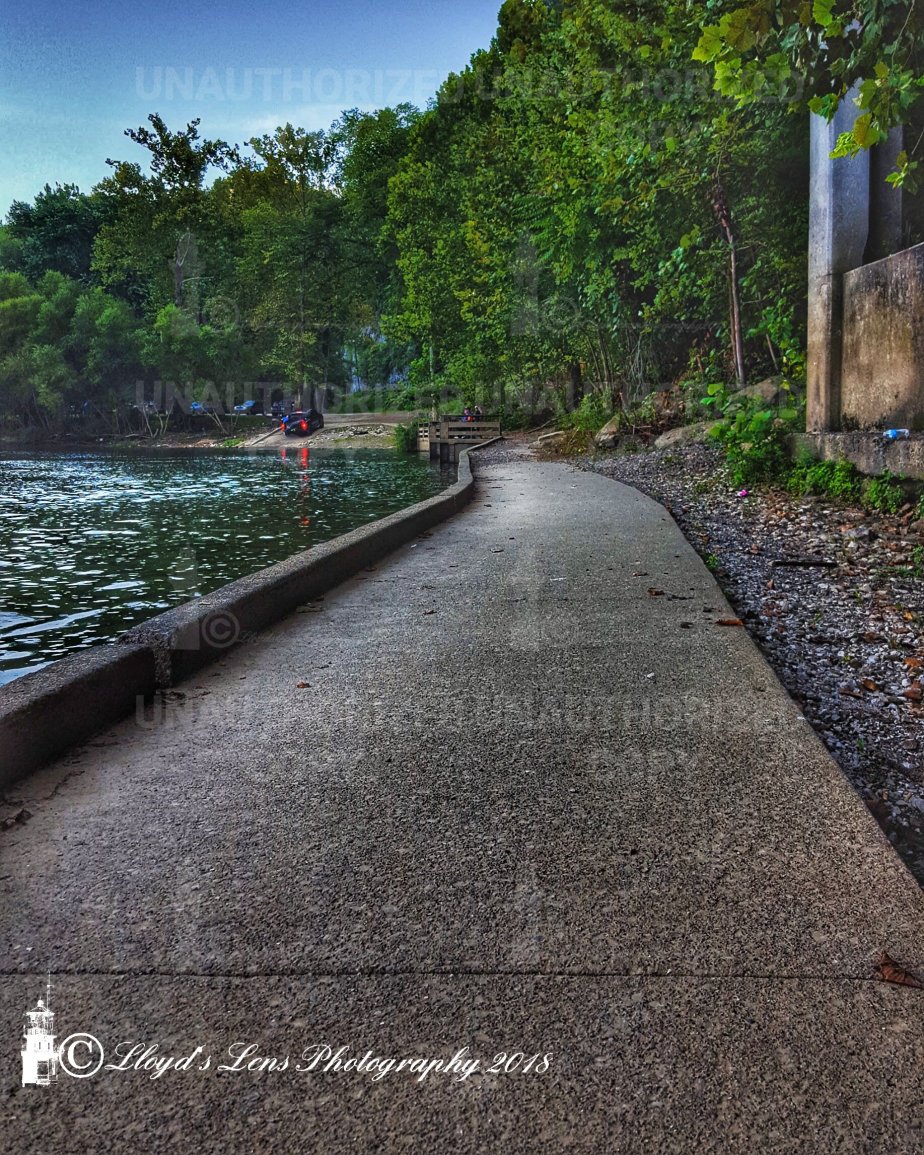
The road in the feature image was one of my favorite childhood memories and a way of escape from the mundane world and a gateway to a primeval adventure.

Falling In Love With Twins

The gently babbling water flows over the rocks. In the shallow pools small fish dart under cover as my shadow crosses in front of them. Dragonflies and Damselflies zip around and occasionally hover. A small crayfish crawls from one pool to another. Somewhere behind me the distinct sounds of a woodpecker hammering away at an old snag echoes through the mountains.

I step carefully as I approached the spot where I will place my tripod. I am in a public park but the copperheads don’t understand that everyone is welcomed here and I’d rather not suffer another bite. Satisfied that I’m not disturbing a sleeping serpent, I begin to set up my camera. The twin falls of Glade Creek are one of our most popular places. They’re certainly not the highest falls in West Virginia but there’s something about the perfect symmetry that’s irresistible. The sun is high in sky and I want the water to come out nice and silky so I make the appropriate adjustments and set the timer hoping that the children playing nearby can stay out frame for just a few more seconds. This was ten years ago and it was one of my first with a real camera. The result is still one of my favorite images today.