Forage Friday 3.. Redbud

Hello Friends!Tonight’s feature image is titled “Redbud 33019”. All of the photos are my original work and are available as prints by following the instructions at the bottom of the article.

One of the true joys of an Appalachian Spring is the blooming of the redbud. In fact one of minor reasons why I chose the property that I live on now is the presence of reddish pink pops of happiness in late March to mid April. After a long gray winter the colorful redbud is a very welcome sight for sore eyes.

A closer look at the redbud flowers

Redbud is often planted as an ornamental shrub because of its early and colorful pea like flowers. And, it is a nitrogen fixing legume that is often used for reclaiming strip mines and helping to heal the soil.

Of course, this is Forage Friday and that means that redbud is also a wild edible. I have only used it as a “trail nibble” by picking a few raw flower buds here and there and popping a few in my mouth. However, I do think that it would be an interesting thing to add to a salad. I’ve been watching the bloom spread up the mountain and I think that I’ll try it as part of a salad soon. Being a legume I expect that redbud is rich in protein. I haven’t tried the pods yet either but Peterson’s Field Guide suggest a ten minute saute of the young tender pods which look somewhat like snow peas hanging below heart shaped leaves. (As always, make sure of positive ID. Before trying the first time. Trees like black locusts have similar pods and are considered toxic)

A word here on timing. The flower is only in its prime for a few weeks and once the pods reach a certain maturity they become leathery. I have also read that some people have canned the pods like green beans but it’s not something that I’m experienced with and as with this whole series I really recommend that you do further research before going out with a basket to try a new and exotic food from the forest.

Okay, don’t skip the disclaimer.

Forage Friday isn’t really intended to teach you everything you need to know about wild foraging. It was conceived as a way for me to showcase my photos while providing a few interesting tidbits of information to peak your interest and start a conversation in some of the forums that I share with on Facebook.

If you have eaten redbud flowers or pods of if you have a question about wild edible plants the comments are open to the public.

Hello Friends and thank you for your support of my page. If you have enjoyed the photos or the writings please let me know by commenting and sharing my work on your social media. I also want to invite you to Follow Lloyds Lens Photography on Facebook

If you would like to Follow me on Facebook the web address is

https://www.facebook.com/aviewfromthelens/

If you’re enjoying my blog and don’t want to miss a post then you can sign up for email alerts on my website.

https://lloydslensphotographyllc.com/

Click the web to go tohttps://lloydslensphotographyllc.com/

Did you know that I also do portraits by appointment? If you’re interested in a portrait session either message me onFacebook or use the contact form

This slideshow requires JavaScript.

Have you checked out the Zazzle Store?

I’m now using Zazzle to fulfil orders. What this means for you is a secure way to place an order, discount codes & a broader product selection! Simply message me on Facebook oruse the contact form on my websiteand tell me which image you want and I’ll reply with a direct link to where you can place the order.

Clicking on the photo takes you tohttps://www.zazzle.com/lloydslensphotos?rf=238248269630914251

Lastly, all of the photos and writings are my original work unless otherwise specified and are not to be copied or reproduced without expressed written permission from the photographer.

Thank you again for your support of my page! 😊

Wood Violets Forage Friday 2

Hello Friends. Tonight’s feature image is titled “Yellow Wood Violet 41909” and is available for purchase by following the instructions at the bottom of the article.

Because we live in such a litigious society I’m obliged to remind you that Forage Friday is only intended to be a conversation starter and not a guide. Having a positive ID on a plant is essential for safety and some of the plants coveted in this series do have poisonous look-alikes that might fool a novice. Wild foraging is a great way to get out and explore but be safety minded and do further research. I also recommend that you keep a copy of Peterson’s Field Guide to Edible Wild Plants handy.

In my part of the Appalachian Mountains one of the most abundant wild edible plants is the wood violet. In fact it’s so prevalent on my land that I have decided to consider it a volunteer salad crop. On their own the leaves are a little bland but they’re also rich in vitamin C as well as vitamin A. The leaves are basically a great substitute for spinach. Not being a huge fan of cooked greens I tend only eat them raw but they can be useful as a pot herb. The leaves and flowers are the only recommend parts. As a type 2 diabetic I avoid sweets but the flowers are often rolled in powdered sugar and eaten as candles. I’ve also recently been told of violet preserves and violet syrups has peaked my imagination.

I know that some people are looking at the yellow flowers in feature image and thinking that it’s the wrong color to be a violet. I have been told that it must be a pansy. Well, actually, both pansies and violets are in the genus Viola and both come in a variety of colors. One of my favorite violets is known locally as the Confederate Violet because of the grayish color.

Confederate Violet

Aside from color the leaves tend to be a little more round. But the shape of a leaf and the shape of the petals can vary depending on the soil nutrients and growing conditions.

Of course I have plenty of the common Blue Violets as well.

The blue violets are so competitive here that in some parts of the yard there’s more flowers than grass. I figured that was God’s way of making sure that I have plenty to eat so I let them have what they want.

One last word on safety and foraging for food. Be aware that we live in a post industrial world and that means that contamination is always a hazard. Chemicals that are used to control weeds can be found even in the most seemingly pristine setting and that includes farmlands. What looks like a park today can be hiding a place where illegal dumping has occurred. So look around before collecting and if something looks off then you might want to forage elsewhere.

So, tell me your experience. Have you ever tried violets as part of a camping trip or maybe an expiriment with Victorian cuisine? The comments are open to the public .

Hello Friends and thank you for your support of my page. If you have enjoyed the photos or the writings please let me know by commenting and sharing my work on your social media. I also want to invite you to Follow Lloyds Lens Photography on Facebook

If you would like to Follow me on Facebook the web address is

https://www.facebook.com/aviewfromthelens/

If you’re enjoying my blog and don’t want to miss a post then you can sign up for email alerts on my website.

https://lloydslensphotographyllc.com/

Click the web to go tohttps://lloydslensphotographyllc.com/

Did you know that I also do portraits by appointment? If you’re interested in a portrait session either message me onFacebook or use the Contact Form on my website

This slideshow requires JavaScript.

Have you checked out the Zazzle Store?

I’m now using Zazzle to fulfil orders. What this means for you is a secure way to place an order, discount codes & a broader product selection! Simply message me on Facebook oruse the contact form on my websiteand tell me which image you want and I’ll reply with a direct link to where you can place the order.

Clicking on the photo takes you tohttps://www.zazzle.com/lloydslensphotos?rf=238248269630914251

Lastly, all of the photos and writings are my original work unless otherwise specified and are not to be copied or reproduced without expressed written permission from the photographer.

Thank you again for your support of my page! 😊

Forage Friday 1 Cattail

Hello Friends! Tonight’s feature image is untitled for the moment as are all the photos in the post. However, if you’re interested in purchasing a copy please use the contact instructions at the bottom of the page.

Before I begin I feel the need to explain the concept behind Forage Friday. First and foremost, Forage Friday is not intended to teach you everything you need to know about wild foraging. Many of the plants I’ll be covering do have toxic look-alikes and for an inexperienced person could result in disaster. It’s highly recommended that you seek out further information before trying it yourself. One of the best resources will be those of the older generation from rural areas who have relied on wild foraging to get by in hard times. They’re just full of knowledge and crave interaction. As you’re reading the post please remember that the author is very human and as such is capable of errors so it’s best to double check with other sources. With that said, it’s my hope that you are entertained and inspired learn more.

One of the first wild edible plants that I learned is also one of the easiest to identify, I’m speaking of course of the common cattail. I remember that when we were kids we’d pretend that the distinctive flowerhead was a corndog. After all, it’s a hotdog shape on a stick. It even looks like it’s breaded. The “hotdog” is not really edible. It’s densely packed fluff would be like trying to eat a down jacket. This is actually the seeds. However, in its season the male flowers are loaded with bright yellow pollen. The pollen is collected by sticking the spike in a bag and shaking it gently. Soon you’ll have a protein rich powder that is generally mixed 50/50 with wheat flour. I have not actually tried it myself but I’m told that it makes awesome pancakes!

What I have tried is the cucumber flavored rhizome and stem base. They are carbohydrate rich and as a type 2 diabetic I tend to avoid carbs these days. But they are tasteful! The big thing to avoid here is contamination. Cattail is capable of absorbing both chemical and biological toxins. Because of this they are quite useful as biological filters in septic systems and in areas where the capture of chemical run off needs to be dealt with. That’s not to say that you can’t ever give them a try but be selective about where you find them. Open ditches in urban and suburban areas are most likely to be full of lawn chemicals or sewage. That pond out in country is a better choice but there’s still agricultural chemicals. Basically, if you wouldn’t eat the fish out of that water source then avoid the water plants as well. As I’ve matured and learned more about things like cryptosporidium I would no longer recommend raw cattail. Instead, scraping the starch out of the stems and leaf base to thicken soups.

Other than the food value of cattail it’s got some tool and craft uses. The fluff from the “hotdog” is a great tinder for your campfire. When I was a kid in Civil Air Patrol we learned that fluffing the down and stuffing it under your jacket makes a great insulation. The leaves are strong enough to be woven into mats or twisted into a string but it’s fairly weak and not suitable for anything that is under stress. But making a sun shelter for an extended stay in the woods is a perfect application.

Cattail is referred to as “Mother Nature’s supermarket. If I tried to list all of the tips and tricks that I’ve learned concerning cattail the post would be so long that reading it would take more time than most people are willing to invest. However, I do know that most of my fellow Appalachians probably have a trick or two to add. The majority of my readers find my posts through groups that I share with on Facebook. I want to encourage you to either comment on the post, or my Facebook page and even my blog is open to the public. I’d love to hear about your experience with cattail. How did you use it? Did you ever fall into the pond when pulling out the stems and leaves?

Hello Friends and thank you for your support of my page. If you have enjoyed the photos or the writings please let me know by commenting and sharing my work on your social media. I also want to invite you to Follow Lloyds Lens Photography on Facebook

If you would like to Follow me on Facebook the web address is

https://www.facebook.com/aviewfromthelens/

If you’re enjoying my blog and don’t want to miss a post then you can sign up for email alerts on my website.

https://lloydslensphotographyllc.com/

Click the web to go tohttps://lloydslensphotographyllc.com/

Did you know that I also do portraits by appointment? If you’re interested in a portrait session either message me onFacebook or use the Contact Form on my website

This slideshow requires JavaScript.

Have you checked out the Zazzle Store?

I’m now using Zazzle to fulfil orders. What this means for you is a secure way to place an order, discount codes & a broader product selection! Simply message me on Facebook or use the contact form on my website and tell me which image you want and I’ll reply with a direct link to where you can place the order.

Clicking on the photo takes you tohttps://www.zazzle.com/lloydslensphotos?rf=238248269630914251

Lastly, all of the photos and writings are my original work unless otherwise specified and are not to be copied or reproduced without expressed written permission from the photographer.

Thank you again for your support of my page! 😊

Winter And Wild Teas

In the natural world winter is a time for rest. The animals tend to stay in their dens. The hardwood trees are in a deep sleep as are the bears. Even the deer find a nice place in the deep woods where they can shelter from the cold. The days are still short and the cold nights are long. Just perfect for deep rest.

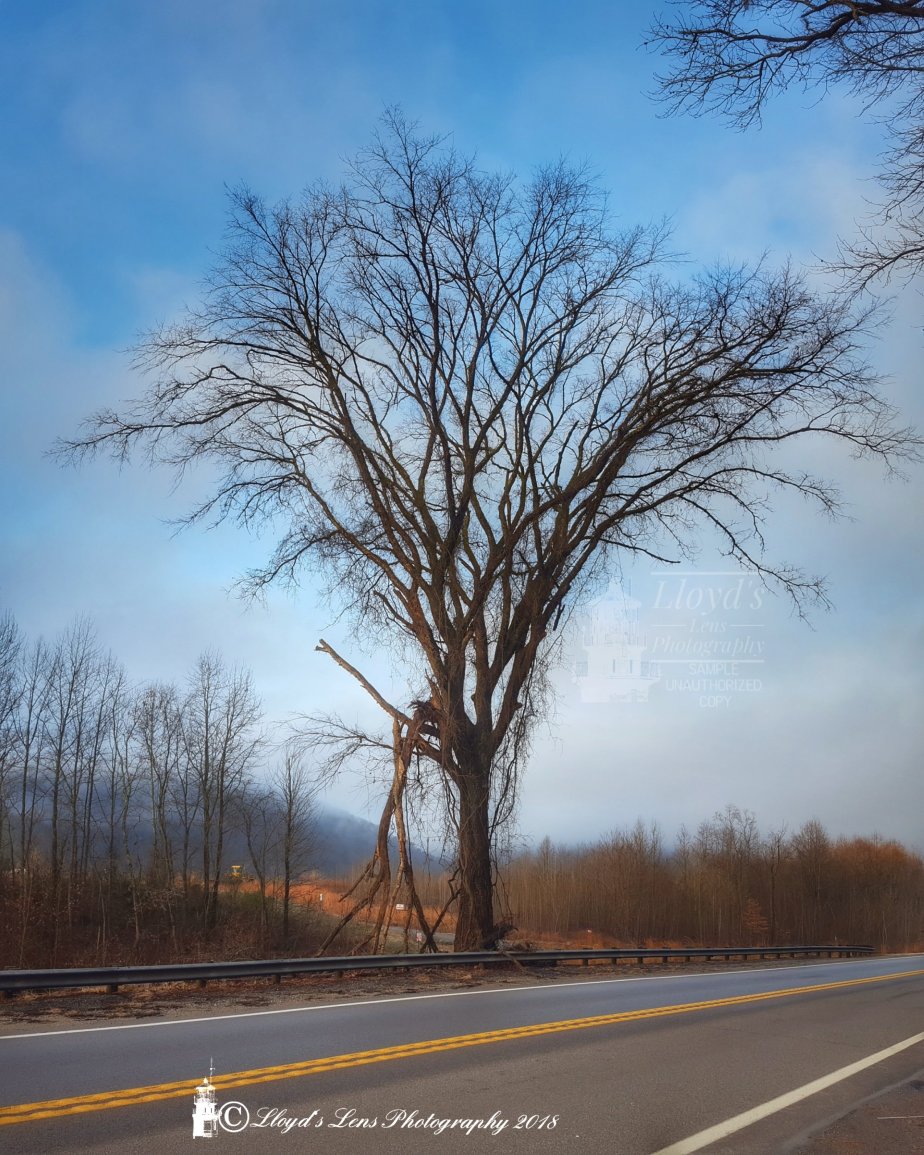
The giant elm tree in tonight’s feature image is just as beautiful in the winter as it is with its leaves on in the warmer months. One of the special treats of the colder months when I was a kid was bark teas. I’d be careful about where I harvested the bark (see note below) but elm actually has a nice spicy flavor. Several years ago I was able to try it for the first time. Traditionally it’s used for sore throats and colds ( I’m not a doctor or a certified anything so this is historical statement and not medical advice) due to the gelatinous fiber it yields. The flavor is similar to the Balsam Poplar that grows in higher elevations. In just a few months the buds will begin to swell and they make a good tea as well. In the old days, the Basswood (Linden or Lyme in Europe) buds were a source of winter food for my ancestors. Winter hikes in my teens always included stopping by a grove of black birch for a handful of wintergreen flavored twigs to nibble on. Sassafras was also a wonderful bark tea with an aroma that filled the house. There’s also the Carolina Spicebush who’s twigs provide a very lemon like flavor and the red berries of the stag horn sumac which has to be filtered well but gives us a pink lemonade in winter.

Perhaps that’s why I like this big old elm tree so much. It’s not only because it’s awesome to look at but it reminds me of all the cool stuff that the Appalachian forests provide even in winter.

(NOTE: WHILE THE TREES AND FOOD USES MENTIONED IN TONIGHT’S POST WERE TRADITIONALLY USED IN APPALACHIA THERE ARE HAZARDS AND FOOD ALLERGIES TO CONSIDER. FOR EXAMPLE, THE ELM IN TONIGHT’S POST IS GROWING NEAR A PLACE WHERE HAZARDOUS SOIL CONTAMINATION IS A RISK AND THEREFORE I WOULD CONSIDER THIS PARTICULAR TREE UNSUITABLE FOR CONSUMPTION. IT’S A SAD REALITY OF THE MODERN WORLD AND JUST NOT WORTH THE RISK. MCHM IS IN USE IN THE REGION AND LOCALS KNOW ALL TOO WELL THAT BY THE TIME A SPILL IS REPORTED IT’S ALREADY TOO LATE TO PREVENT CONTAMINATION. )

Hello Friends and thank you for your support of my page. If you have enjoyed the photos or the writings please let me know by commenting and sharing my work on your social media. I also want to invite you to Follow Lloyds Lens Photography on Facebook

Ring this bell for Facebook

Recently, I’ve been made aware that many of my posts on Facebook are being buried in the feed. So, if you don’t want to miss a post then you can sign up for email alerts on my website at the bottom of theWelcome Page

Tonight’s Feature Image is “The Big Elm At London West Virginia 12.27.18” and is available for purchase by usingthe Contact Form on my website. ( just click on the the bell below)

(Note, I do not share or sell contact information. EVER)

4X6 is $5.00

5X7 is $10.00

8X10 is $15.00

Some cropping may be necessary for certain sizes.

Ring this bell to order prints or schedule portraits

I’m also available for portraits by appointment. Use the Contact Form or message me on Facebook for details.

Blackwater Falls Through Old And New Eyes

The cold weather if late Fall and early Winter always draws my imagination to the Pleistocene era. I can imagine how the lone hunter must have seen his pristine world. He walks through a land untamed by clocks and unnatural restrictions. As he steps out of a thicket his eyes behold the falls for the first time. He is at one with the rhythm of nature as he approaches the edge of the water. He sees the fluid movement of the shadows as they dart around beneath the falls. His feet are in tune with the earth as he raises his Atlatl spear and slowly gets into position. As he casts his stone tipped dart towards the target his eyes never lose focus. There’s no splash as the dart penetrates the fish below the water’s surface. His skills with the weapon are so deft that the rest of the fish are undisturbed until he wades into freezing water to retrieve his meal.

Today Blackwater Falls is a popular tourist attraction in West Virginia. A paved path leads to the wooden staircase and there are platforms for taking in the view. However, it’s still easy to imagine that you’re a wild human roaming the wilderness in the distant past as you look down into the Falls.

Hello Friends and thank you for your support of my page. If you have enjoyed the photos or the writings please let me know by commenting and sharing my work on your social media. I also want to invite you to Follow Lloyds Lens Photography on Facebook

Ring this bell for Facebook

Recently, I’ve been made aware that many of my posts on Facebook are being buried in the feed. So, if you don’t want to miss a post then you can sign up for email alerts on my website at the bottom of theWelcome Page

Visit My Website

Tonight’s Feature Image is titled “Blackwater Falls 1” and is available for purchase by contacting me on Facebook or by using the Contact Form on my website. (Note, I do not share or sale contactinformation. EVER)

4X6 is $5.00

5X7 is $10.00

8X10 is $15.00

Some cropping may be necessary for certain sizes.

Ring this bell to order prints or schedule portraits

I’m also available for portraits by appointment. Use the Contact Form or message me on Facebook for details.